


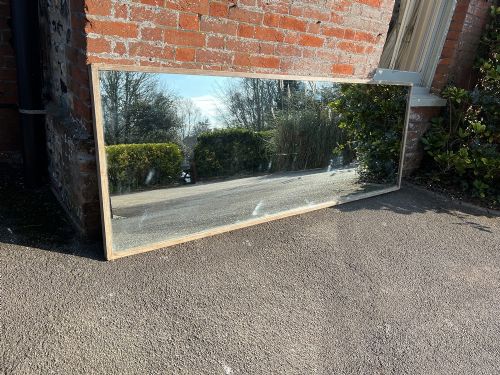


Painted Timber Glass Mirror
These painted timber glass mirror pieces bring historic character to a room, offering functional reflection through distressed plates and decorative frames.
Painted Timber Glass Mirror
A painted timber glass mirror spans wall-hanging formats, overmantels, and display cabinets originating from the mid-nineteenth century up to the early twentieth century. Examples range from English country designs to French Provincial and Empire styles, incorporating arched tops and architectural proportions.
The most common formats on this page are large carved wood painted wall mirrors and overmantel mirrors. Pieces from the Victorian era and the Sheraton Revival period frequently utilise timber frames finished with paint, gesso, or satinwood.
How they were made
Frames are constructed from timber, carved wood, and satinwood, often enhanced with applications of gesso to build up decorative moulding and surface detail. Artisans then applied paint finishes to the wood, ranging from plain coats to distressed treatments.
Mirrors utilise glass plates fitted securely into the wooden rabbets, occasionally featuring distressed silvering or antique plate characteristics. Structural joinery and hand-carved elements define the construction of both English and French examples.
One cinema advertising board hides behind a distressed mirror plate, proving that historic French establishments knew how to mix business with reflection.
What varies in quality
The refinement of the hand-carved woodwork and the execution of the painted or gesso surface separate standard items from finer examples. More accomplished pieces display sophisticated proportions, such as arched top profiles and balanced ornamentation.
The integration between the original timber frame and the glass plate dictates the overall integrity of the object. Consideration rests on the harmony of the decorative style, whether French Chateau or English country, and the preservation of the surface finish.
The Painted Timber Glass Mirror Glossary
- Gesso
- A plaster-like material applied to wood frames to create a smooth surface for painting or to build up low-relief carved ornamentation. It provides the base for intricate decorative mouldings.
- Overmantel mirror
- A large horizontal mirror designed to hang on the wall directly above a fireplace mantel. These pieces frequently feature substantial carved timber frames.
- Satinwood
- A durable hardwood with a fine grain and a natural golden sheen, popular in quality cabinet making and decorative frames during revival periods. It accepts painted decoration well.
- Bistro mirror
- A commercial or domestic wall mirror originating from French social establishments, often characterised by robust construction and a painted or distressed frame.
- Distressed mirror plate
- Glass that shows ageing, foxing, or oxidation within the silvering layer. This effect contributes to the antique aesthetic of the piece.
Painted Timber Glass Mirror: Frequently Asked Questions
How do I hang a heavy overmantel mirror?
Heavy mirrors require secure fixing directly into wall studs or masonry using appropriate weight-bearing brackets. Professional installation ensures the substantial timber frame remains safely supported.
Positioning the mirror at the correct height above a mantelpiece or console table balances the visual weight within the room.
How do I clean a painted timber frame?
Dust the carved wooden surfaces gently with a dry, soft cloth to prevent dirt accumulation in the gesso crevices. Avoid using harsh chemical sprays that might soften or damage the historic paint finish.
For the glass plate, apply a mild glass cleaner to a cloth rather than directly onto the glass, keeping moisture away from the timber edges.
Are these mirrors suitable for bathrooms?
Historic painted timber frames are sensitive to high humidity and moisture fluctuations. Continuous exposure to bathroom steam can compromise the gesso, paint, and timber.
Placement in dry living spaces, hallways, or bedrooms preserves the original materials and prevents warping of the wood.