


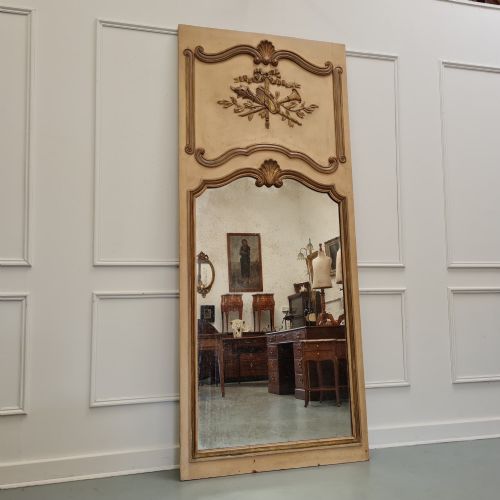


Painted Standing Mirror
A painted standing mirror brings hand-finished surface colour and full-height reflection into a room, offering both practical utility and decorative weight.
Painted Standing Mirror
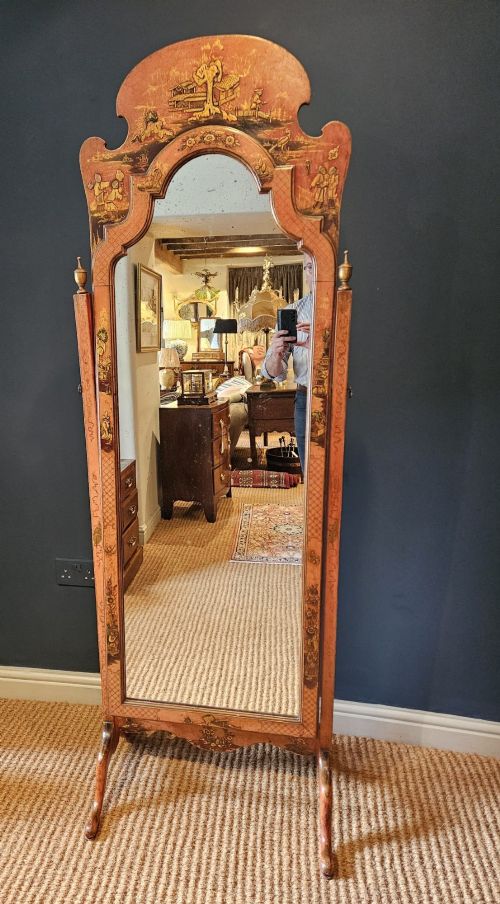
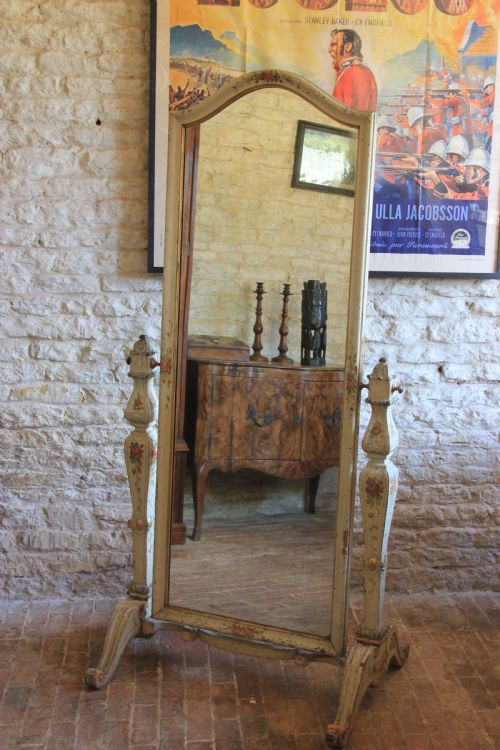
When searching for a painted standing mirror, a buyer meets substantial floor-standing pieces designed for dressing and interior display. The selections on this page span several decades, featuring cheval mirrors mounted on pivots, large floor-resting glasses, and adjustable vanity stands from the nineteenth and early twentieth centuries.
The forms originate from diverse design traditions, ranging from French revival styles with carved crests to Chinoiserie interpretations and simpler Edwardian shapes. Most examples serve as focal points in bedrooms or dressing rooms, where their height provides a complete vertical reflection alongside decorative painted or gilt finishes.
How they were made
Wood serves as the primary structural foundation for the frames and stands, often built from mahogany, kingwood, or softer timbers prepared to hold surface decoration. Gesso and carved wooden elements provide relief and moulded detail before the application of paint, gold leaf, or tinted varnishes.
Surfaces receive hand-applied paint finishes, sometimes layered over ebonised grounds or parcel gilt highlights to create depth. Metal components such as brass pivots, cast iron frames, and forged iron supports provide the mechanical strength needed to hold heavy glass plates securely.
Painted Standing Mirror Retail Price Guide 2026
Typical asking prices for painted standing mirror among the pieces listed under this phrase on Sellingantiques today, from the lower quarter to the upper quarter. They describe what is for sale here now, not the wider market.
Some nineteenth-century dressing mirrors included integrated swivel trays for pocket watches and cuff-links, anticipating the early commuter's morning rush.
What varies in quality
Quality rests in the execution of the surface decoration and the structural integrity of the timber frame. Finer examples display meticulous hand-painted details, subtle gilt work, and deeply carved wood and gesso ornamentation rather than flat, uniform factory coatings.
The weight and clarity of the glass plate, alongside the robust engineering of pivot mechanisms and support legs, separate standard utility pieces from substantial decorative items. Proportion and the crispness of carved mouldings further define the upper tier of these mirrors.
The Painted Standing Mirror Glossary
- Cheval mirror
- A freestanding full-length mirror suspended on a vertical frame with side pivots allowing the glass to tilt. This form became particularly popular for dressing rooms during the nineteenth century.
- Gesso
- A plaster-like mixture applied to wood frames to create a smooth surface for gilding or painting. It allows craftsmen to carve intricate relief decoration.
- Parcel gilt
- A decorative treatment where specific carved details or highlights are selectively covered in gold leaf while the rest of the surface is painted or polished.
- Trumeau mirror
- A decorative wall or standing mirror integrated into a wooden panel, frequently adorned with painted scenes or carved motifs in the upper section.
Painted Standing Mirror: Frequently Asked Questions
How do I secure a freestanding mirror?
Most standing mirrors rely on a stable base, wide feet, or an easel-style rear leg to maintain balance on level flooring. Placing them away from high-traffic areas prevents accidental tipping.
Heavier cheval mirrors can use floor anchors or discreet wall tethers attached to the upper frame if stability is a concern in busy households.
Can these mirrors be adjusted for angle?
Cheval mirrors utilise brass pivot screws fitted to the side standards, allowing the user to tilt the glass plate to the desired viewing angle. Tightening these fixings holds the mirror firmly in place.
Fixed-frame standing mirrors do not tilt and rely on their overall height and natural rake to provide the correct reflection for the room.
How do I clean a painted and gilt frame?
Dust frames gently using a dry, soft bristle brush or a clean microfibre cloth to protect delicate gesso and painted surfaces. Avoid using liquid cleaners or abrasive cloths near the edges where paint meets the glass.
Glass cleaner can be applied sparingly to the mirror plate itself, taking care not to let moisture seep behind the bevel or onto the wooden rabbet.
What rooms suit a standing mirror best?
Bedrooms and dressing rooms remain the traditional placement for full-height mirrors, providing practical utility for daily dressing and grooming. Their vertical presence helps bounce ambient light around private spaces.
Larger halls and reception rooms also accommodate these pieces well, where they expand perceived floor space and introduce decorative colour against neutral walls.