



Painted Silhouette Miniature
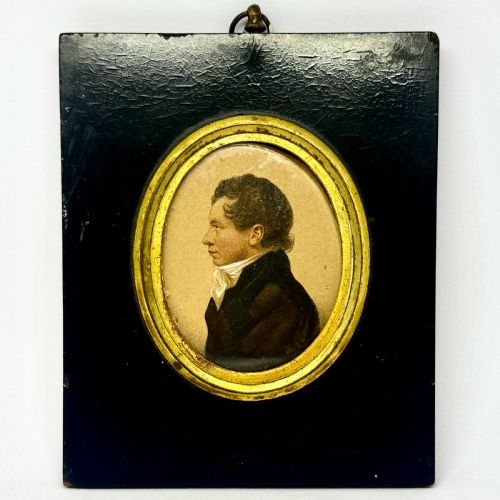
These painted silhouette miniature works capture a sitter's profile through delicate brushwork or reverse painting, offering an intimate glimpse into Georgian and Victorian likenesses.
Painted Silhouette Miniature
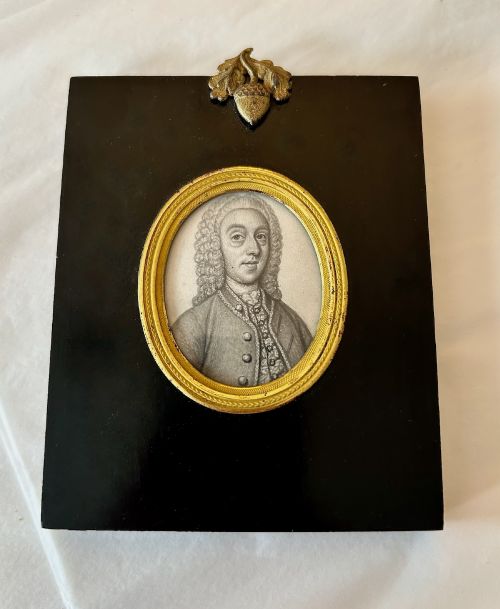
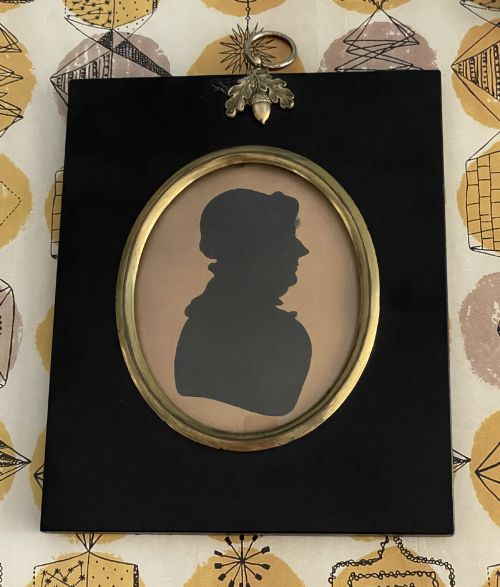
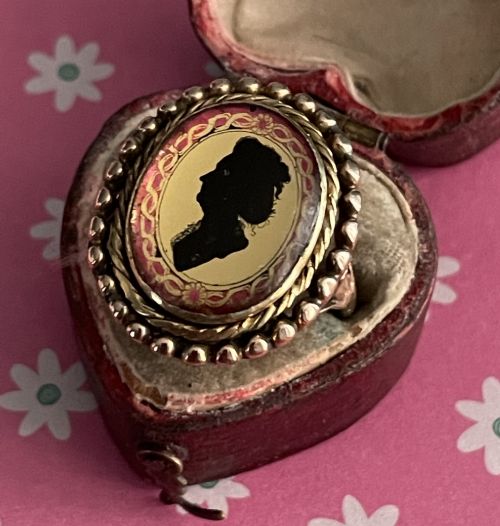
A painted silhouette miniature is a small portrait capturing the profile of a sitter, most commonly found in Georgian, Regency, and Victorian formats. These pieces take the form of framed wall art, pendants, rings, and portrait miniatures.
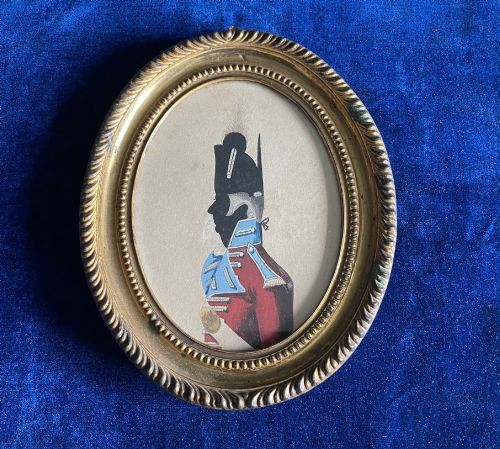
The examples on this page span from the eighteenth century into the Victorian era, showing subjects ranging from named sitters like Mrs Grace Williams to full-length studies of gentlemen. They appear in mediums such as watercolour, ink, and paint, often housed in traditional wood or brass frames.
How they were made
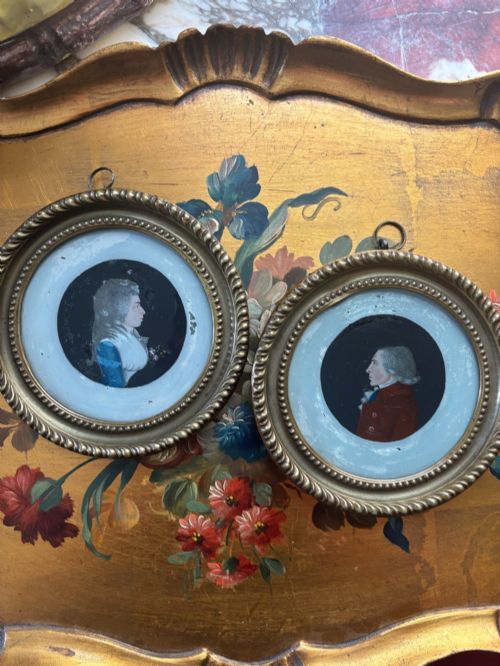
Makers applied paint, ink, and watercolour directly onto glass, paper, or plaster to build up the profile. Many Georgian and Regency examples utilise verre églomisé techniques, where the image is reverse-painted on glass and accented with gold leaf.
Finished portraits were set into brass, pear wood, or rosewood frames, or mounted into jewellery pieces such as rings and pendants to be worn close to the body.
Painted Silhouette Miniature Retail Price Guide 2026
Typical asking prices for painted silhouette miniature among the pieces listed under this phrase on Sellingantiques today, from the lower quarter to the upper quarter. They describe what is for sale here now, not the wider market.
Listings feature works spanning from the 18th century through the Regency period to the Victorian era, executed on glass, paper, and plaster.
What varies in quality
Quality also depends on the preservation of the original setting, whether a rosewood frame, a brass mount, or a dedicated jewellery casing, alongside the clarity of any accompanying signatures or provenance.
John Miers·J. Deacon·John Smith of Edinburgh
The Painted Silhouette Miniature Glossary
- Verre eglomise
- A cold-painting technique on glass incorporating gold or metal leaf applied to the reverse side. This method creates a reflective backdrop that enhances the painted silhouette.
- Profile
- The side-view outline of a sitter's face, which forms the core subject of every silhouette miniature. It relies purely on contour and minimal shading to convey identity.
- Reverse painted
- A method where the artist paints the image on the back of a glass panel so that it is viewed through the front. This protects the pigment and adds depth to the portrait.
- Plaster
- A solid backing material used by certain makers to provide a smooth, matte surface for silhouette painting. It allows for crisp edges compared to fibrous paper.
Painted Silhouette Miniature: Frequently Asked Questions
How do I display a painted silhouette miniature?
These framed artworks and portrait miniatures suit small wall spaces where their intricate detail can be appreciated up close. Keeping them out of direct sunlight protects the delicate watercolours, paints, and gold leaf accents.
Jewellery pieces like rings and pendants are best housed in protective display cases when not being worn. Their small scale allows them to sit comfortably alongside other period objects on a desk or shelf.
Are all silhouettes painted on glass?
While reverse painting on glass is common, especially during the Georgian and Regency periods, artists also used paper and plaster as grounds for their work. Each material yields a different finish, from the reflective depth of glass to the matte surface of plaster.
Examining the backing through the frame usually reveals the chosen medium. The surrounding materials, such as brass mounts or pear wood frames, often correspond to the period of manufacture.
How do I date a silhouette miniature?
Dating relies on the costume of the sitter, the framing style, and any signatures or inscriptions on the reverse. Regency pieces frequently feature distinctive hairstyles and high-collared attire, while Victorian examples show later fashions.
Written notes or signatures on the back, such as those by known practitioners, help narrow down the decade. The presence of materials like rosewood frames or gold leaf points towards Georgian and Regency production.