

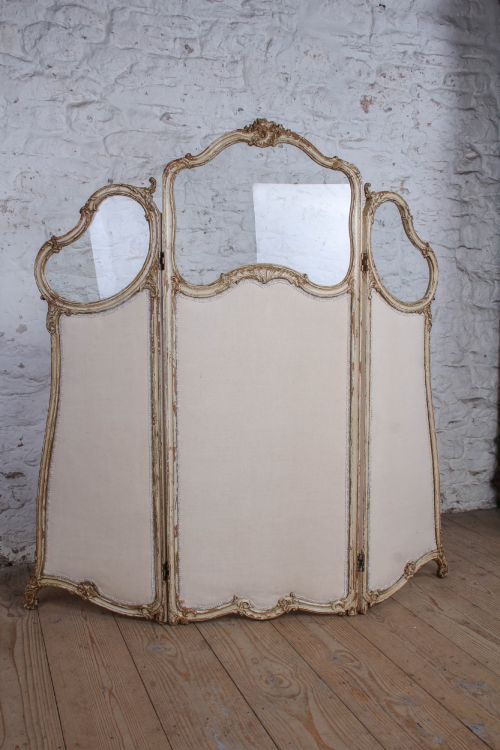

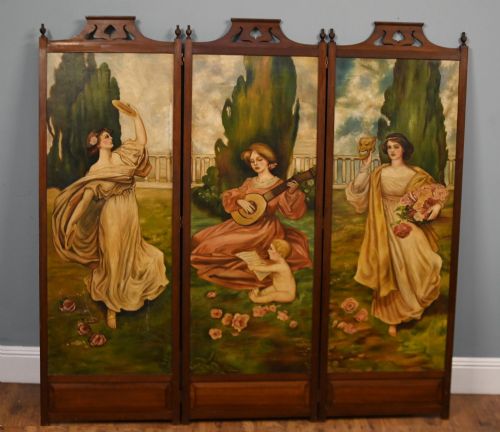
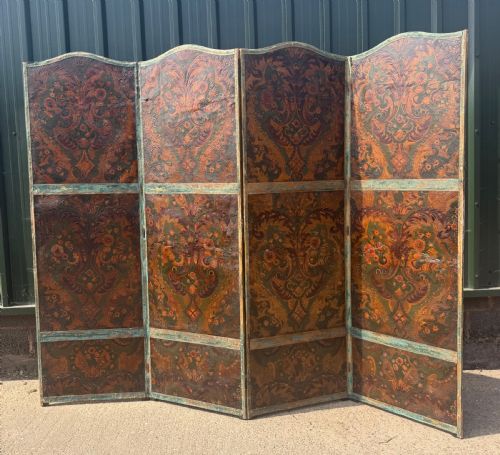

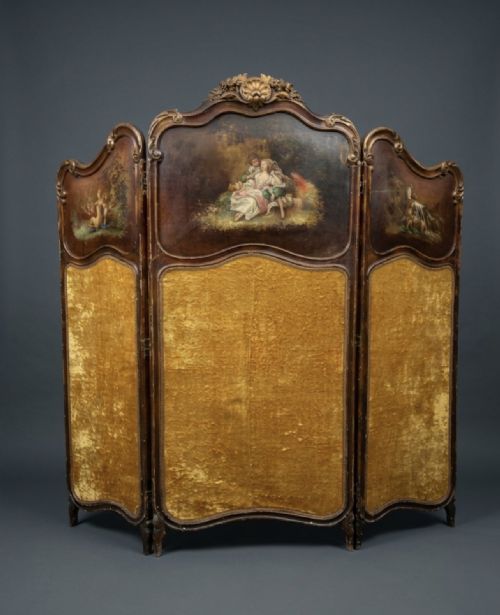
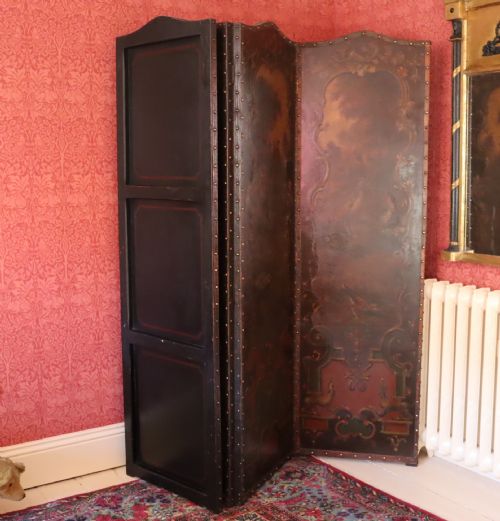


Painted Privacy Screen
A painted privacy screen offers instant division of space while bringing rich artistic detail into a room.
Painted Privacy Screen
A painted privacy screen serves as both a functional room divider and a decorative focal point within an interior space. These folding pieces partition large rooms or obscure specific areas while introducing colour and narrative illustration directly onto the panels.
The versions most commonly met on this page span the eighteenth, nineteenth, and early twentieth centuries, encompassing styles from Victorian interpretations to Chinese Republic Era lacquerwork and French pastoral scenes.
Makers utilised multi-fold constructions, typically ranging from three to six panels hinged together, allowing the screen to fold flat for storage or angle to suit the floor plan.
Materials and construction
Substantial timber frames in walnut or native wood support flexible panels of leather, canvas, or paper. Artisans applied oil paint, lacquer, and gilt embossing directly to these surfaces, frequently building up polychrome decoration.
Hardware such as brass hinges joins the individual folds, permitting articulation in both directions. Lacquered and leather examples demand specialised ground preparation before the final hand-painted motifs are executed.
Painted Privacy Screen Retail Price Guide 2026
Typical asking prices for painted privacy screen among the pieces listed under this phrase on Sellingantiques today, from the lower quarter to the upper quarter. They describe what is for sale here now, not the wider market.
Listings feature periods ranging from the eighteenth century to the 1950s, utilising materials such as leather, canvas, lacquer, and timber.
Assessing quality and execution
The distinction between tiers of work rests on the depth of the hand-painted detail and the integrity of the materials. Finely rendered pastoral scenes, intricate Chinoiserie hardstone mounts, and deeply embossed Cordoban leather elevate a piece far above simpler commercial decoration.
Structural stability in the wooden frames and the original quality of the hinges also dictate the worth of a screen. Superior execution shows in the crispness of the brushwork and the preservation of the painted surface across all panels.
The Painted Privacy Screen Glossary
- Cordoban leather
- Heavy leather decorated with rich tooling, paint, and gilding, originating from Spain. It provides a durable and luxurious surface for intricate room dividers.
- Chinoiserie
- European artistic style reflecting Chinese motifs and techniques, popular in lacquer and painted furniture. It brings fanciful landscapes and figures to panels.
- Polychrome
- Decorated in multiple colours. This describes screens featuring varied painted hues across their canvas or leather surfaces.
- Modesty screen
- A small folding screen historically used to shield someone from draughts or direct view. These pieces function on a more intimate scale than full room dividers.
Painted Privacy Screen: Frequently Asked Questions
How do I use a privacy screen?
Place the screen to section off a dining area within a larger living space or to create a secluded dressing corner in a bedroom. The hinged panels allow you to angle the structure to fit the dimensions of the room.
Position the screen away from direct heat sources and strong sunlight to protect the painted canvas, leather, or lacquer surfaces from fading and cracking over time.
How are wooden and leather screens cleaned?
Dust the frames and panels gently with a soft, dry microfibre cloth to remove surface particles. Avoid liquid cleaners, oils, or harsh chemicals that can damage aged oil paint and delicate gilt work.
Professional restoration is recommended if the leather or painted canvas shows signs of flaking or structural tearing. Regular gentle maintenance prevents the accumulation of grime in the crevices of the panels.
What periods do these screens date from?
The pieces span from the eighteenth century through the nineteenth century and into the early twentieth century. Listings include Victorian examples alongside Chinese lacquerwork and French pastoral designs.
Each period brings distinct stylistic traits, from heavy gilt-embossed leather to hand-painted canvas and intricate fretwork.
Are these screens stable on carpets?
Folding screens stand securely when the panels are angled rather than stretched completely flat. This zigzag arrangement distributes the weight and prevents tipping.
On thick carpets, ensure the hinges move freely and that the bottom edges of the panels rest evenly without straining the joints.