
Painted Porcelain Cup
A painted porcelain cup brings hand-applied botanical scenes, landscapes, and gold enrichment from eighteenth and nineteenth-century kilns directly to the table.
Painted Porcelain Cup
A painted porcelain cup combines utilitarian tea and coffee drinking vessels with fine ceramic artistry, spanning the eighteenth and nineteenth centuries.
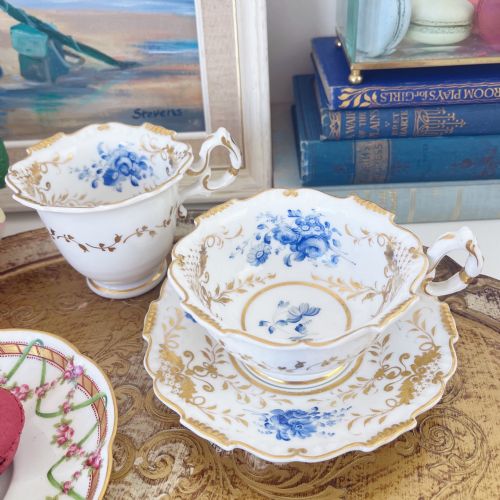
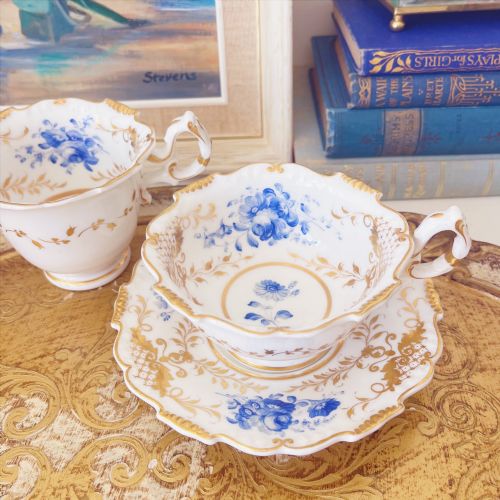
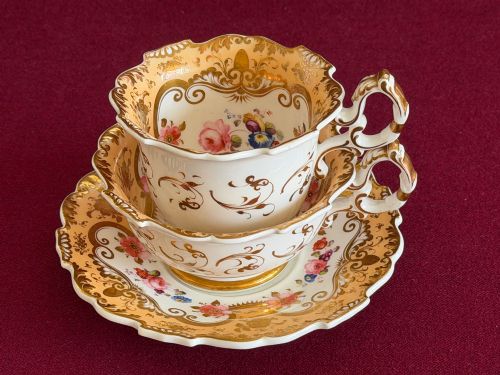
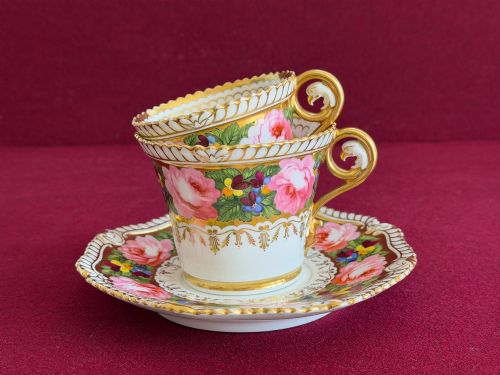
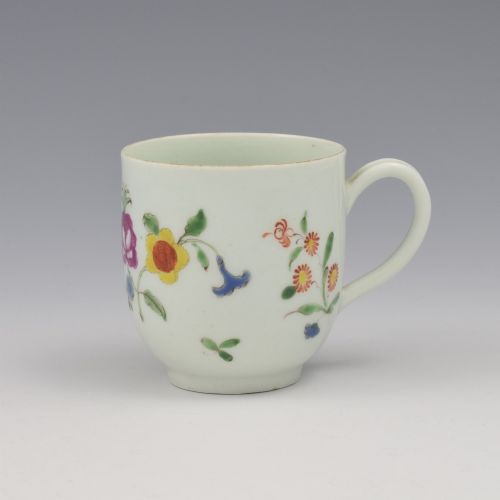
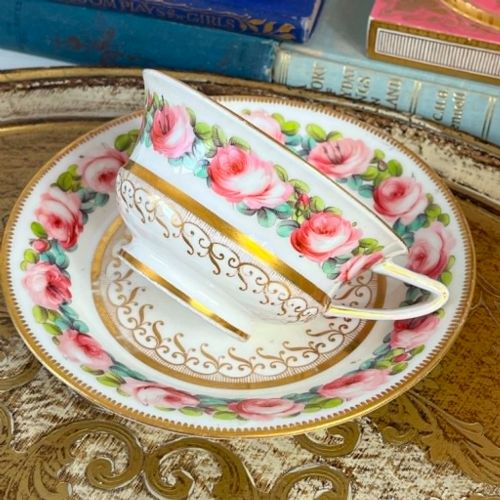
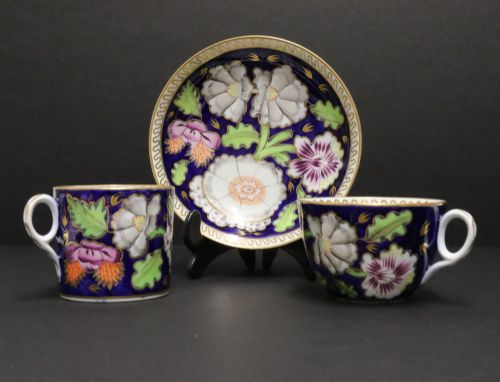
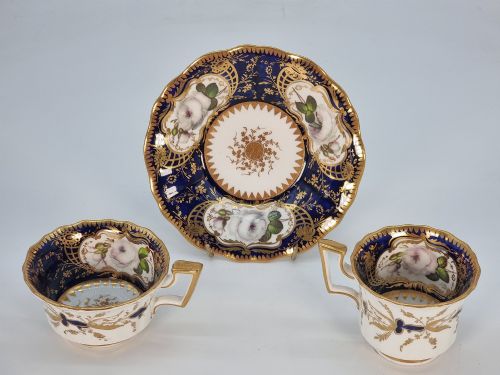
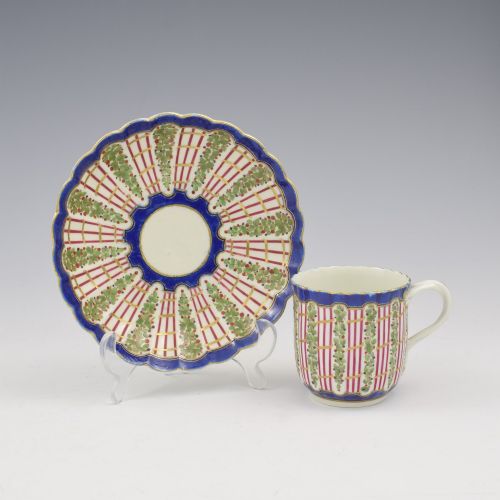
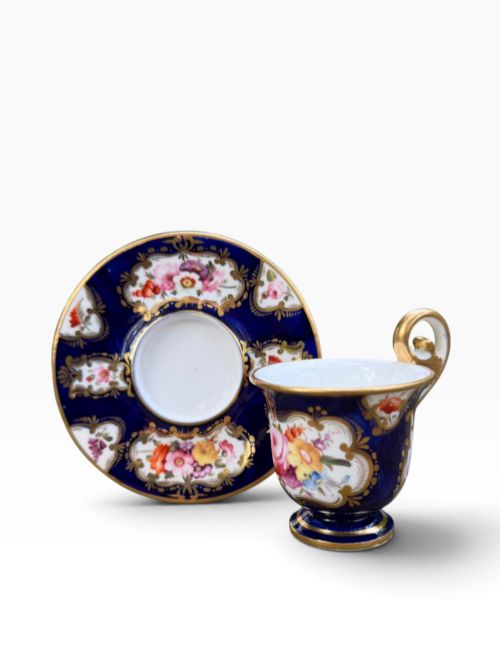
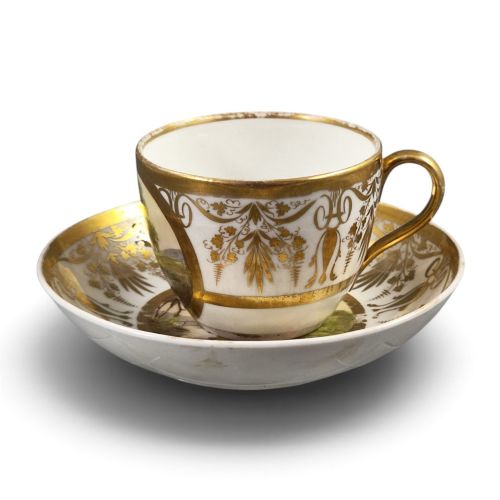
The version most likely to meet the buyer on this page is the Regency or Georgian cabinet trio, teacup, or coffee can decorated with handpainted florals, landscapes, or gilt accents.
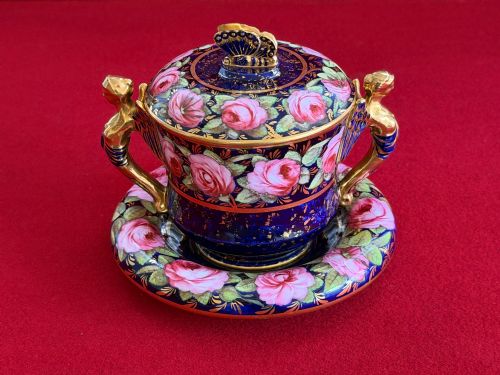
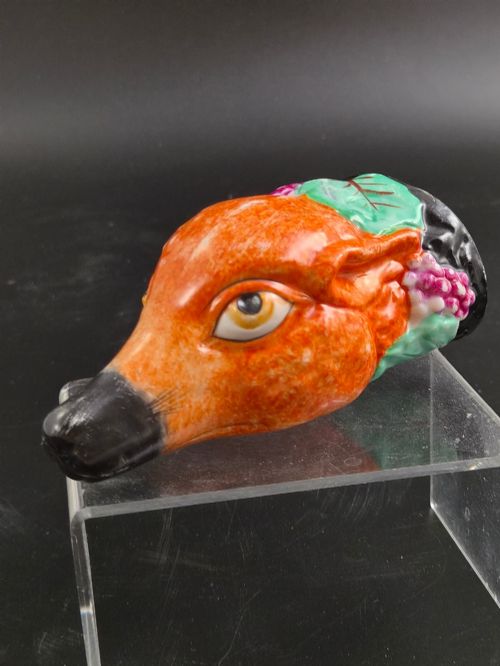
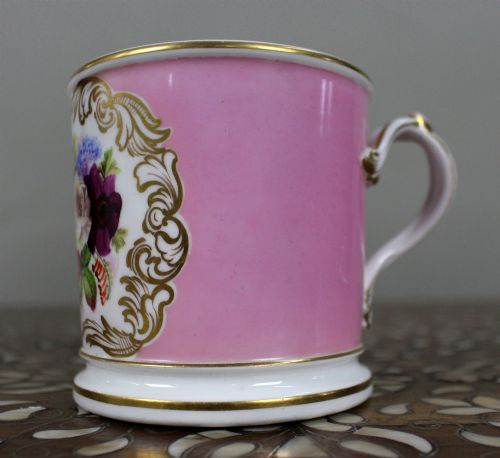
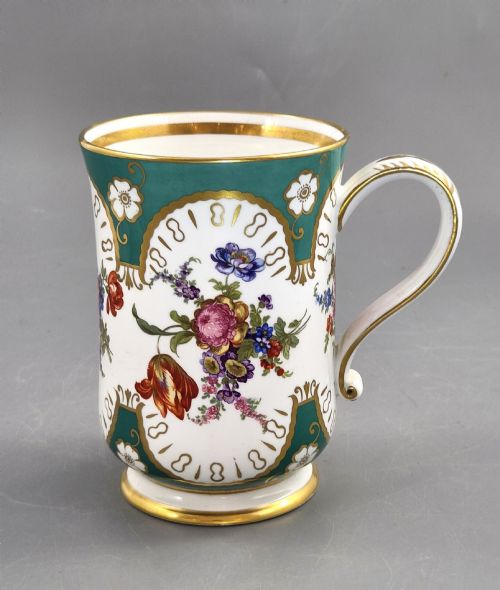
Forms extend from standard teacups and saucers to specialised pieces such as chocolate cups, porter mugs, stirrup cups, and loving cups.
How they were made
Potters utilised soft-paste and hard-paste porcelain alongside bone china and felspar porcelain, shaping them into handled cups, cans, and mugs.
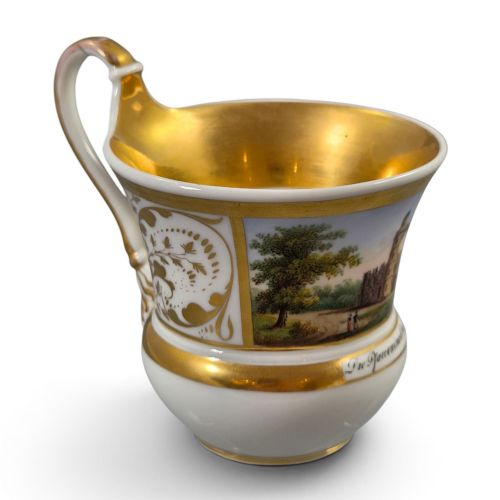
Decoration relied upon handpainted polychrome enamels, botanical studies, topographical scenes, and sepia motifs combined with gold leaf and extensive gilding.
Periods represented on the page range across the eighteenth, nineteenth, and early twentieth centuries, including Georgian, Regency, and Victorian eras.
What varies in quality
The precision and detail of the handpainted enamel work separates standard production pieces from master-painted cabinet cups featuring landscapes or figures.
The application of heavy gilding, gold leaf, and specialised ground colours such as rose pompadour or green ground dictates the standing of the piece within its period.
H & R Daniel·Chamberlain Worcester·Spode·Richard Chaffers·Coalport·Grainger Worcester·Dr Wall Worcester·KPM Berlin·Bloor Derby·Flight & Barr·Rockingham·Yates Leeds·Minton·Ginshōtei Gyokushi·Derby·Sevres·Royal Worcester·Copeland & Garrett
The Painted Porcelain Cup Glossary
- Soft-paste porcelain
- An early artificial porcelain body composed of white clay and glass frit, fired at lower temperatures than true hard-paste porcelain.
- Coffee can
- A straight-sided cylindrical porcelain cup designed for drinking strong black coffee during the Georgian and Regency eras.
- Cabinet cup
- A decorative display cup and saucer made primarily for visual appreciation in a glazed cabinet rather than for daily tea service.
- Ground colour
- A solid background glaze or enamel applied across the porcelain surface, such as green, pink, or turquoise, before further painting.
- Trio
- A matched set consisting of a teacup, a coffee cup, and a matching saucer.
Painted Porcelain Cup: Frequently Asked Questions
What is a coffee can?
A coffee can is a straight-sided, cylindrical cup manufactured without a traditional footed handle loop during the Georgian and Regency periods.
These pieces were specifically intended for serving strong black coffee after meals rather than taking milked tea.
How do I identify a cabinet cup?
Cabinet cups are typically heavier, highly decorated display pieces featuring topographical landscapes, portraits, or elaborate gilt borders.
They were designed to sit inside glass-fronted furniture to showcase wealth and taste rather than for regular dining use.
What is the difference between hard-paste and soft-paste?
Soft-paste porcelain is an artificial mixture containing glass and white clay fired at lower heats, common in eighteenth-century English factories.
Hard-paste porcelain utilises true kaolin and petuntse fired at much higher temperatures to create a denser, more vitreous body.
How were these cups used?
These vessels served high-status hot beverages including tea, chocolate, and coffee across polite society in the Georgian and Victorian eras.
Specialised forms like chocolate cups included covers to retain heat, while loving cups and stirrup cups fulfilled communal and ceremonial drinking roles.