




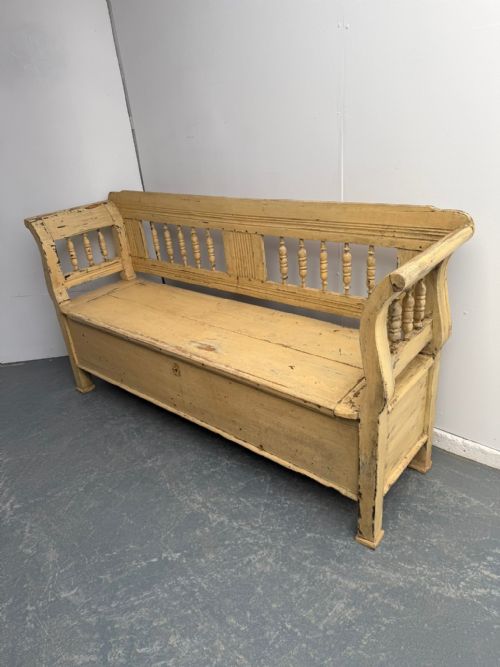
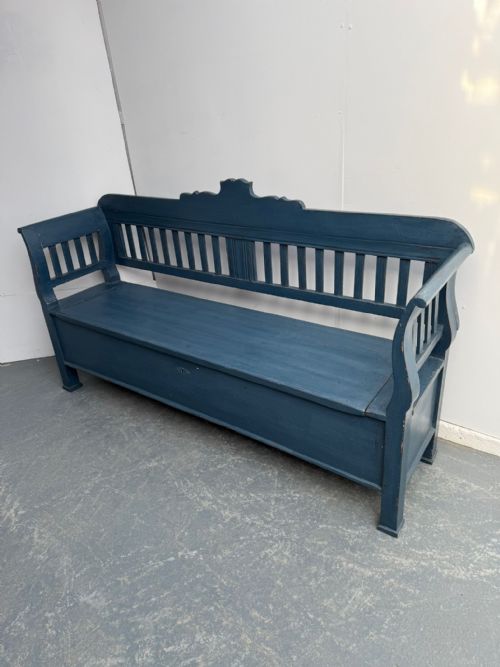
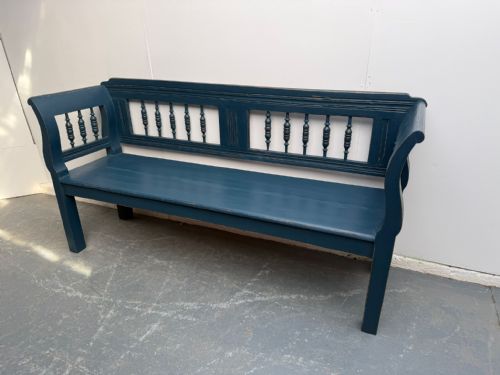

Painted Pine Settle Bench
A painted pine settle bench brings practical seating and enclosed storage together, offering robust vernacular character for any hallway or kitchen.
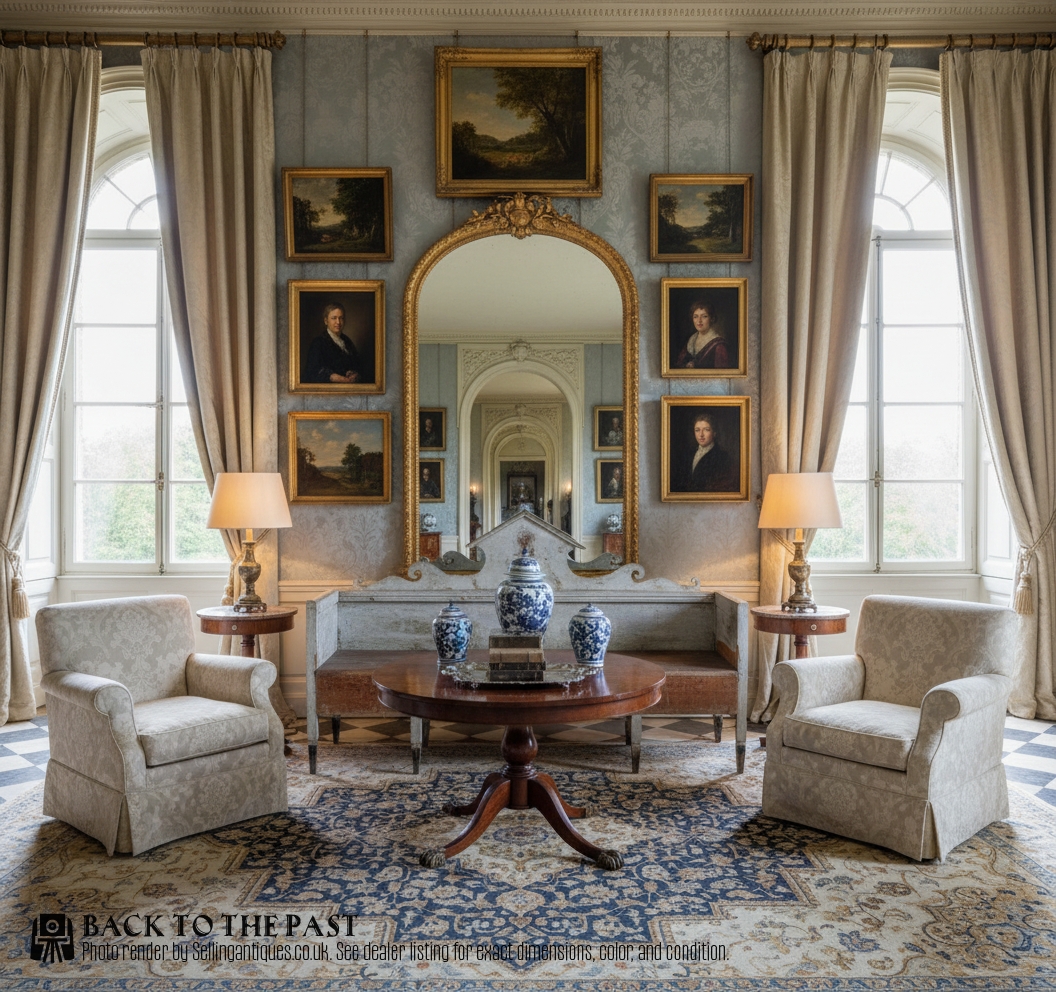
Painted Pine Settle Bench
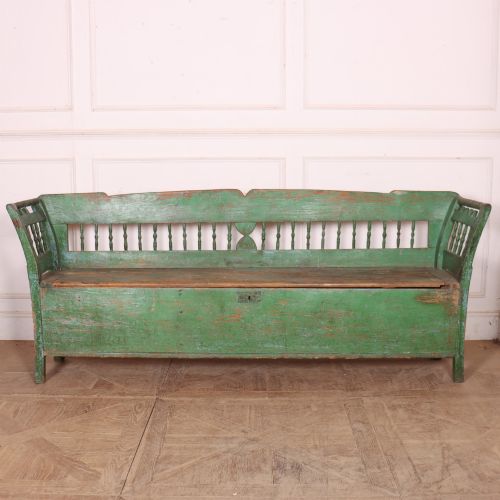
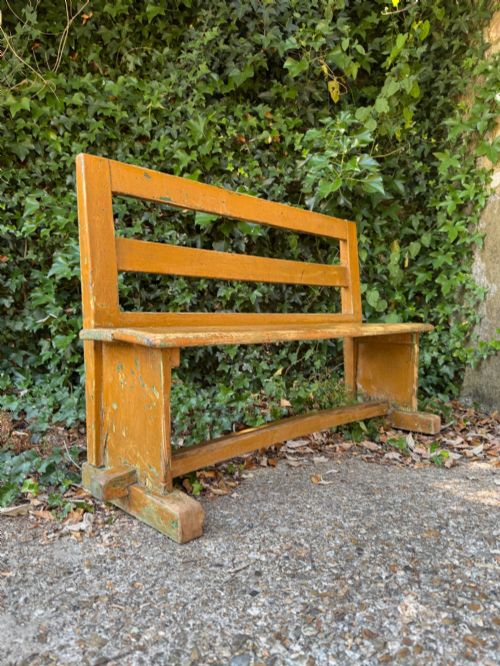
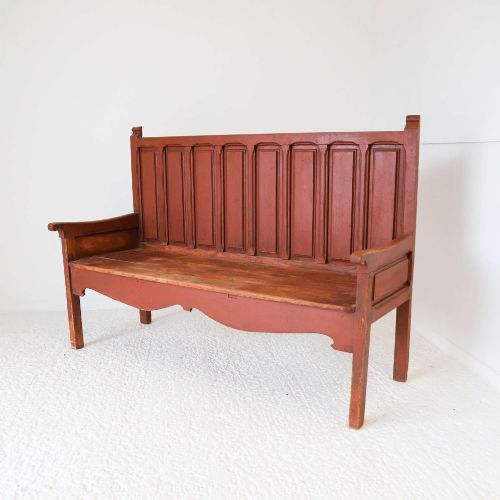
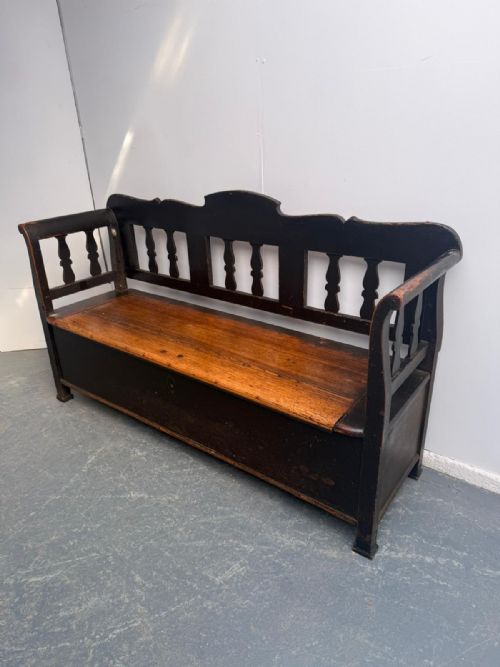
A painted pine settle bench combines a high-backed wooden seat with enclosed lower storage, often taking the form of a box settle or storage bench designed to block draughts in older homes. These pieces emerge from regional vernacular traditions across England, Wales, Spain, France, and central or northern Europe, spanning the eighteenth, nineteenth, and early twentieth centuries.
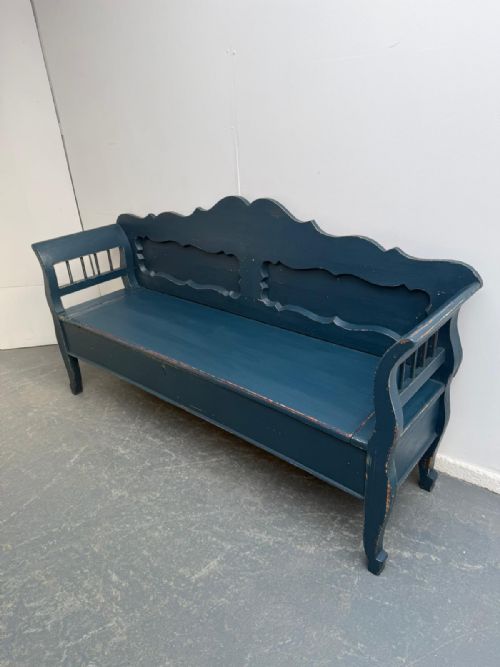
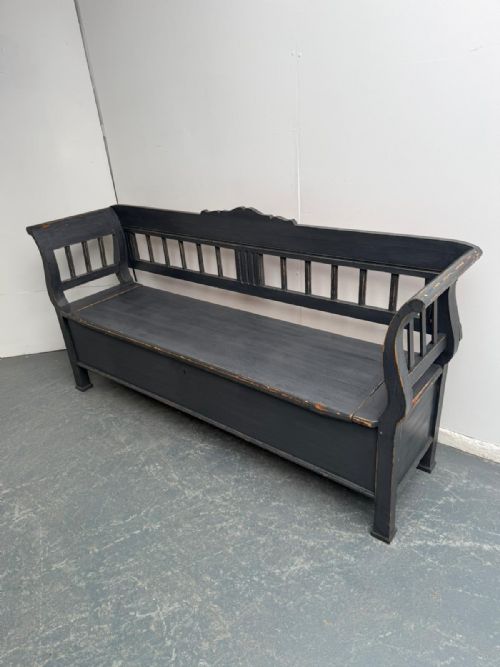
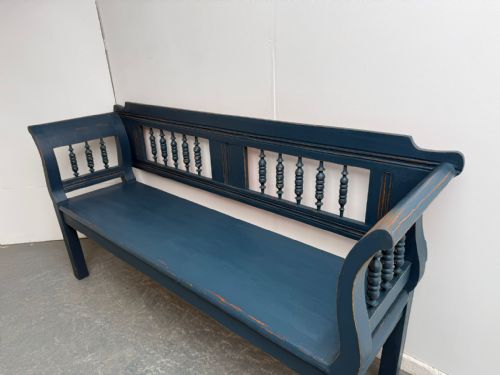
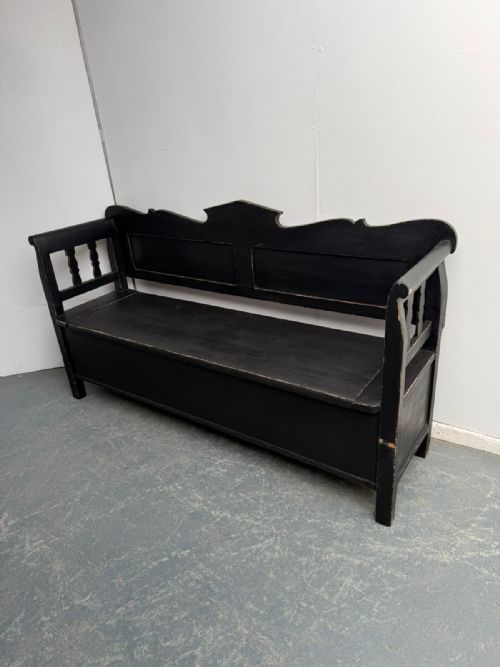
The versions most commonly met on this page include nineteenth-century Hungarian three-seater box settles in original blue, grey, or black paint, alongside Swedish and Austrian farmhouse benches. English and Welsh tavern benches and high-back settles also appear frequently, alongside smaller folk art and Arts and Crafts examples.
Materials and construction
Makers built these pieces primarily from solid pine and native timbers, utilising robust pegged or jointed construction suited to heavy domestic use. Iron hinges, brackets, and fixings frequently reinforce the lids of box settles and storage benches.
Surfaces were frequently finished with layers of paint, ranging from functional lead-based pigments to decorative folk art motifs. Over decades, this paint has weathered and worn, preserving original blue, green, grey, cream, black, and scumble finishes beneath subsequent patination.
Several Hungarian pieces retain generations of farmhouse dust settled deep inside their box seats like an invisible regional passport.
What separates the best from the rest
The survival of early or original painted finishes largely determines desirability, as untouched historic pigment carries greater character than later overpainting. Pieces retaining their genuine surface paturation show authentic softening of edges and corners.
Proportions and structural integrity also separate standard regional seating from finer vernacular forms, such as high-backed settles with integrated box storage, neat proportions, or unusual regional detailing like scumble graining.
The Painted Pine Settle Bench Glossary
- Settle bench
- A wooden seat featuring a high back designed to keep out cold draughts, frequently incorporating a box base for storage. They traditionally stood near hearths in farmhouses and taverns.
- Box settle
- A variant of the settle featuring a hinged seat lifting to reveal a deep storage compartment underneath. This design doubled as a blanket chest or general household storage.
- Scumble
- A decorative painting technique where a translucent glaze is dragged or manipulated over a lighter base coat to imitate wood grain or create textured patterns. It appears on primitive regional pine furniture.
- Vernacular
- Everyday furniture built by local craftsmen to practical designs rather than following formal academic style dictates. These pieces reflect the regional materials and domestic needs of their makers.
- Folk art
- Decorative painting and carving traditions rooted in regional culture rather than academic fine art. Hungarian, Austrian, and Scandinavian examples often display these distinctive regional motifs.
Painted Pine Settle Bench: Frequently Asked Questions
How do I use a settle bench at home?
These benches suit narrow hallways, boot rooms, or large country kitchens where their high backs create a defined seating nook. The internal box storage accommodates shoes, blankets, or household items out of sight.
Ensure adequate wall clearance for the high backrest, and position the bench away from direct heat sources to protect the historic timber and paint layers.
How do I identify original paint?
Original paint shows natural wear, subtle crazing, and gradual softening around high-touch areas like armrests and seat edges. Traces of early pigment often survive beneath accumulated layers of domestic history.
Inspect the surface closely in natural light to spot uniformity that suggests modern re-painting rather than genuine historic patination.
Where were these benches made?
The pieces originate from regional workshops across Britain and continental Europe, including rural England, Wales, Hungary, Sweden, Austria, France, and Spain. Each region developed distinct proportions, construction methods, and painting traditions.
Hungarian and Scandinavian examples often feature vibrant folk art colours and box-seat designs, while Welsh and English variants tend toward tavern settles and high-back pine forms.