
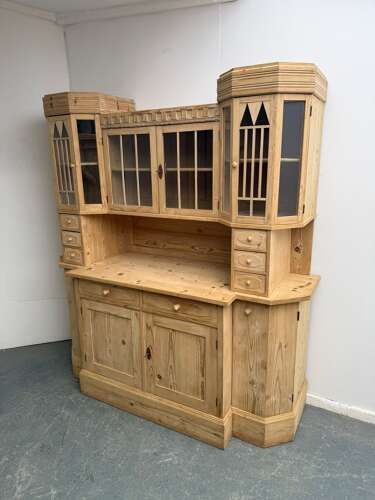
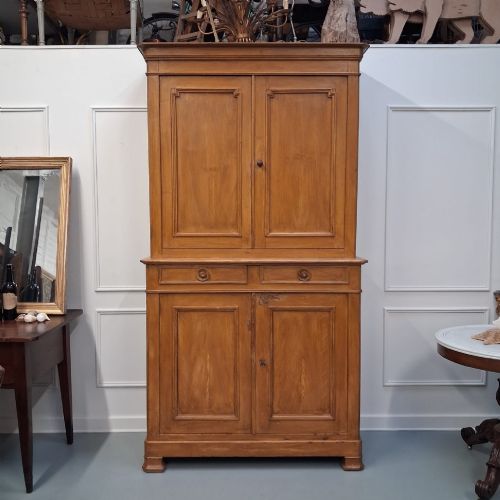
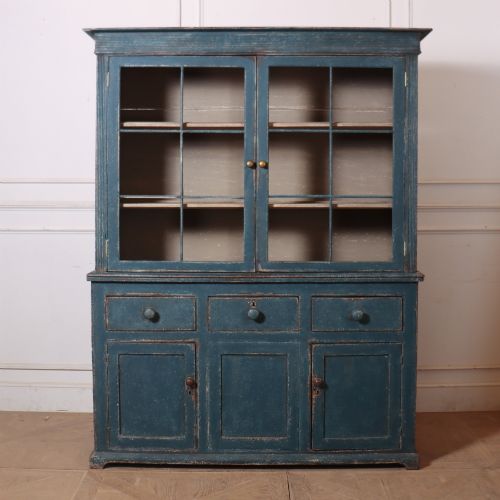
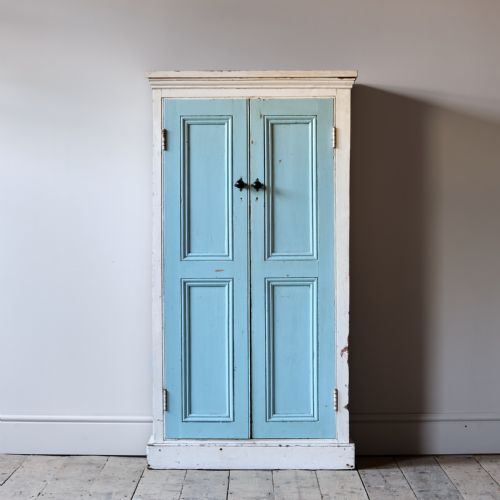

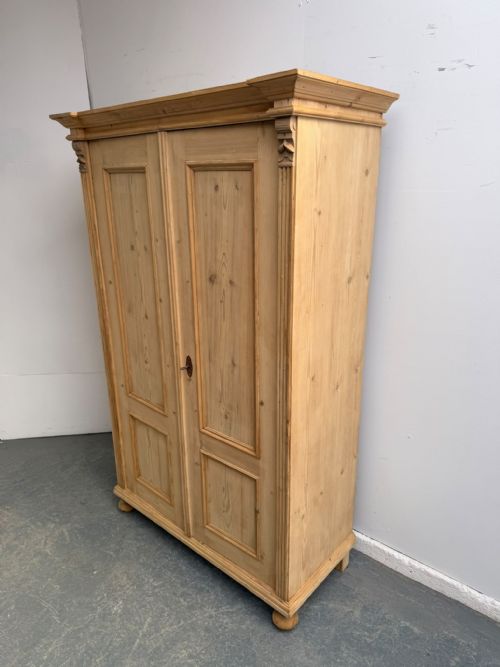
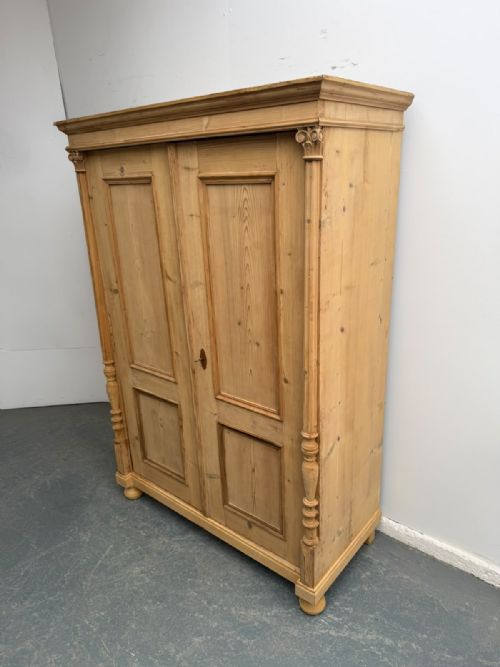
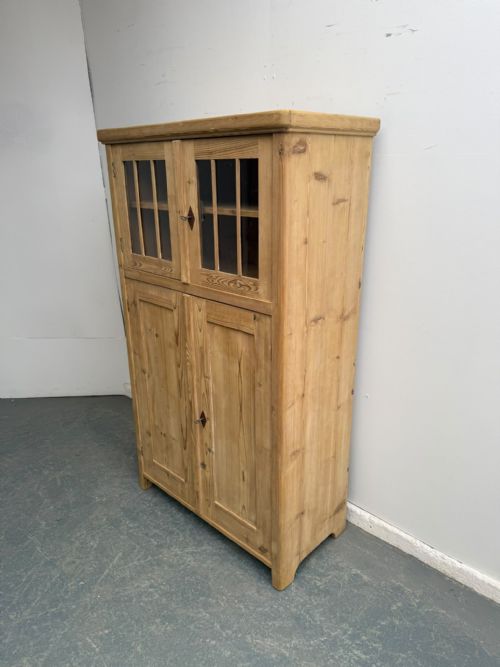
Painted Pine Larder
A painted pine larder is a utilitarian kitchen storage piece offering generous interior volume, highly sought after for bringing practical storage and character to modern country interiors.
Painted Pine Larder
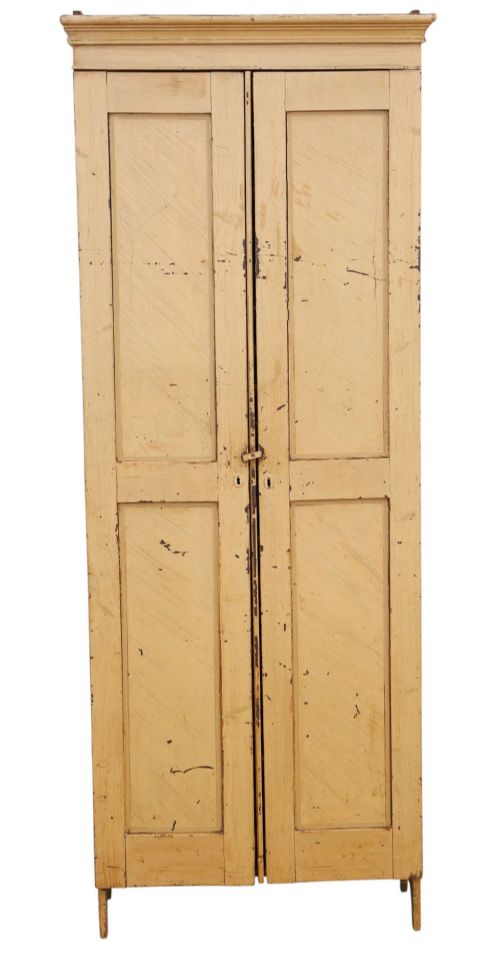
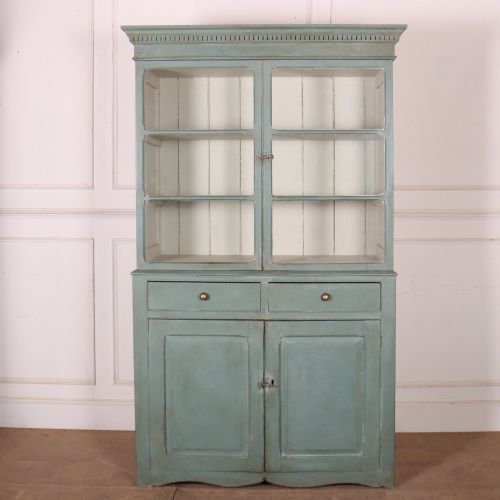
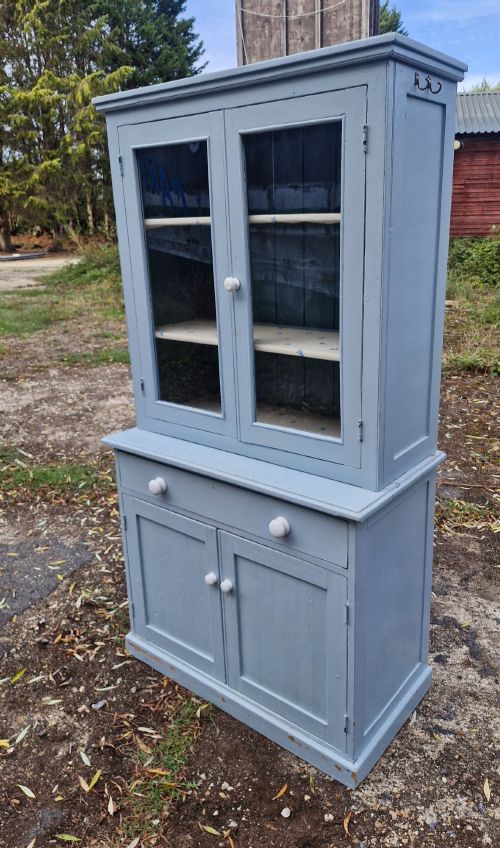
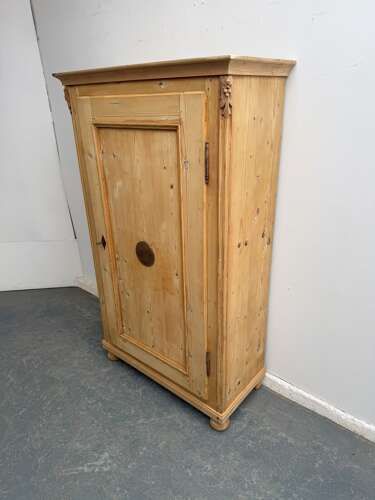
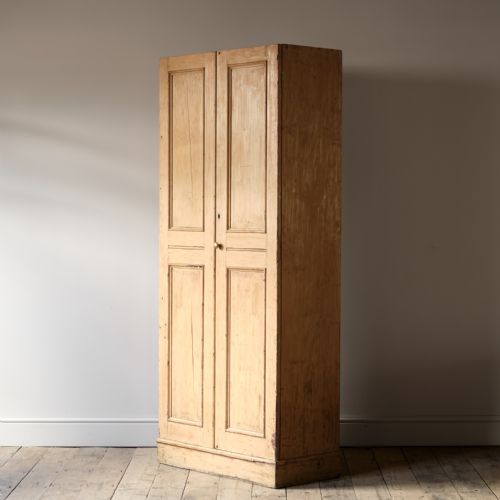
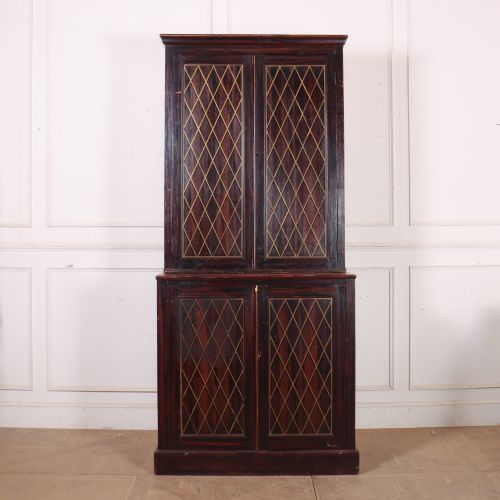
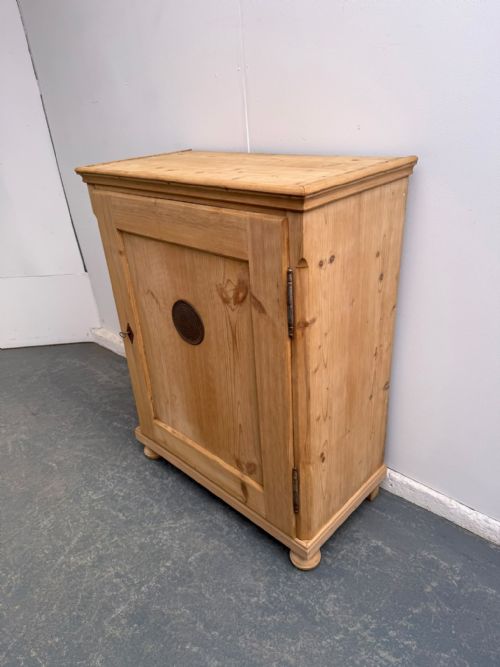
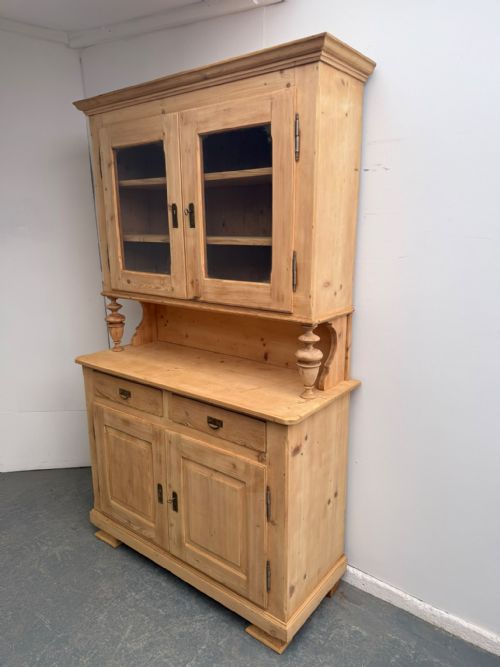
A painted pine larder serves as a robust kitchen storage solution, originating primarily from the Victorian and 19th-century periods. These freestanding storage pieces take various forms, including single and multi-door cupboards, housekeeper cupboards, and kitchen dressers.
The most common examples encountered on this page date from the Victorian era and the broader 19th century, often constructed as tall, two-part, or single-piece storage units. Regional influences appear across English, French, Scandinavian, and Hungarian pieces, alongside specific vernacular forms like bread and cheese cupboards and vented food cupboards.
Makers historically built these cupboards using sturdy softwood, applying layers of paint either originally or during later periods to protect the wood and suit domestic tastes. Buyers select these items to anchor a kitchen or utility room with authentic period storage that accommodates contemporary provisions and tableware.
Materials and construction methods
Makers constructed these larders predominantly using pine and painted wood, supported by functional iron and brass hardware such as hinges, latches, and drawer pulls. Glass frequently appears in glazed cabinet doors and display sections, allowing visibility into upper storage compartments.
Joinery methods on these pieces focus on utility and durability, incorporating fielded panels, beaded edges, and occasionally carved details on country and regional examples. Surfaces often feature original paint layers or later applications of paint and wax, reflecting decades of domestic use and maintenance.
Materials recorded across the inventory include solid pine, glass panels, iron hardware, brass fixtures, and traditional painted wood finishes.
Distinctions in quality and proportion
Quality in a painted pine larder rests on the integrity of its original proportions, the balance between depth and height, and the survival of original painted surfaces. Pieces retaining early or original paint schemes carry greater authenticity than those stripped or repeatedly repainted.
Internal configuration also separates standard utility pieces from superior examples, particularly those featuring well-fitted shelving, functional drawers, and intact ventilation panels or wire mesh. The joinery standard, from solid one-piece constructions to two-part modular formats, dictates the structural longevity of the cupboard.
The Painted Pine Larder Glossary
- Housekeeper's Cupboard
- A large storage piece traditionally used in domestic service for linens, dry goods, and provisions, usually featuring multiple doors and internal shelving.
- Fielded Panel
- A central wooden panel with bevelled or thinner edges designed to fit into a grooved frame, allowing the wood to expand and contract without cracking.
- Vented Cupboard
- A storage unit incorporating pierced wooden panels, fabric, or wire mesh inserts intended to circulate air around food items before mechanical refrigeration.
- Bread and Cheese Cupboard
- A regional vernacular food cupboard specifically ventilated to store perishable dairy and baked goods in a domestic kitchen.
- Two-Part Cupboard
- A large storage cabinet constructed in two separate modular sections stacked vertically to ease transport and placement in domestic spaces.
Painted Pine Larder: Frequently Asked Questions
How were painted pine larders used originally?
These cupboards served as the primary food and provision storage in domestic kitchens before the widespread adoption of domestic refrigeration. Households relied on them to store dry goods, cured meats, dairy, and baking supplies.
Larger variants like housekeeper cupboards also accommodated household linens, crockery, and preserves. Their internal shelving and ventilated doors kept perishables protected from pests while maintaining airflow.
How do I care for a painted pine larder?
Maintain painted pine larders by dusting them regularly with a dry cloth and avoiding modern chemical cleaning products that can damage historic paint surfaces. Keep them away from direct heat sources and severe humidity fluctuations to prevent the pine from warping.
Treat original painted surfaces with care, as aggressive cleaning will strip the historic patination accumulated over the centuries. Wax finishes on unpainted sections benefit from occasional traditional beeswax application to nourish the timber.
Are these cupboards suitable for modern kitchens?
These pieces integrate effectively into contemporary kitchens and pantries as freestanding storage for modern groceries, tableware, or linens. Their deep shelves and tall proportions provide substantial capacity without requiring fitted kitchen installation.
Buyers often place them in utility rooms, dining spaces, or open-plan kitchens to introduce practical storage alongside traditional period character.
How can I tell the period of a pine larder?
Dating relies on examining construction techniques, hardware, and timber characteristics rather than relying solely on surface paint. Georgian and early 19th-century examples often display hand-planed boards, pegged joints, and wrought iron hinges.
Victorian and Edwardian pieces frequently incorporate machine-sawn timber, standardised brass hardware, and factory-produced mouldings. Original paint layers, where retained, also offer clues through their pigment composition and application style.