


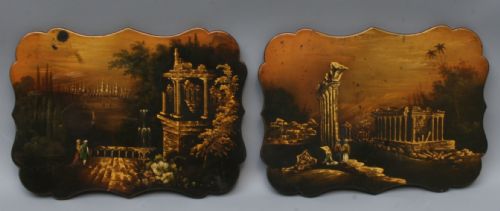

Painted Papier Mache Art
These painted papier mache art objects bring hand-rendered ornament and miniature detail to desks and walls through lacquered finishes and gilded highlights.
Painted Papier Mache Art
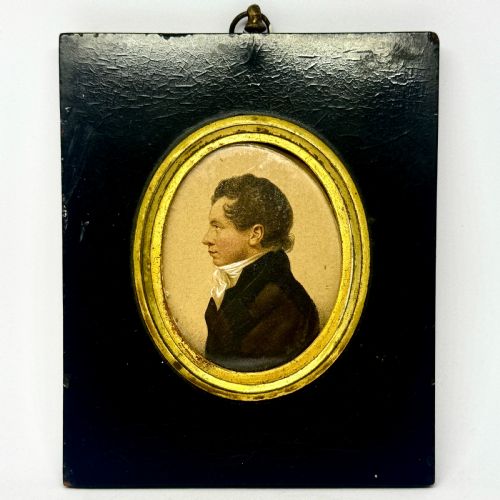
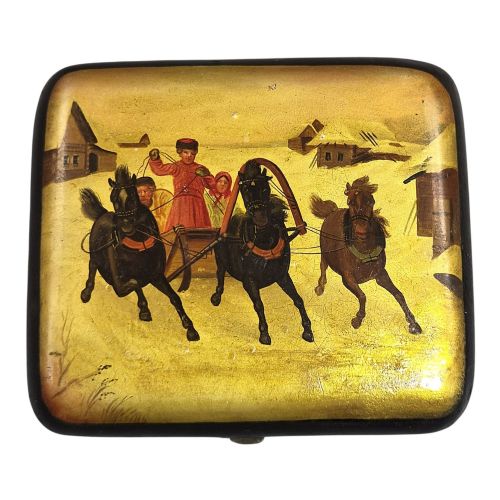
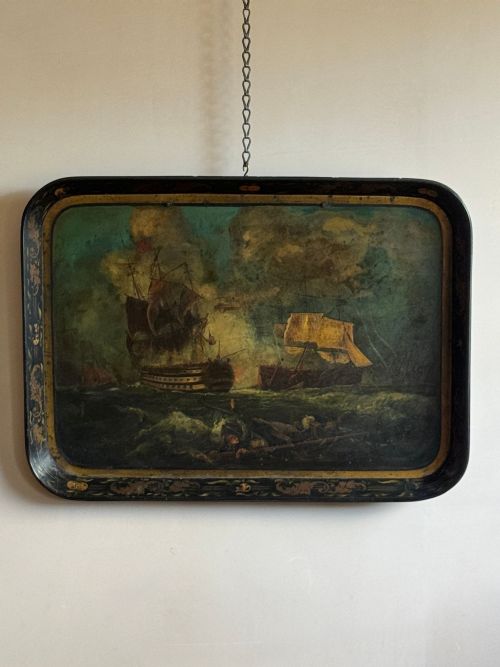
When you search for painted papier mache art, you encounter a diverse gathering of small decorative forms spanning portrait miniatures, lacquer cigarette cases, wall plaques, and desk sets. The examples here cross several distinct periods, including Georgian, Regency, Victorian, and later twentieth century output, reflecting how makers used moulded paper pulps as a canvas for fine brushwork.
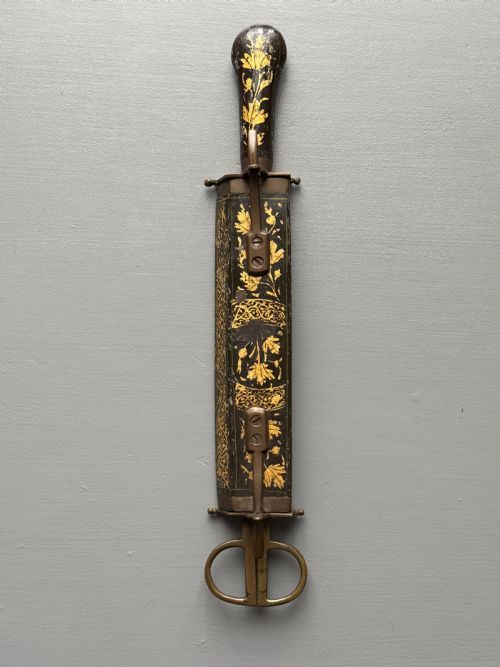
You are most likely to meet Regency and nineteenth century trays, boxes, and panels alongside folk art figures such as paper mache cows and bulls from the 1920s. These pieces range from British japanned wares to Imperial Russian lacquer and Qajar Persian items, each carrying specific regional traditions in paint and varnish.
The assortment also encompasses silhouette portraits and framed plaques, demonstrating that this medium served both utilitarian functions like snuff boxes and purely visual roles as wall art. Every item relies on the combination of a dense paper substrate and a meticulously painted surface to achieve its finished character.
Materials and construction methods
Makers built the foundational structures using layers of paper pulps or pasted sheets bound together, which dried into a rigid, durable material capable of holding crisp moulded details. This papier-mache base was then smoothed and sealed before receiving coats of dark lacquer or japanning ground.
Surface decoration frequently incorporated gold leaf, brass accents, and detailed watercolour or oil painting applied directly to the prepared ground. Artisans finished these works with multiple protective varnish layers that preserved the delicate pigments underneath while adding depth to the painted scenes.
Listings feature items spanning the Georgian, Regency, and Victorian periods alongside twentieth-century folk art sculptures.
Distinguishing quality in the work
The integrity of the underlying papier-mache body and the preservation of the original lacquer finish also dictate standard. Pieces that retain their structural crispness without excessive warping or surface flaking demonstrate superior initial material preparation and subsequent care.
Vishnyakov Workshop·J. Deacon·Stobwasser
The Painted Papier Mache Art Glossary
- Papier-mache
- A composite material made from paper pulp or reinforced paper sheets moulded and dried into solid objects. It provides a lightweight yet sturdy base for decorative finishes.
- Japanning
- A European imitation of East Asian lacquer work using hard-drying varnishes and paints, typically finished in black or dark tones. It creates a glossy, durable surface often accented with gilt.
- Portrait Miniature
- A small, highly detailed painting depicting a person, executed with fine brushes on materials like paper or vellum. These works often served as personal tokens or portable memorials.
- Lacquer
- A clear or coloured varnish made from natural resins or shellac that dries to a hard, durable finish. It protects the painted layers beneath while imparting a deep lustre.
Painted Papier Mache Art: Frequently Asked Questions
What is painted papier mache art?
These items are three-dimensional objects and flat panels formed from compressed paper pulp and finished with painted scenes, lacquer, and gold leaf. They encompass functional items like boxes and trays alongside portraits and sculptural figures.
The medium allowed makers to achieve fine detail on a stable, lightweight body that mimicked more costly materials like wood or metal.
How were these pieces used historically?
Many items served practical daily functions, such as holding tobacco, snuff, cigarettes, or small writing accessories on desks and tables. Others, including portrait miniatures and wall plaques, were designed purely for interior decoration and display.
Portable items like cigarette cases and small boxes also functioned as personal accessories reflecting the taste and status of their owners.
How do I care for papier mache?
Keep these objects away from direct sunlight, excessive moisture, and rapid temperature changes, which can cause the lacquer and paper base to warp or crack. Dust them gently with a dry, soft cloth without using liquid cleaners.
Displaying them in stable indoor environments ensures the painted surfaces and gold leaf remain secure over time.
How do I tell different periods apart?
Georgian and Regency pieces frequently feature japanned finishes, classical silhouettes, and fine floral or figural painting associated with British production and makers like Stobwasser. Later nineteenth-century items often show heavier Victorian ornamentation or specific regional styles such as Russian lacquer.
Twentieth-century examples, including the folk art animal figures, tend to display simpler, bolder paint application distinct from earlier workshop standards.