




Antique Lacquered Wall Plaque
These antique lacquered wall plaque examples bring rich texture and hand-applied finishes to an interior, offering centuries of regional craftsmanship.
Antique Lacquered Wall Plaque
An antique lacquered wall plaque encompasses carved wooden panels, roundels, and framed works originating from Chinese, Japanese, and British workshops. Buyers exploring this category encounter pieces dating from the mid-eighteenth century through to the early twentieth century.
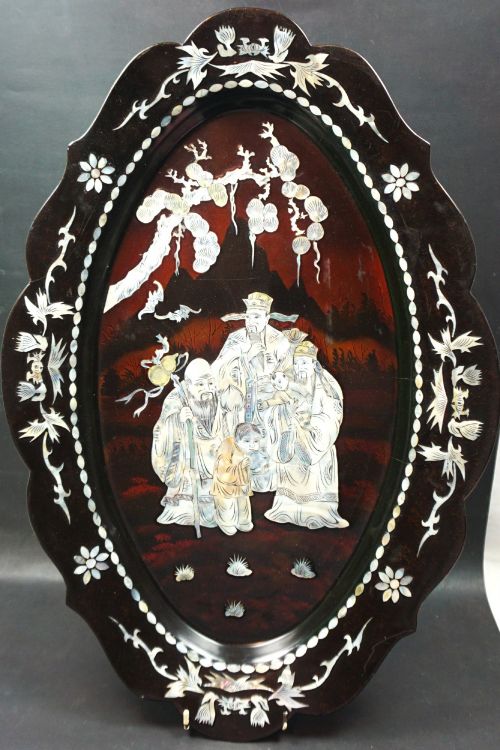
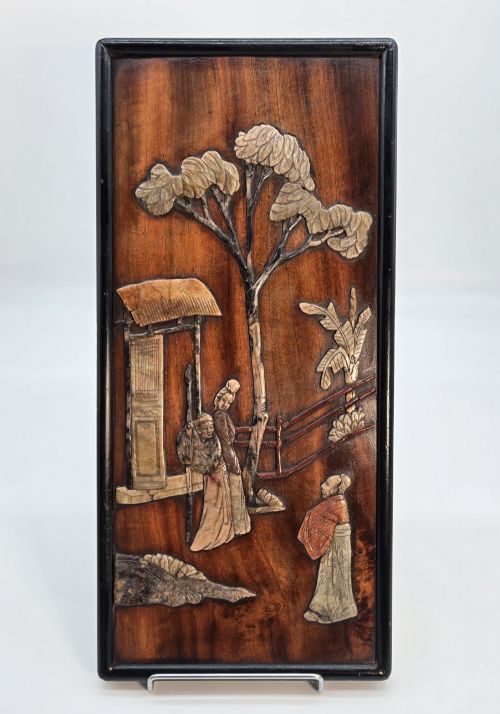
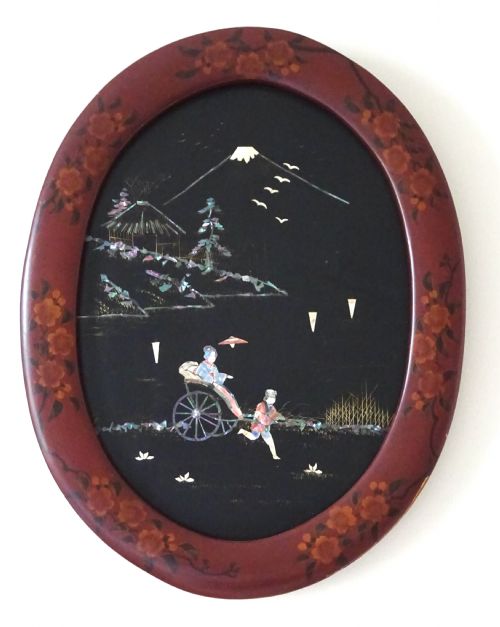
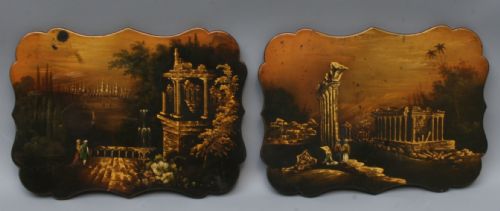
The objects take various forms on this page, including temple carvings, rectangular panels, and circular roundels. Most examples lean towards Qing Dynasty Chinese or Meiji period Japanese aesthetics, alongside Victorian papier-mâché interpretations.
These items were originally produced to adorn domestic interiors and sacred spaces alike, utilising traditional wall hanging formats. The selection here reflects diverse regional techniques applied to decorative wall displays over two centuries.
Materials and construction
The physical build relies heavily on carved softwood, timber panels, and papier-mâché substrates treated with layers of lacquer. Artisans built up these surfaces before integrating decorative elements such as gold leaf and paint.
Inlay work forms a prominent part of the construction, utilising mother-of-pearl and bone to create contrasting pictorial scenes against dark grounds. Gilding and carved giltwood further accentuate the dimensional qualities of the woodwork.
Keep an eye out for Daruma staring intently from the wood; even centuries of lacquer cannot dim an enlightened gaze.
Assessing quality and execution
Quality rests upon the depth and precision of the carving, alongside the stability and depth of the lacquer layers. Superior examples display crisp detail in figural motifs and botanical subjects without superficial masking.
The integration of delicate inlays such as mother-of-pearl distinguishes finer decorative platters and panels from simpler painted variants. Material selection, from dense timber to well-prepared papier-mâché, dictates the longevity and structural integrity of each piece.
The Antique Lacquered Wall Plaque Glossary
- Lacquer
- A durable resin finish applied to wooden or papier-mâché bases to create a smooth, protective surface. It forms the primary medium for decorative wall art in this category.
- Mother of pearl
- An iridescent inner shell layer used by artisans for intricate inlay work. It contrasts sharply against dark lacquer grounds.
- Giltwood
- Timber carved and treated with gold leaf or metallic powder to simulate solid gold. This technique highlights relief work on temple panels and plaques.
- Totai
- A cloisonné technique involving enamel applied directly over a porcelain body. It appears in more complex decorative chargers within Asian decorative arts.
- Papier mache
- A composite material made from paper pulp or reinforced sheets mixed with binding agents, pressed and dried into rigid forms. It provides a lightweight alternative to carved timber.
Antique Lacquered Wall Plaque: Frequently Asked Questions
How do I hang these wall plaques safely?
Most antique panels require secure fixings suited to their weight, often utilising original mounting points or custom brackets. Professional framing or hanging consultation helps protect fragile lacquer and inlaid surfaces.
Ensure the wall material can bear the load of dense timber or papier-mâché items without putting stress on joints or delicate inlays.
What is the difference between Chinese and Japanese panels?
Chinese pieces often feature deep relief carvings in wood, sometimes with rich gilt or polychrome paint, reflecting Qing Dynasty motifs. Japanese works frequently emphasise Meiji period lacquer techniques and delicate pictorial compositions.
Examining the underlying subject matter and carving style helps clarify the distinct regional traditions behind each plaque.
How should I clean antique lacquer?
Dust surfaces gently with a soft, dry microfibre cloth to prevent scratching the delicate finish. Avoid using chemical cleaners, water, or abrasive polishes which can damage the lacquer or lift inlay materials.
Keeping the piece away from direct sunlight and dramatic humidity changes protects the organic components and prevents warping.
Are these pieces suitable for modern interiors?
These decorative plaques add textural depth and historical narrative to contemporary and traditional spaces alike. Their varied forms allow them to act as striking focal points above furniture or within gallery walls.
Pairing them thoughtfully with neutral backgrounds lets the intricate details of the lacquer and inlay work stand out clearly.