
Painted Oriental Cupboard
A painted oriental cupboard brings rich lacquer, intricate Chinoiserie decoration and substantial storage to a room.
Painted Oriental Cupboard
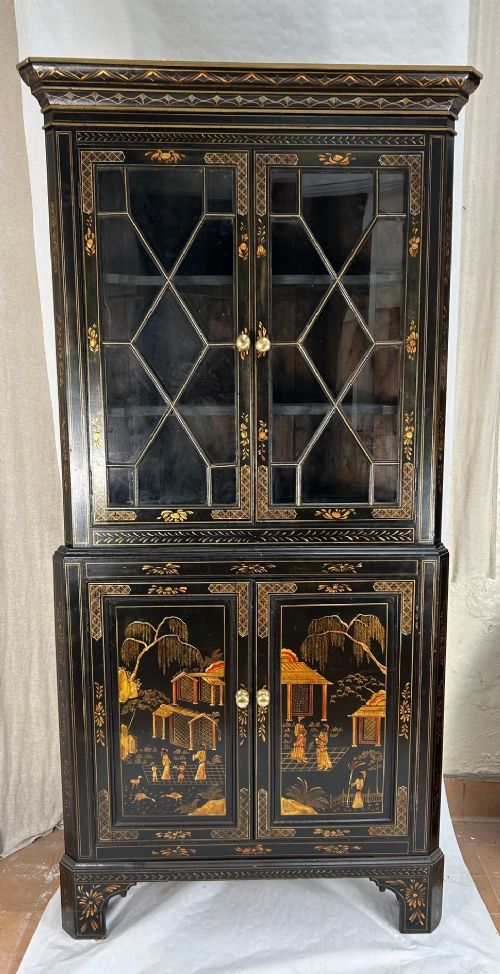
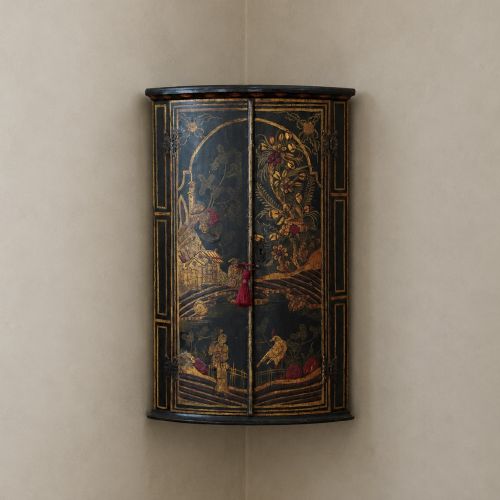
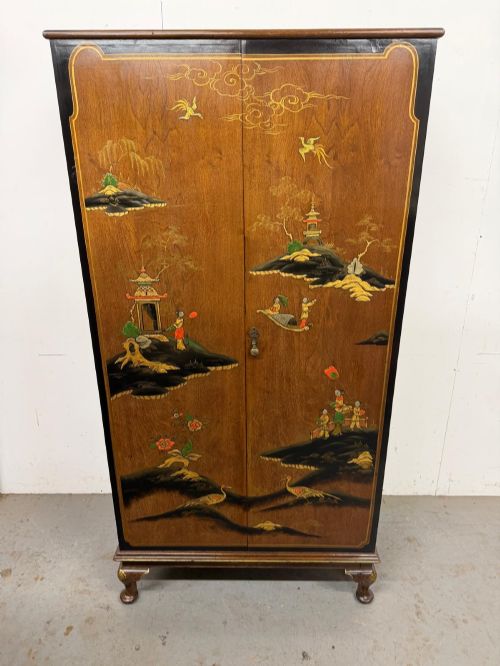
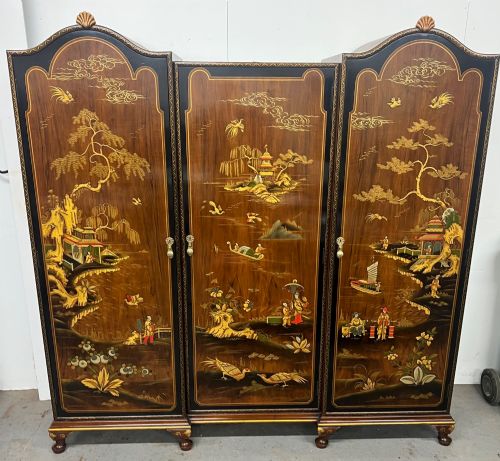
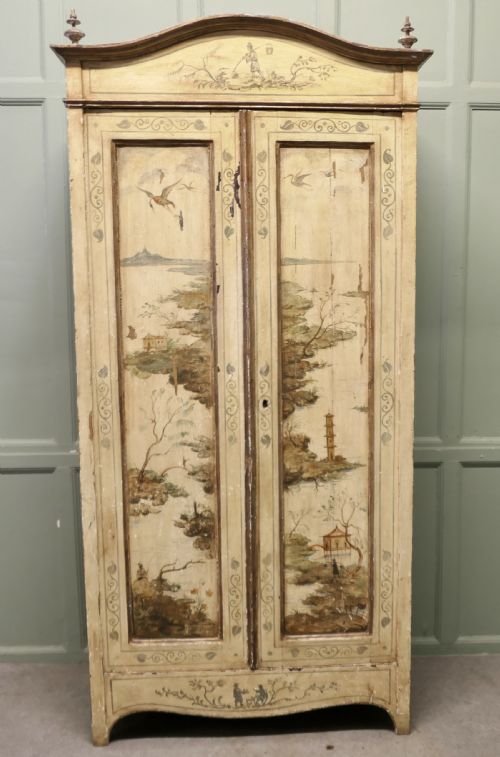
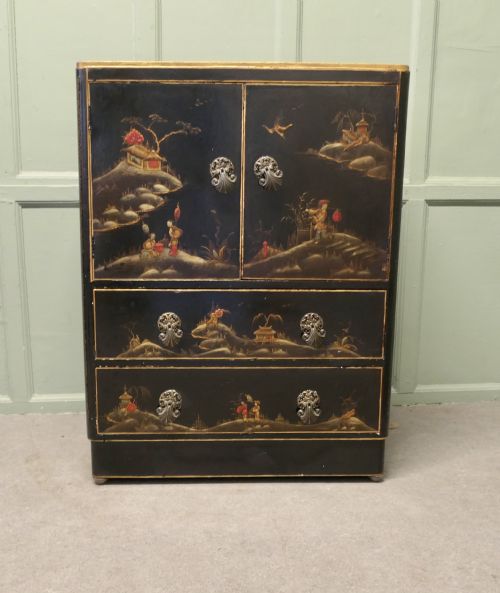
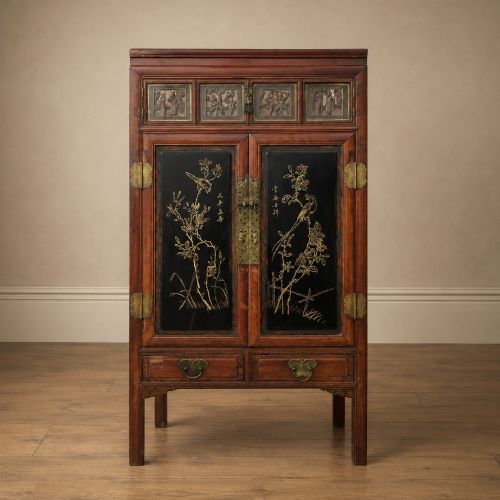
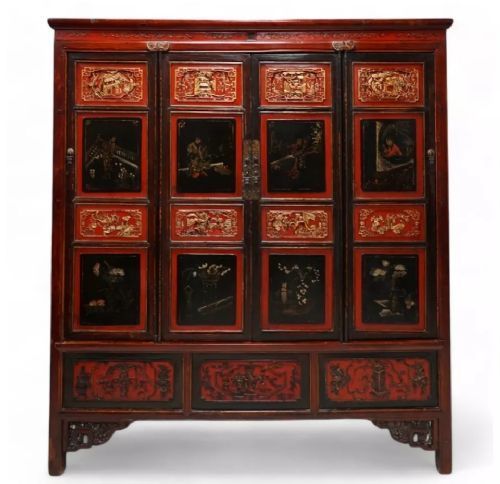
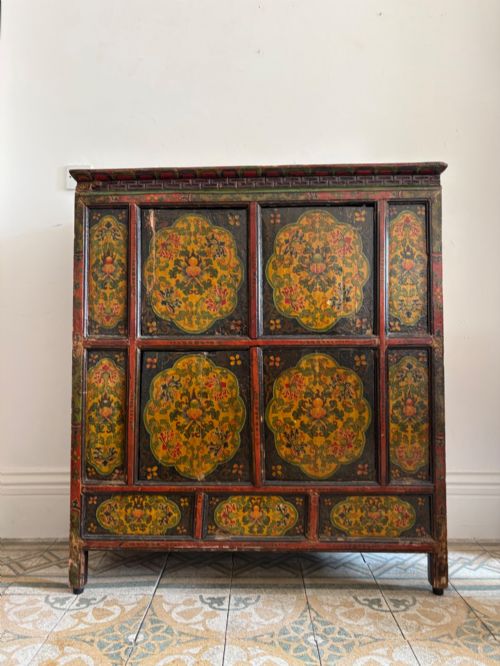
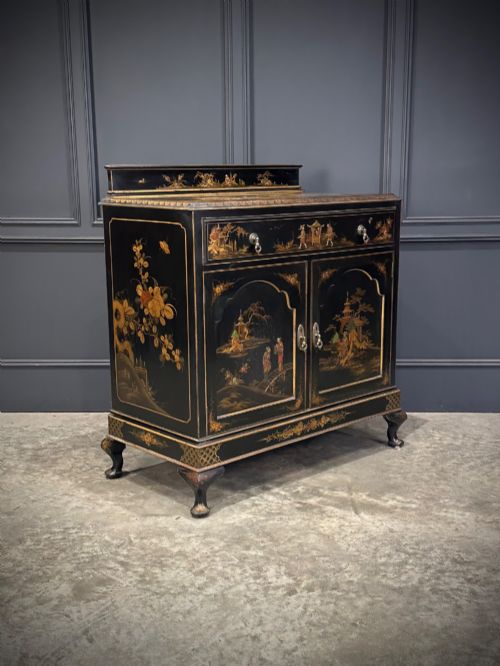
A painted oriental cupboard encompasses a diverse range of cabinets, corner cupboards, wardrobes and drinks cabinets decorated with paint and lacquer. When searching for a painted oriental cupboard, buyers frequently encounter pieces from the nineteenth century alongside twentieth-century interpretations.
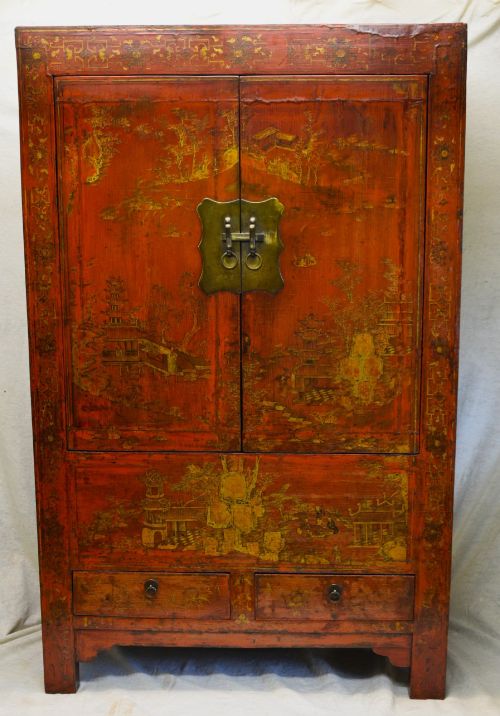
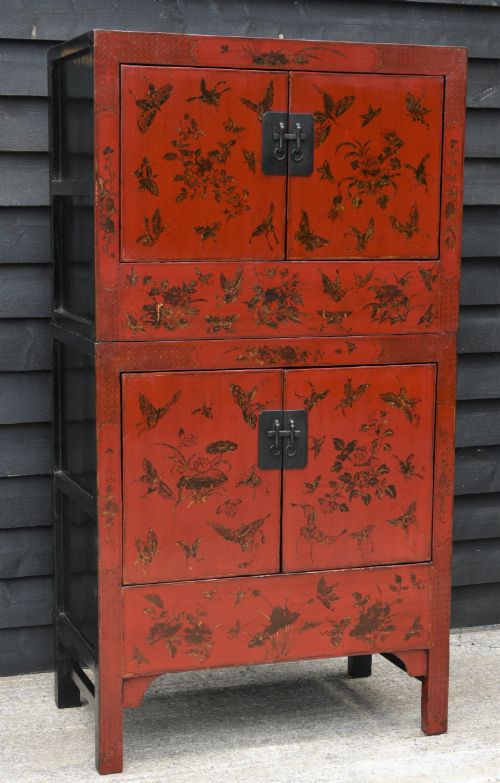
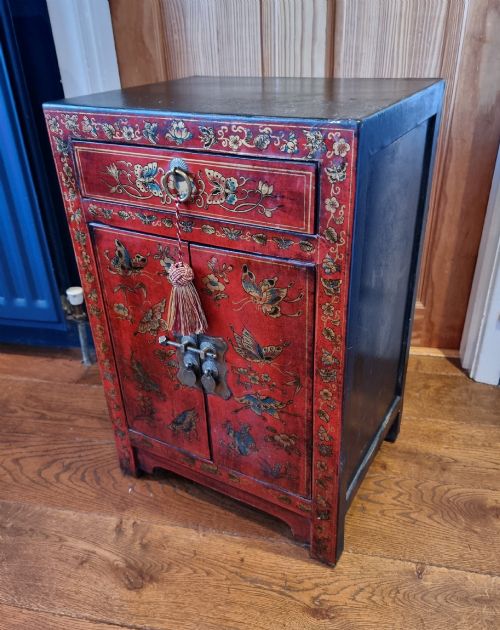
The selection spans traditional Chinese marriage cabinets and red lacquer storage pieces through to English and European Chinoiserie revival pieces. Forms range from compact side cabinets and corner cupboards to large wardrobes and cabinets on stands.
How They Were Made
These pieces utilise wood as a primary substrate, frequently incorporating Chinese elm or other timber frames prepared for decorative finishes. Artisans applied layers of lacquer or paint to create smooth surfaces suitable for intricate pictorial work.
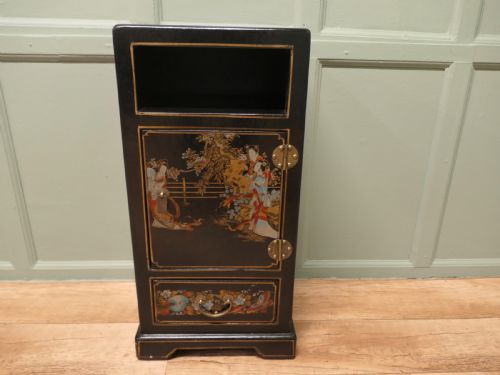
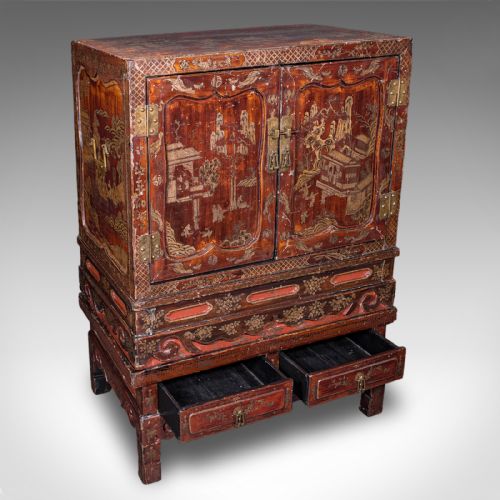
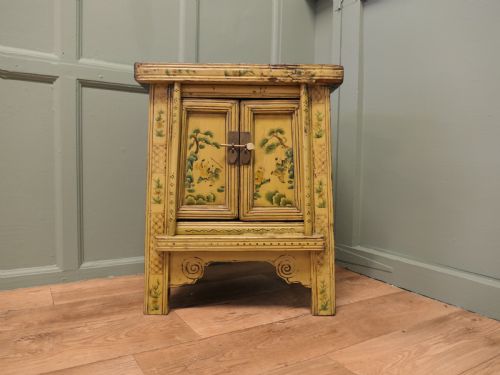
Decoration relied on paint, gilt and hand-painted details depicting outdoor scenes, birds, flowers and figurative motifs. Brass and iron hardware, including hinges and lock plates, provided functional structure and visual contrast against the painted bodies.
Cabinet doors occasionally hide clever cocktail compartments equipped for serving evening drinks beneath layers of traditional oriental bird paintings.
What Varies in Quality
Quality reveals itself in the depth and preservation of the lacquer work and the crispness of the hand-painted decoration. Pieces with well-preserved pictorial scenes depicting outdoor views or birds demonstrate superior artistic execution.
Construction standards differ between traditional joinery found in Chinese Qing Dynasty pieces and Western cabinet-making traditions of the Georgian, Edwardian and Art Deco periods. Original painted surfaces carry higher consideration than later overpainting or heavy restoration.
Maples & Co.·Harrods
The Painted Oriental Cupboard Glossary
- Chinoiserie
- European theatrical interpretation and imitation of Chinese artistic traditions and motifs, popular in furniture decoration during various periods.
- Japanned
- European imitation of Japanese and Chinese lacquer work, achieved using specialised varnishes and metallic dusts on wooden furniture.
- Marriage Cabinet
- Traditional large Chinese storage cabinet, often finished in red lacquer, historically presented to newlywed couples.
- Lacquer
- A durable finish derived from tree sap, applied in multiple layers and polished to create a hard, glossy surface on wooden cabinets.
- Compactum Wardrobe
- A fitted wardrobe designed to hold multiple types of clothing within a single combined compartment.
Painted Oriental Cupboard: Frequently Asked Questions
How were they used historically?
Many Chinese examples served as marriage cabinets for storing clothing and valuables within domestic households. Corner cupboards and wall cabinets provided display and storage space in European rooms.
Later twentieth-century versions often functioned as specialised drinks cabinets or compact wardrobes for modern living spaces.
How do I style a painted oriental cupboard?
A brightly coloured red or black lacquer cabinet works effectively as a focal point in a neutral room. Their decorative painted scenes complement both traditional interiors and eclectic modern settings.
Placing a corner cupboard in an unused space adds architectural interest and practical storage without dominating the floor area.
How do I tell periods apart?
Eighteenth and nineteenth-century pieces often display traditional Chinese construction methods or early European Japanning techniques. Edwardian and Art Deco examples incorporate period-specific proportions and hardware styles.
Materials such as Chinese elm point towards traditional Asian origins, while specific English maker labels indicate twentieth-century revival pieces.