




Painted Oak Dresser
A painted oak dresser brings practical storage and honest utility to a room, grounding the space with solid timber and aged colour.

Painted Oak Dresser
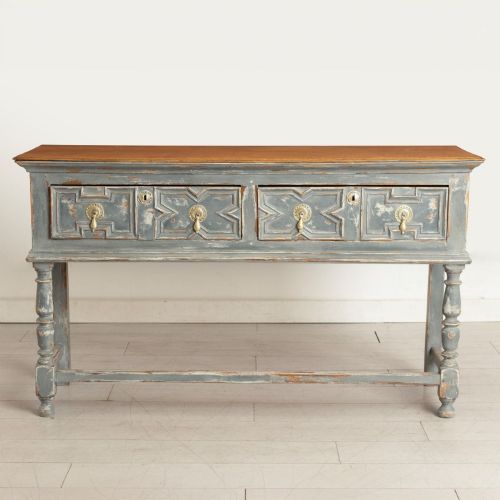
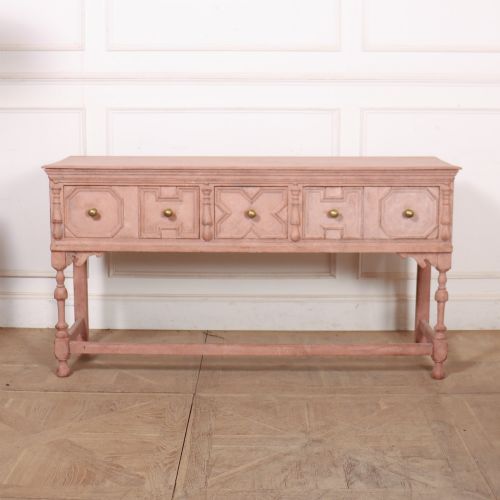
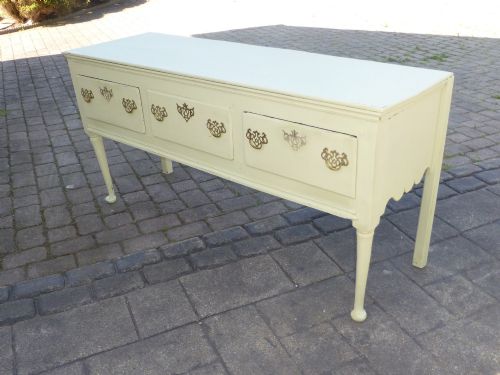
A painted oak dresser stands as a utilitarian storage piece, appearing in forms such as dresser bases, kitchen dressers, and potboard designs. These pieces originate across English, French, and Scandinavian regions, spanning from the seventeenth century through to the early twentieth century.
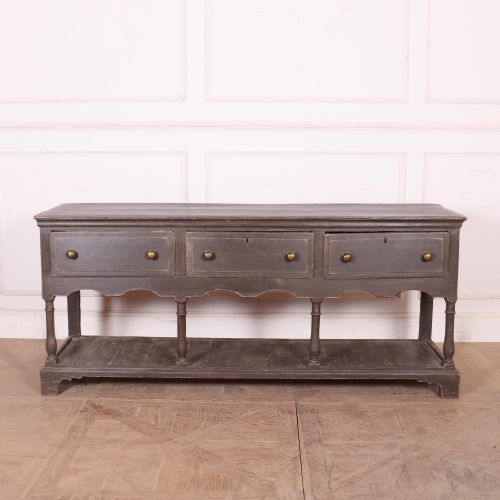
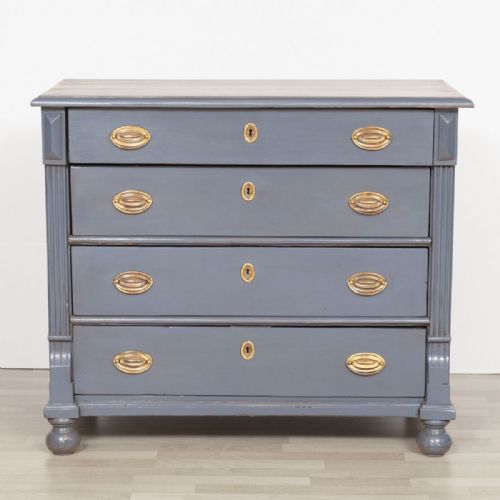
The version most commonly met on this page is the eighteenth century dresser base, often fitted with drawers above an open potboard or enclosed cupboard space. English country and West Country vernacular examples sit alongside continental pieces, including French provincial and Swedish commodes.
Makers built these items for hard use in domestic kitchens and sculleries, leading to robust proportions and straightforward lines. Later nineteenth and twentieth century interpretations bring similar functional forms, sometimes adapted for retail display or institutional spaces.
Materials and construction
Carpenters constructed the primary frames and drawer linings using solid oak, occasionally supplemented by pine or other secondary woods for internal partitions and backs. Woodworkers shaped boards by hand or early machine methods, joining panels with pegged mortise and tenon joints to withstand heavy daily wear.
Surfaces received layers of lead or oil based paint finishes, applied over decades to seal the timber and refresh the appearance of domestic furniture. Brass handles, drop pulls, and key escutscheons provided functional hardware across drawer fronts and cabinet doors.
Materials recorded across the inventory include solid oak, pine, brass hardware, and historic layers of paint applied to wood and metal structures.
Judging quality and integrity
Quality rests in the retention of original structural timber and the honesty of the surface finish, whether the paint layer is contemporary to the piece or applied in a later era. Pieces that maintain their original boards, drawer linings, and hardware without extensive timber replacement command greater attention.
Proportion and regional vernacular detailing distinguish standard utility work from finer regional craftsmanship, such as carved mouldings or distinctive potboard supports. The balance of the base, the crispness of the drawer construction, and the harmonious integration of paint layers determine the standing of each individual example.
The Painted Oak Dresser Glossary
- Potboard
- An open lower shelf fitted beneath a dresser base, originally designed for storing heavy pots and domestic ceramics. This open staging sits just above the floor on short feet or stiles.
- Dresser base
- The lower section of a kitchen dresser, featuring a flat top surface above a configuration of drawers and cupboards. These items function independently as sideboards or serving tables.
- Commode
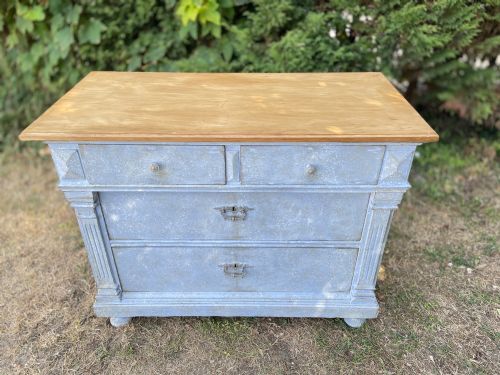
- A low cabinet or chest of drawers of French origin, typically featuring two or more deep drawers. Continental examples frequently display refined shaping to the apron and drawer fronts.
- Buffet de corps
- A large, substantial two-tier cupboard or sideboard originating in France, constructed from heavy timber. These pieces offer extensive vertical and surface storage capacity.
- Vernacular
- Furniture built by local country joiners using regional traditions and readily available materials rather than following formal metropolitan design books. These items prioritise direct utility over fashionable ornamentation.
Painted Oak Dresser: Frequently Asked Questions
How do I date an oak dresser?
Dating relies on examining construction methods, timber preparation marks, hardware types, and overall proportions. Hand-cut joints, pegged tenons, and wide board widths generally point towards earlier centuries.
Stylistic cues such as Georgian bracket feet, seventeenth century mouldings, or provincial regional traits help narrow the period. Paint analysis can also reveal whether the surface finish dates to the original construction or a subsequent era.
Are painted finishes original?
Many pieces received paint layers decades or centuries after their initial construction to suit changing domestic tastes or utility needs. Some items display historic or shoe shop display paint, while others retain early surface treatments applied by regional makers.
Evaluating the paint involves looking for craquelure, wear patterns, and underlying timber interaction. Both original and later historic paint layers contribute to the character and visual history of the piece.
How do I style a dresser in a modern home?
A painted dresser works well in a kitchen, dining room, or hallway as a primary storage and display surface. The deep drawers accommodate tableware and linens, while the top surface holds lamps, ceramics, or books.
Pairing the aged oak and painted finish with contemporary or traditional interiors lets the piece anchor the room. The neutral tones of weathered paint complement both minimalist and layered decorative schemes.