


Painted Oak Chest
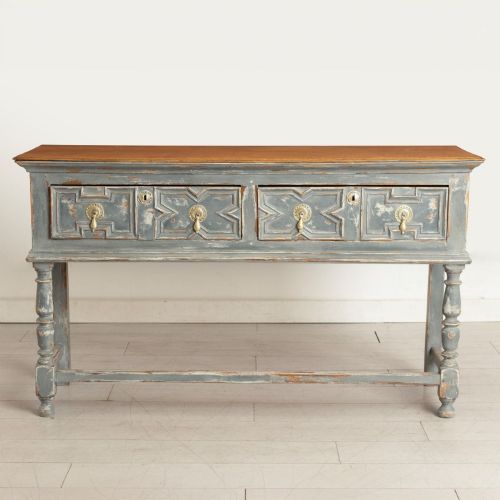
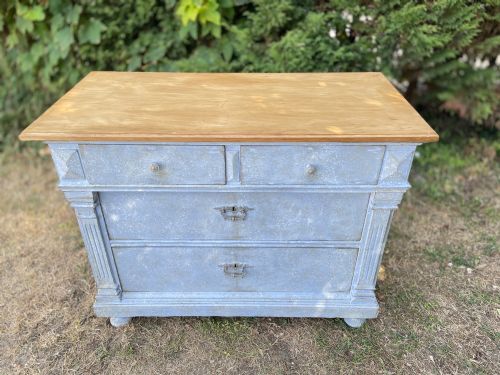
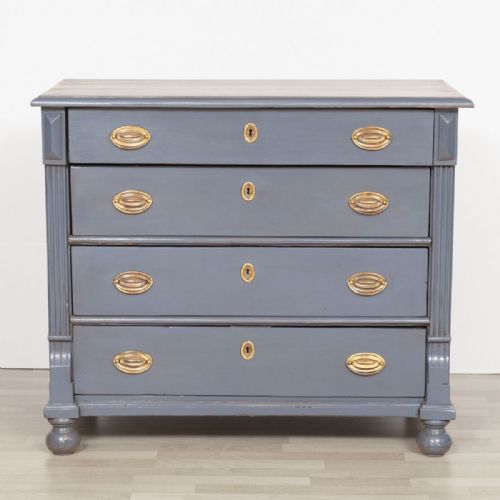
A painted oak chest brings together sturdy hardwood construction and decorative surface finishes, ranging from French commodes to Welsh coffers.
Painted Oak Chest
A painted oak chest provides substantial storage whilst displaying surface decoration applied over heavy hardwood timbers. These pieces appear across several centuries, with particular strength in eighteenth and nineteenth-century examples.
The selection includes French commodes, Scandinavian dome-top coffers, and English country pieces. Buyers frequently encounter French Provincial and Gustavian styles alongside sturdy domestic chests of drawers and travelling trunks.
Forms range from simple dovetailed boxes and strong boxes to grand serpentine commodes and carved chests on stands. Each object combines utilitarian oak carcases with historical paint finishes, whether original decorative schemes or later simulated wood effects.
Assessing quality and finish
The integrity of the underlying oak carcase separates standard utility pieces from finer cabinetwork. Dovetail precision in the drawers and the structural stability of heavy lids or marble tops indicate superior craftsmanship.
The longevity and historical significance of the painted surface dictate the overall standing of the piece. Original pigment layers, hand-painted details, and patinated finishes command greater attention than later or heavy-handed overpainting.
Military trunks frequently carry surviving campaign letter-work, hinting at distant postings and orderly packing.
The Painted Oak Chest Glossary
- Commode
- A low chest of drawers or cabinet, typically associated with eighteenth and nineteenth-century French furniture design. These pieces often feature serpentine fronts or decorative mounts.
- Coffer
- A heavy storage chest with a hinged lid, frequently utilised for domestic storage or travel. Early examples often display panelled construction and wrought iron hardware.
- Serpentine
- A furniture front characterised by a wavy contour, curving outward in the centre and inward at the sides. This shape demands high skill from the woodworker.
- Dovetail
- A joint formed by interlocking wedge-shaped fingers, used extensively in drawer construction. Hand-cut examples help indicate the period of manufacture.
- Marbling
- A decorative paint technique designed to imitate the appearance of natural stone. Artisans applied this finish to both solid timber and simulated wood surfaces.
Painted Oak Chest: Frequently Asked Questions
How do I date a painted oak chest?
Dating relies on examining construction methods such as hand-cut dovetails, iron hardware, and timber preparation. Stylistic indicators like cabriole legs, panel configurations, and specific regional motifs also help place the piece within a century.
Paint analysis provides further clues, though finishes often received updates or complete overhauls during subsequent generations of use.
Are these chests suitable for daily bedroom storage?
Most chest of drawers and commode formats function exceptionally well for modern clothing and linen storage. The deep drawers and sturdy timber carcases handle regular use without difficulty.
Trunks and coffers work best for blankets or occasional items, keeping heavy lids safely balanced when accessed.
How should I care for an antique painted surface?
Protect the finish by keeping the piece away from direct sunlight and maintaining stable room humidity. Dust gently with a dry microfibre cloth and avoid liquid cleaners or harsh chemical polishes.
Wax can nourish certain traditional paint types, but professional advice is recommended before applying any treatment.