





Painted Marble Top Commode
A painted marble top commode offers a solid stone surface set above decorated storage, bringing continental elegance to a room.
Painted Marble Top Commode
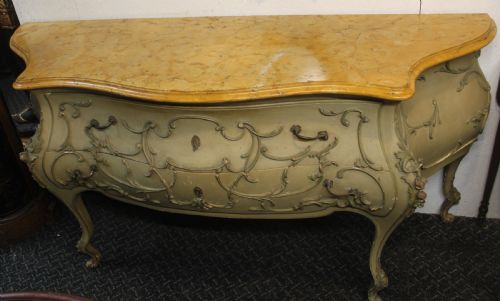
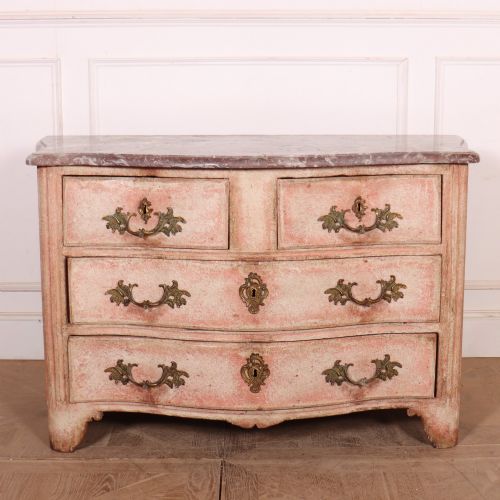
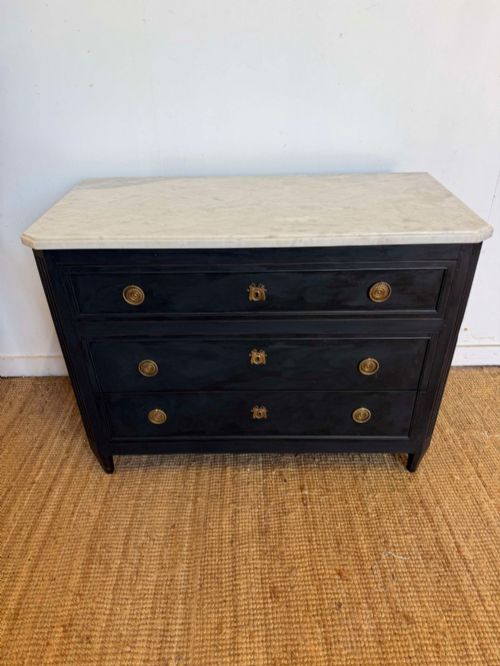
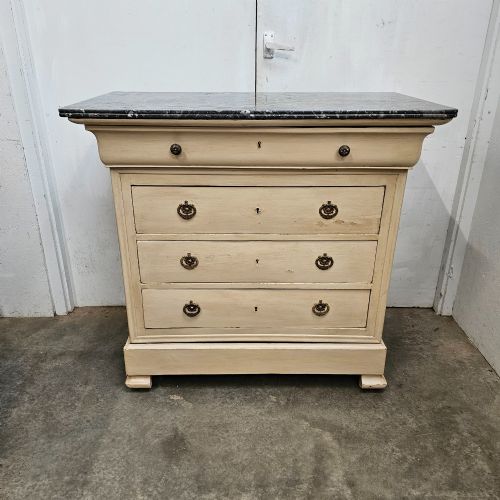
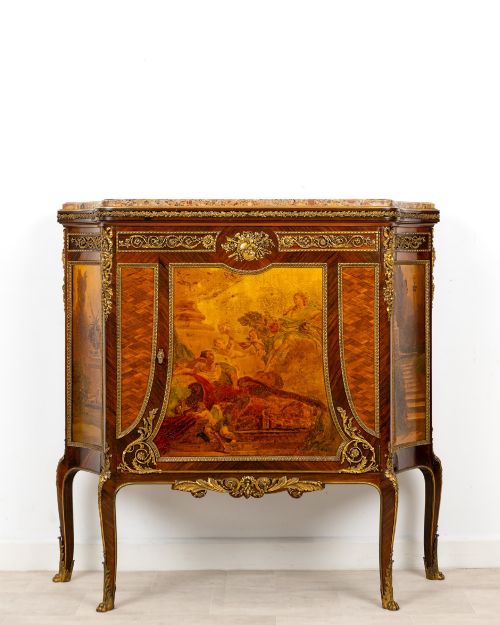
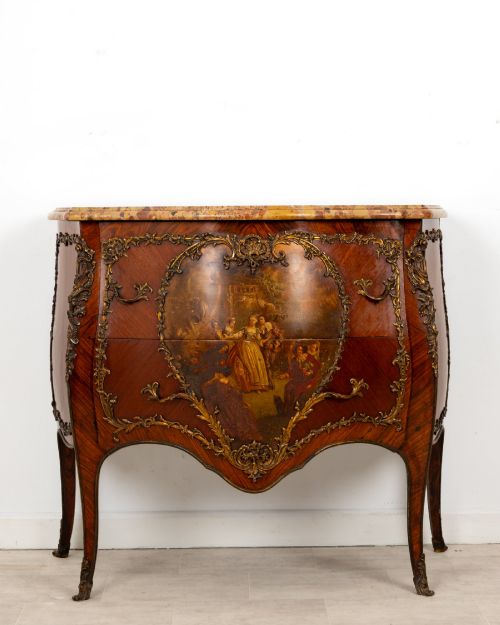
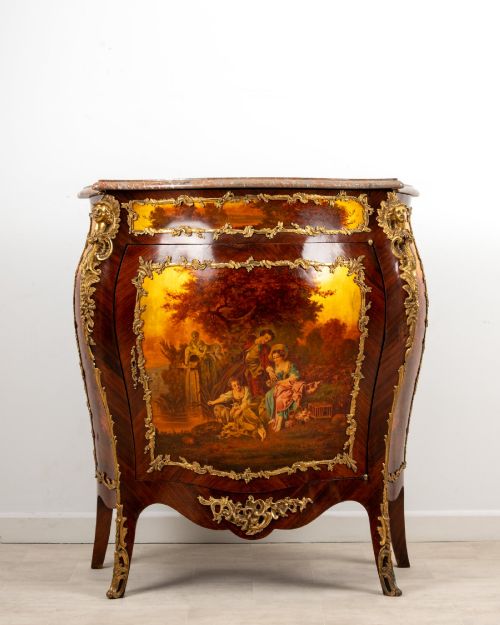
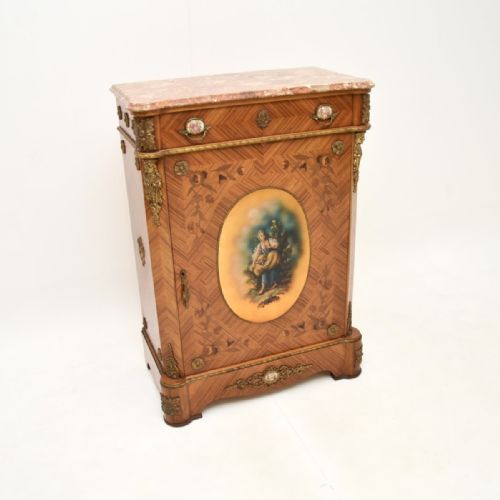
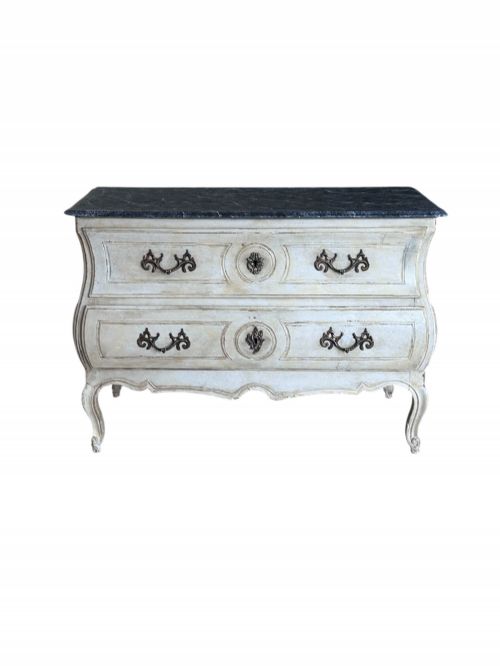
A painted marble top commode combines decorative painted wooden cabinetry with a smooth stone surface, serving as a functional storage chest or side cabinet. Buyers searching for a painted marble top commode encounter diverse regional interpretations, predominantly French and Dutch examples ranging from the eighteenth century through the early twentieth century.
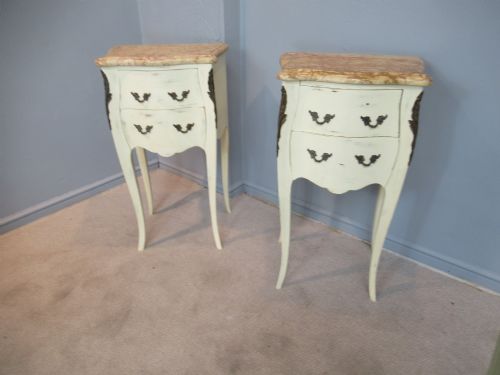
The form appears in several distinct silhouettes, including serpentine fronts, bombé shapes, and breakfront designs. Side cabinets and bedside tables also share these characteristics, though the classic commode remains the primary form on this page.
Origins stretch across France, Italy, England, and the Netherlands. Pieces span formal revival movements like Louis XV and Rococo alongside simpler provincial and rustic traditions.
Materials and Construction
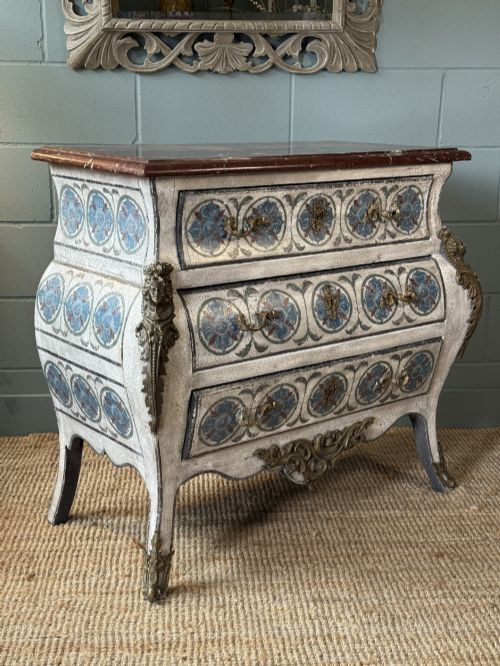
Cabinet makers constructed carcasses using timbers such as oak and kingwood, applying painted finishes directly to the wood or utilising specialised techniques like Vernis Martin. Some pieces incorporate decorative mounts in gilt bronze and ormolu to accent the structure.
The distinctive top layer consists of either genuine marble or faux marble finishes applied to wood. Artisans shaped these stones to follow the serpentine, bow front, or straight contours of the commode beneath.
Painted Marble Top Commode Retail Price Guide 2026
Typical asking prices for painted marble top commode among the pieces listed under this phrase on Sellingantiques today, from the lower quarter to the upper quarter. They describe what is for sale here now, not the wider market.
Regional variants include Dutch breakfronts, Italian painted commodes, and French Rococo revival cabinets featuring gilt bronze mounts.
Assessing Quality and Execution
Quality rests in the precision of the cabinet work and the fidelity of the painted decoration. Hand-painted panels, particularly those executed in the Vernis Martin tradition, show considerable variation in artistic skill and depth of detail.
The integration of the stone top relative to the wooden base indicates the standard of manufacture. Well-executed pieces feature marble slabs that match the exact contours of the bombé or serpentine carcass without gaps.
The Painted Marble Top Commode Glossary
- Commode
- A low chest of drawers or cabinet designed for domestic storage. The term originates from the French word for convenient.
- Vernis Martin
- A simulated Japanese lacquer technique developed in eighteenth-century France. Artisans applied multiple layers of varnish to create translucent painted panels.
- Bombé
- A swelling, outward-curving contour found on the front and sides of furniture. This undulating shape requires specialised carpentry to align with stone tops.
- Ormolu
- Gilt bronze mounts used as decorative ornamentation on furniture. These cast metal details highlight corners, handles, and aprons.
- Serpentine
- A furniture front characterised by a concave central section flanked by two convex ends. This flowing line demands precise stone cutting for the marble top.
Painted Marble Top Commode: Frequently Asked Questions
Where should I place a commode?
These cabinets function well in hallways, living rooms, and bedrooms as focal storage pieces. The stone surface provides a durable display area for lamps or decorative objects.
Ensure the dimensions suit the chosen wall space, particularly with bombé or serpentine shapes that extend further into the room than standard chests.
How do I clean the marble top?
Wipe the stone surface using a soft cloth dampened with warm water and mild, neutral soap. Avoid acidic cleaners, vinegar, or harsh chemicals that etch or dull the marble polish.
Dry the surface thoroughly after cleaning to prevent water spots from forming on the stone.
Are the painted finishes original?
Some pieces retain their period painted surfaces, while others feature later decorative paint applied during subsequent decades. Examination of the paint layers and underlying wood helps determine the age of the finish.
Revival pieces from the nineteenth century often mimic eighteenth-century styles using contemporaneous painting techniques.
What is the difference between a commode and a chest of drawers?
While both provide drawer storage, a commode typically refers to continental European low cabinets with decorative detailing and stone tops. Chest of drawers is a broader term often applied to simpler or British forms.
Continental commodes frequently incorporate curved fronts, elaborate mounts, and painted panels rather than plain timber surfaces.