

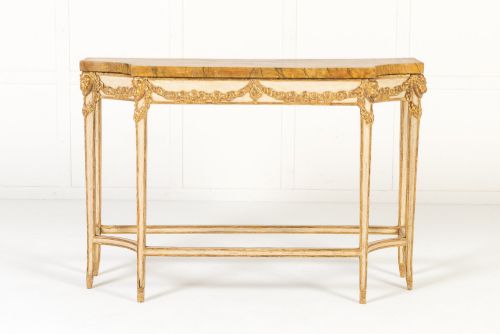
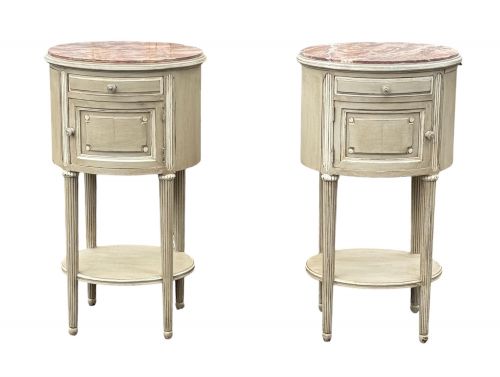
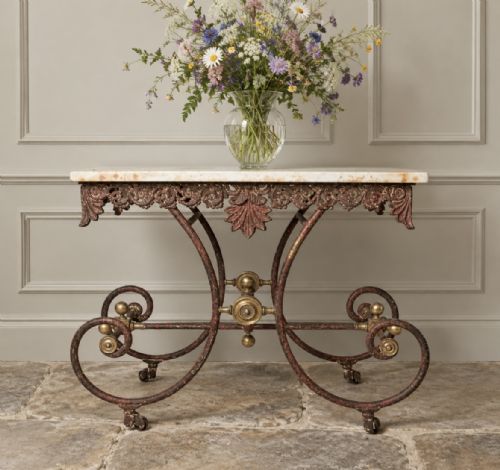
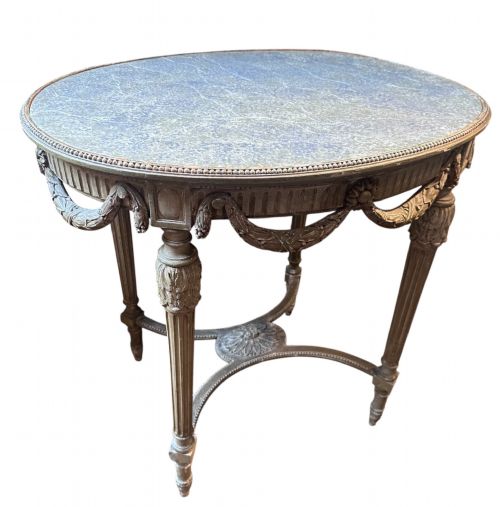
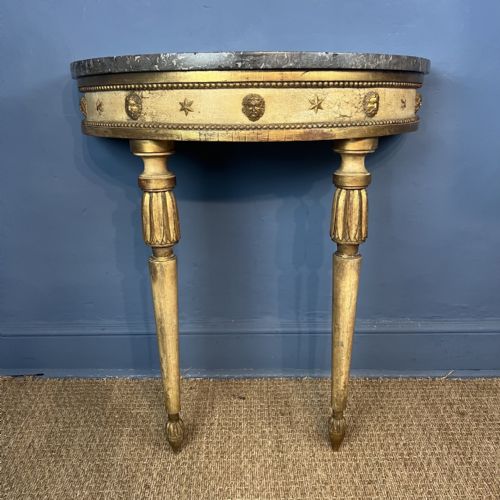
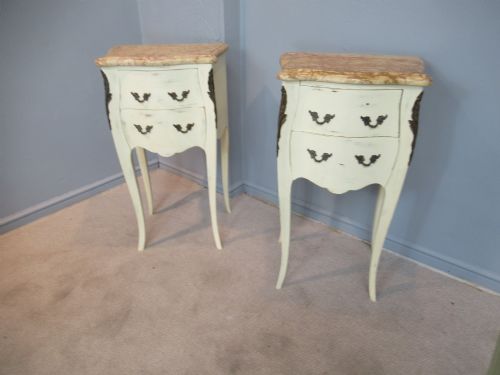


Painted Marble Side Table
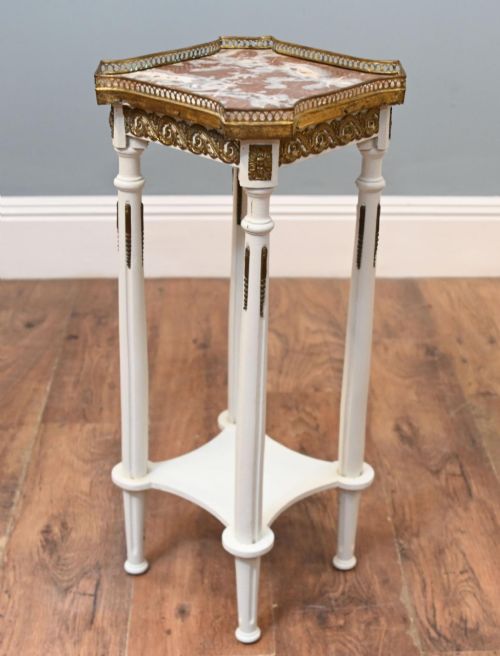
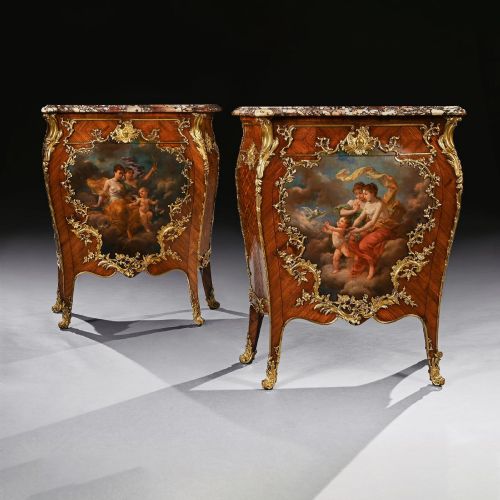
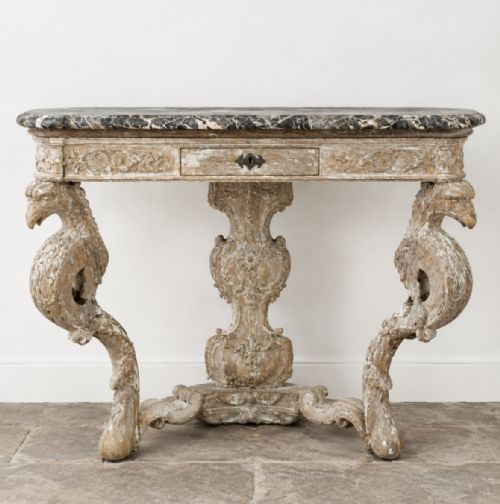
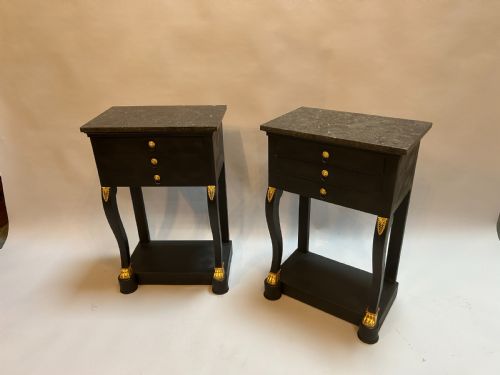
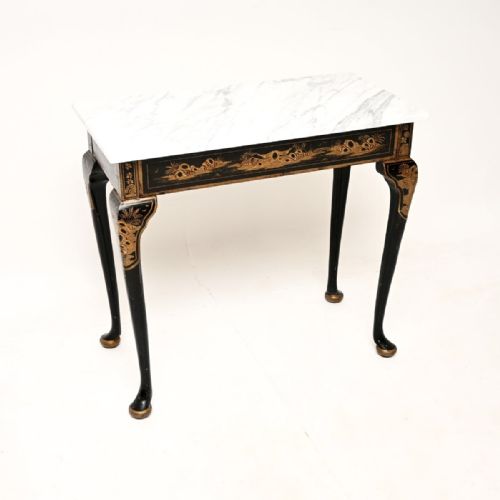
A painted marble side table brings a solid stone surface together with decorated timber woodwork, offering a functional table for a hallway or reception room.
Painted Marble Side Table
When searching for a painted marble side table, buyers encounter a variety of forms including console tables, gueridons, bedside cabinets, and occasional tables spanning from the eighteenth century into the twentieth century.
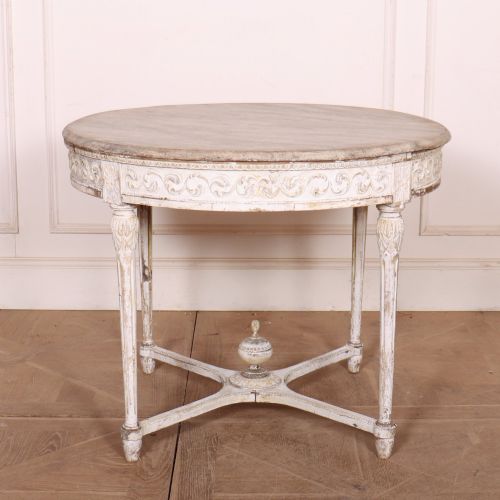
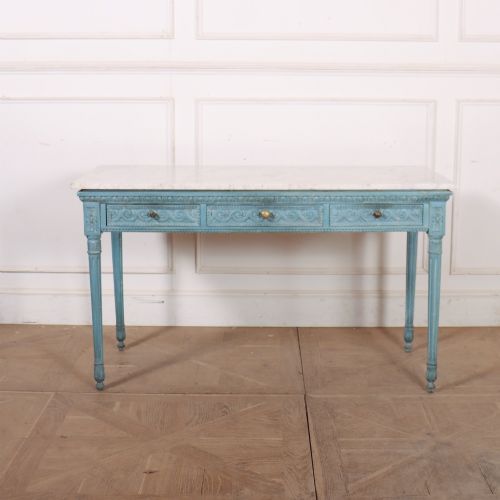
The most common examples on this page are French and Italian console or gueridon tables featuring stone slabs set into painted timber frames.
Originating largely from continental workshops, these pieces range from austere Swedish pine designs to ornate neoclassical Italian and French furniture.
How they were made
Craftsmen built the structural frames using native timbers such as pine, oak, or fruitwood, which were then primed, painted, and sometimes finished with parcel gilt highlights or gesso details.
Slabs of marble, ranging from white Carrara to specimen varieties and faux porphyry finishes, were cut and polished to fit precisely onto the wooden bases.
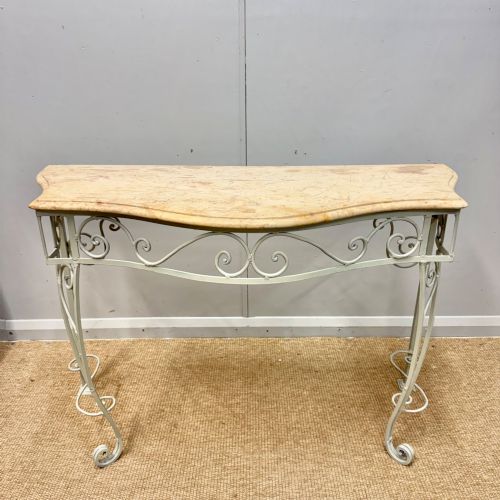
Wrought iron or cast iron support structures occasionally appear alongside traditional wood joinery, particularly in bistro or utility tables.
Painted Marble Side Table Retail Price Guide 2026
Typical asking prices for painted marble side table among the pieces listed under this phrase on Sellingantiques today, from the lower quarter to the upper quarter. They describe what is for sale here now, not the wider market.
Listings feature items spanning from the eighteenth century through the Edwardian period, incorporating pine, oak, kingwood, and cast iron.
What varies in quality
The distinction between ordinary and exceptional pieces lies in the depth of the carving, the crispness of the painted or gilded surface, and whether the marble top is original to the base.
Superior examples exhibit harmonious proportions, hand-mixed historical paint layers, and high-grade natural stone rather than later replacements.
The Painted Marble Side Table Glossary
- Console table
- A table designed to stand against a wall, frequently secured with brackets or supported by front legs.
- Gueridon
- A small round table on a central pillar or multiple legs, originating in seventeenth-century France.
- Parcel gilt
- Woodwork decorated with thin applications of gold leaf over specific carved areas or raised mouldings.
- Specimen marble
- A decorative surface composed of various coloured marbles arranged in geometric patterns or mosaics.
- Faux porphyry
- A painted simulation of the purple-red igneous rock prized by ancient Romans and later neoclassical cabinetmakers.
Painted Marble Side Table: Frequently Asked Questions
How do I clean a marble top?
Use a soft, damp cloth with mild, neutral soap and dry the surface thoroughly immediately afterwards. Avoid acidic cleaners or household detergents that etch the polished stone.
Protect the surface from oils and spills by using coasters and mats, as marble remains a porous material susceptible to staining.
Are these tables sturdy enough for daily use?
Most console and side tables are structurally stable for lamps, books, and decorative objects, though wall-fixing is recommended for tall console designs. Heavier marble tops provide natural stability through their own weight resting on the frame.
Joints can loosen over decades, so check that legs sit firmly on the floor without excessive wobble.
How can I tell if the paint is original?
Examine the surface under natural light for craquelure, wear patterns around edges, and accumulated layers of dust within recessed mouldings. Original paint often shows consistent ageing matching the period of the timber base.
Subsequent repainting frequently appears flat, lacks underlying gesso shrinkage, or conceals older joinery marks.
Where should I place a side table?
These tables suit entryways, hallways, and living rooms where a narrow profile or compact surface is required against a wall. Gueridons work effectively beside seating or in the centre of a room as occasional display stands.
Keep them away from direct heat sources and strong sunlight to protect the painted finishes and prevent timber shrinkage.