


Painted Louis XVI Chair
A painted louis xvi chair brings classical French proportion and muted colour into a room, offering both seating and architectural presence.
Painted Louis XVI Chair
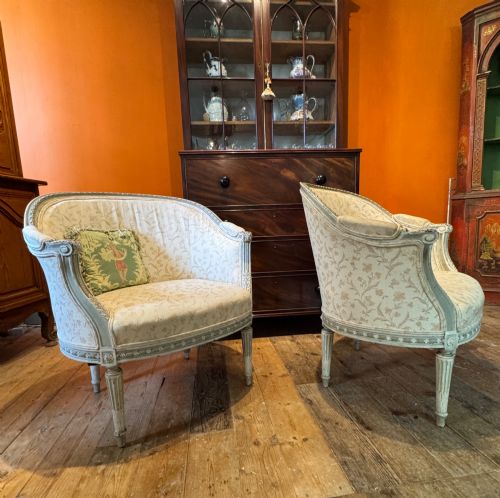
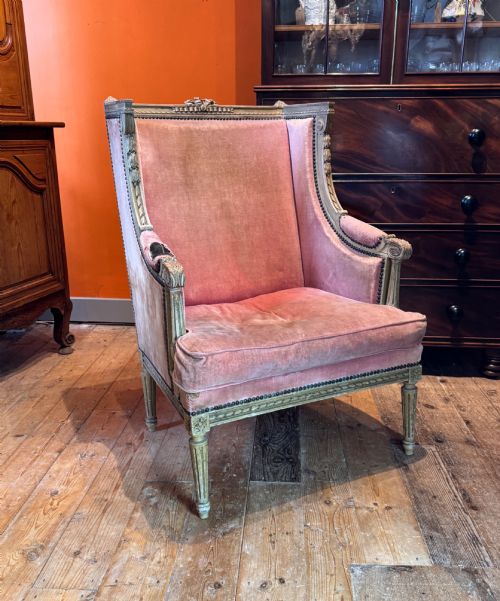
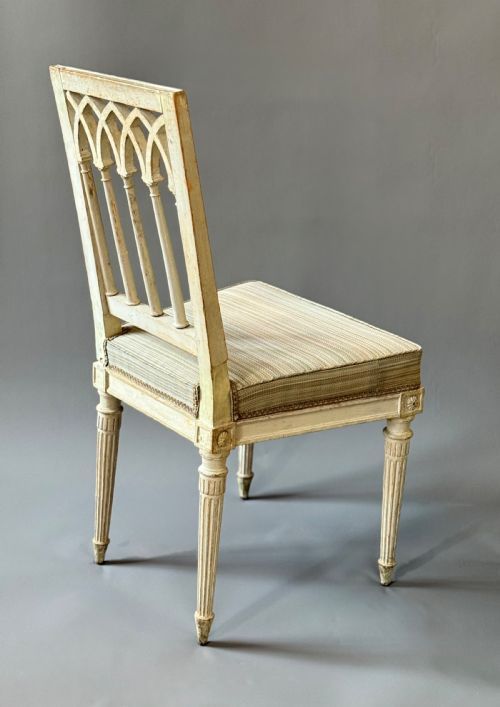
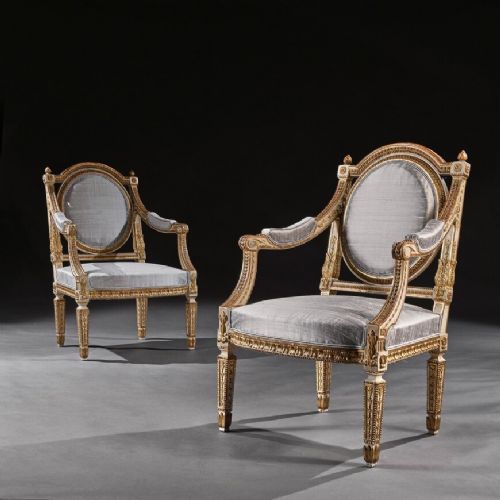
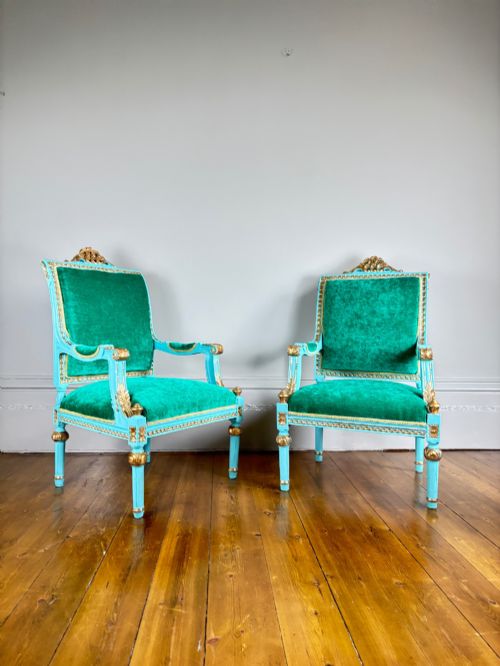
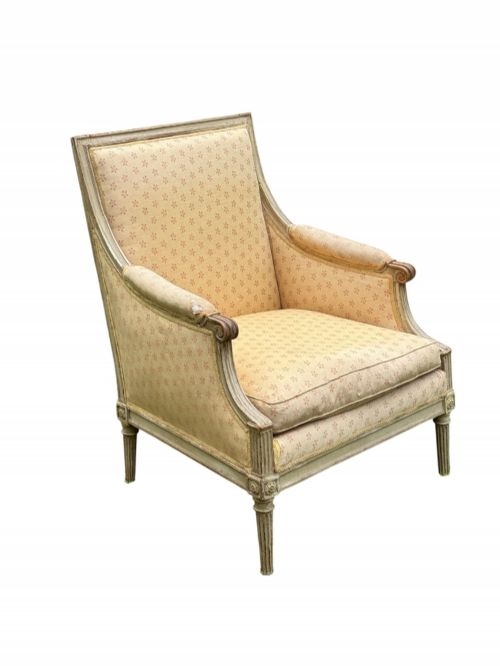
A painted louis xvi chair defines an aesthetic rooted in French neoclassical design, typically featuring rectilinear or oval backs, straight fluted legs, and carved frame details. Pieces on this page span the eighteenth, nineteenth, and early twentieth centuries, encompassing original period works as well as later revivals.
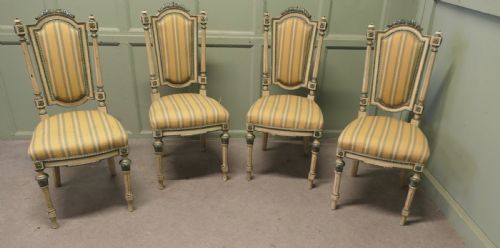
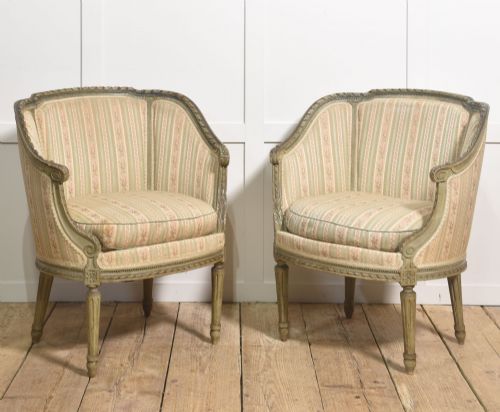
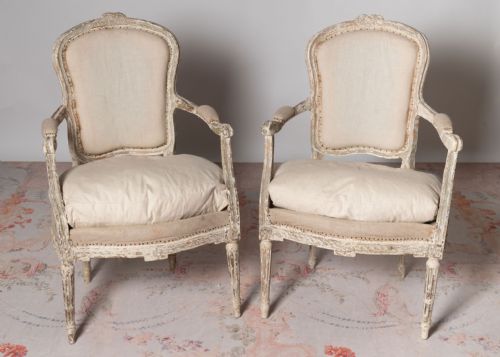
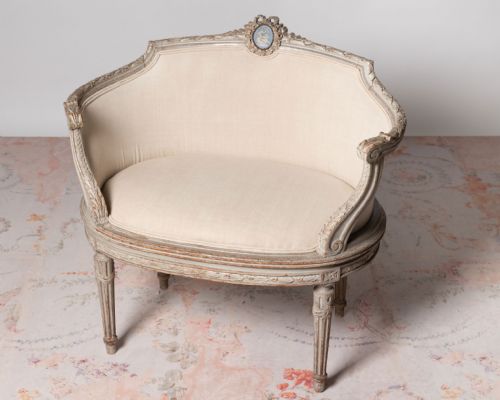
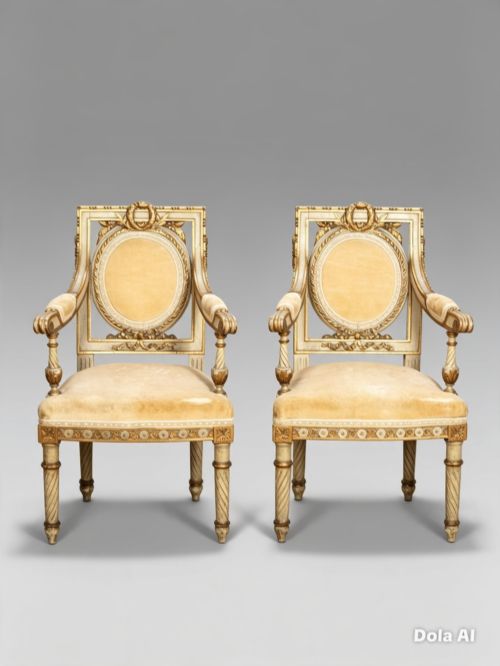
Forms vary considerably across the selection, ranging from open armchairs and bergere tub chairs to salon chairs, dining suites, and occasional settees. Many survive in pairs or larger sets, often retaining traces of original or subsequent painted and parcel-gilt finishes.
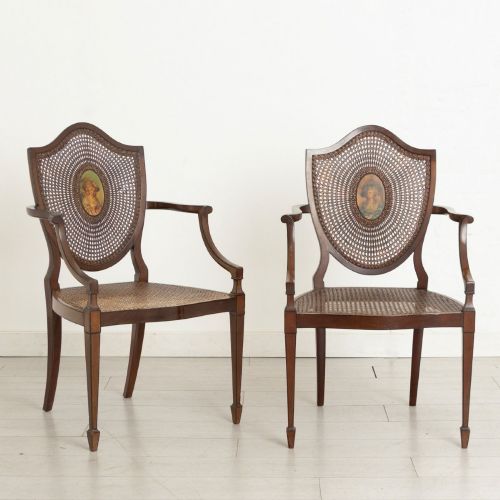
Originating largely from French workshops and chateaux, these chairs reflect both formal court taste and subsequent nineteenth-century revivals that embraced the same restrained geometry. The inventory includes variants with caned seats, needlepoint panels, and upholstered cushions.
Materials and construction
Frames are constructed primarily from timber such as beech, shaped through carpentry before receiving coats of paint, gesso, and sometimes parcel-gilt accents. The application of paint was integral to the neoclassical palette, often layered over time to create nuanced patination.
Upholstery relies on traditional textile applications, utilising fabric, velvet, damask, and decorative needlepoint or petit point panels secured to the wooden carcass. Structural support is frequently reinforced by brass hardware and internal webbing suited to the specific chair form.
A tiny children's salon chair proves that even royal taste occasionally catered to the miniature aristocracy.
Quality and execution
Quality reveals itself in the crispness of the wood carving and the balance of proportions, where authentic eighteenth-century examples or skilled nineteenth-century revivals display precise fluting and harmonious joinery. Lesser iterations often show heavier, less refined carving and generic proportions.
The integrity of the painted surface plays a major role, distinguishing pieces with original or undisturbed historic paint layers from those subjected to later, unsympathetic redecoration. Finer examples maintain a cohesive relationship between the carved decorative motifs, the gilding, and the choice of upholstery textiles.
Henri Jacob
The Painted Louis XVI Chair Glossary
- Fauteuil
- An open-framed armchair with upholstered back and seat, typically featuring exposed wooden arms. This form is central to French seating design.
- Bergere
- A closed-arm armchair featuring upholstered sides, often enclosing a loose seat cushion. It provides a more enveloping sit than an open armchair.
- Parcel Gilt
- A decorative technique where specific carved details of a painted frame are highlighted with gold leaf. This creates contrast against the primary painted ground.
- Cabriolet
- A chair leg that curves outward and then tapers inward, or a chair back with a concave serpentine curve. The shape echoes organic neoclassical lines.
- Caning
- A woven rattan seat or back panel that offers a light, resilient surface. It is frequently paired with painted wooden frames.
- Neoclassical
- A style drawing inspiration from classical antiquity, favouring symmetry, straight lines, and architectural motifs. It defines the core visual language of these pieces.
Painted Louis XVI Chair: Frequently Asked Questions
How do I spot an eighteenth century original?
Authentic eighteenth century examples display hand-cut joinery, period tool marks beneath the frame, and aged timber shrinkage consistent with age.
Surface finishes on early pieces often exhibit a complex, layered patination that modern reproductions struggle to replicate accurately.
Are these chairs suitable for daily use?
Most antique seating is structurally sound for regular sitting, provided the underlying frame and joinery remain stable and well maintained.
Delicate salon chairs or pieces with fragile caning benefit from lighter placement rather than heavy everyday lounging.
How should I care for original painted finishes?
Preserving historic paint requires dusting gently with a dry, soft cloth and avoiding moisture or harsh chemical cleaning agents.
Keeping the chairs away from direct sunlight and extreme humidity changes protects both the wood and the delicate paint layers.