



Grey Wood Armchairs
Grey wood armchairs bring continental elegance and muted painted finishes into a room, offering seats designed for both formal salons and quiet corners.
Grey Wood Armchairs
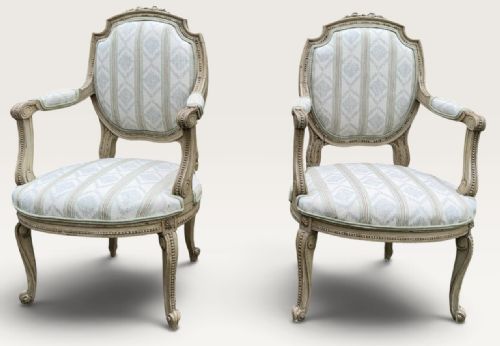
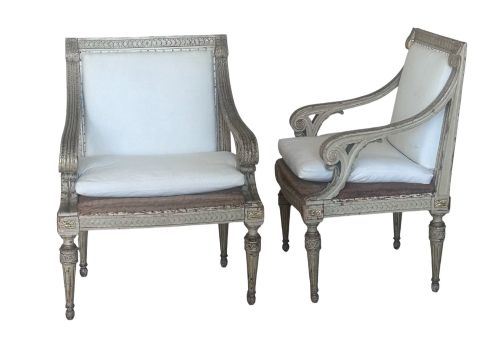
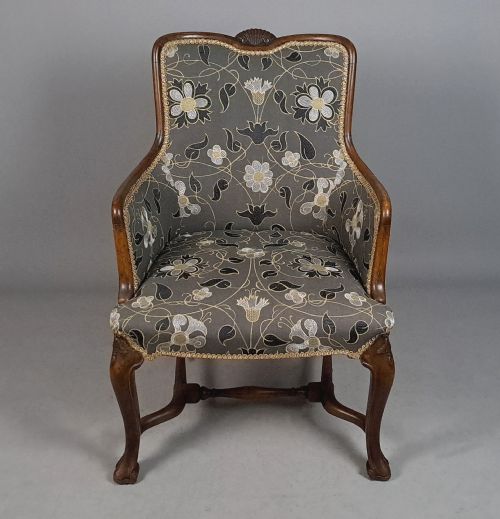
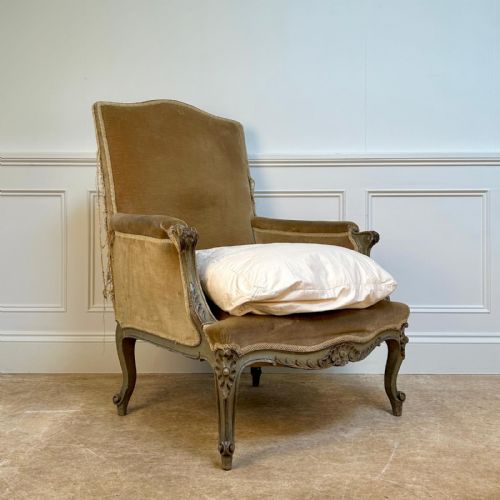
Grey wood armchairs encompass seating framed in painted, bleached, or weathered timber, drawing heavily on French and continental design traditions. When you search for grey wood armchairs, you encounter pieces spanning the eighteenth, nineteenth, and early twentieth centuries, dominated by French provincial and revival aesthetics.
How they were made
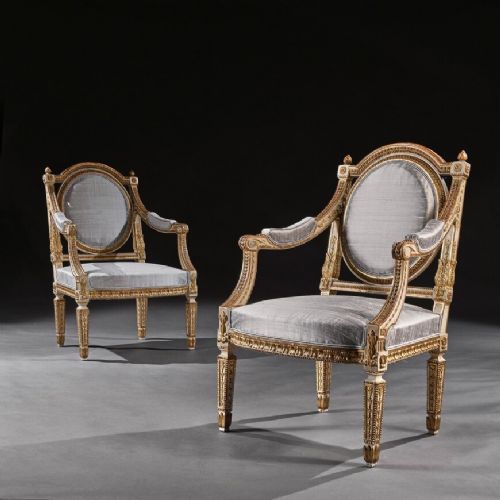
Frames rely on traditional timbers such as beech, walnut, fruitwood, and mahogany, shaped through manual turning and carving. Artisans often applied gesso and paint directly to the wood, sometimes incorporating parcel gilt highlights to accentuate the carved details.
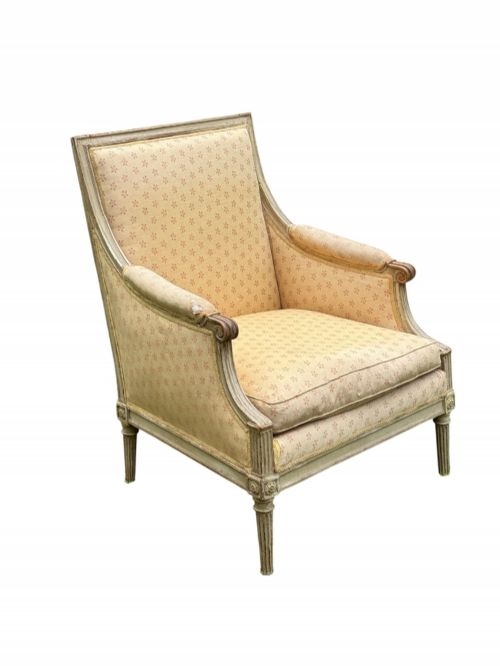
Upholstery techniques integrate traditional stuffing with modern or period textiles, silk, and woven fabrics. Frames frequently rest on fluted legs or cabriole supports typical of specific historical periods.
A solitary teak tree root chair stands among the neoclassical painted salons.
What varies in quality
Quality rests upon the crispness of the timber carving and the authenticity of the surface finish. Original paint and period gesso retain historical character far better than later decorative overcoats.
Structural integrity of the wooden joints and the fidelity of revival styles to their eighteenth-century prototypes distinguish finer pieces. Maker attribution, such as work by recorded cabinetmakers, elevates specific examples.
Henri Jacob
The Grey Wood Armchairs Glossary
- Bergère
- An enclosed upholstered armchair with wooden sides and a padded back, popular in eighteenth-century France. This form provides a deep, comfortable seat.
- Gesso
- A plaster-based mixture applied to wood surfaces to prepare them for painting or gilding. It creates a smooth base for fine decorative details.
- Louis XVI
- A neoclassical style defined by straight lines, symmetry, and classical motifs like fluted legs. It contrasts with the earlier, more sinuous rococo designs.
- Gustavian
- The Swedish interpretation of French neoclassical design, characterised by pale painted finishes and restrained ornamentation. It brings a bright, austere elegance to interiors.
- Parcel gilt
- A decorative technique where specific raised portions of a carved wooden surface receive a thin layer of gold leaf. This highlights the underlying craftsmanship.
Grey Wood Armchairs: Frequently Asked Questions
Are these chairs comfortable for daily use?
Many of these period armchairs feature deep seats and upholstered backs designed for relaxation in a drawing room or study. Bergères and club chairs offer particularly enveloping proportions for sitting.
While historic padding can feel firmer than modern foam, professional reupholstery often balances period support with contemporary comfort.
How do I identify a true antique frame?
Examination of the timber beneath the paint reveals tool marks, timber shrinkage, and joinery methods consistent with eighteenth or nineteenth-century construction. Original surface patination develops naturally over generations of handling.
Revival pieces from the Edwardian era emulate these older styles but utilise machine-cut elements and twentieth-century hardware.
Can I mix different French periods together?
Combining Louis XV and Louis XVI frames within one room creates a layered interior by contrasting curved rococo lines with straight neoclassical geometry. Painted finishes in grey or neutral tones tie disparate eras together harmoniously.
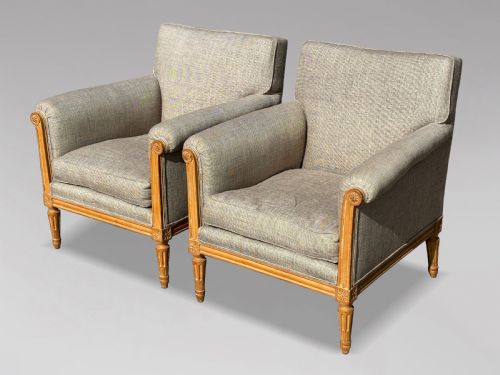
Matching pairs provide formal symmetry, while single armchairs function well as accent seating.
How should I care for painted wood?
Dust wooden frames gently with a dry, soft cloth to protect fragile original paint and gesso surfaces from abrasion. Avoid liquid cleaners and modern polishes that can degrade historical finishes.
Keep upholstered pieces away from direct sunlight to prevent the silk, fabric, or textile coverings from fading.