

Painted Longcase Clock
A painted longcase clock brings the steady rhythm of the past into a room through timber, brass, and hand-brushed dials.
Painted Longcase Clock
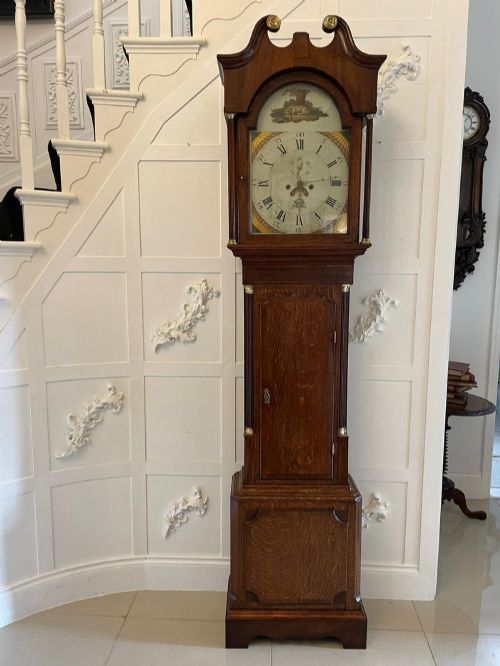
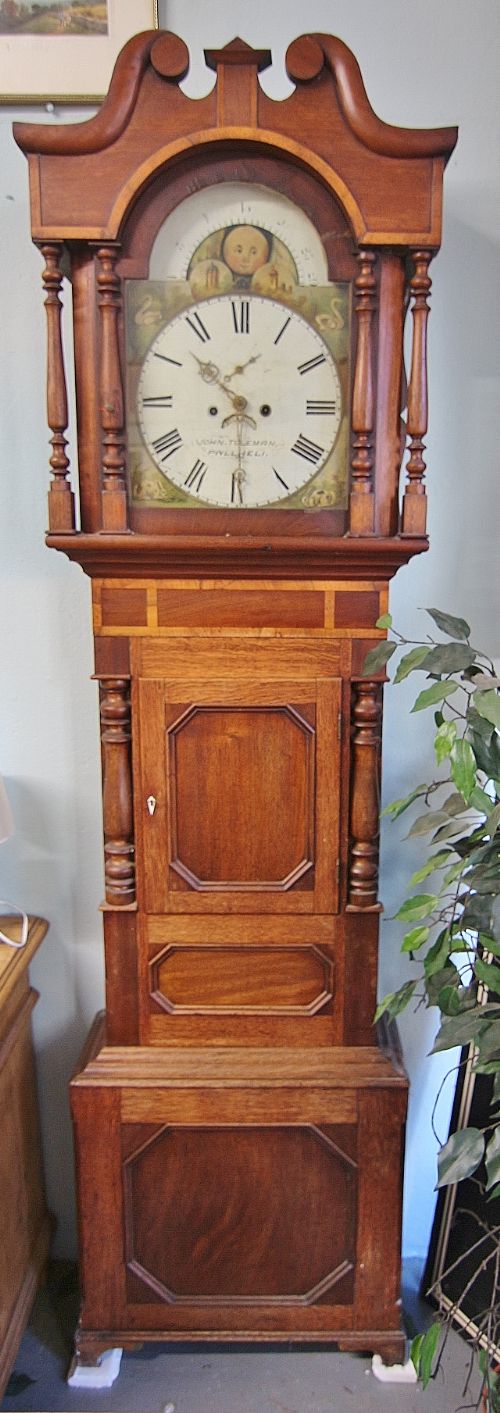
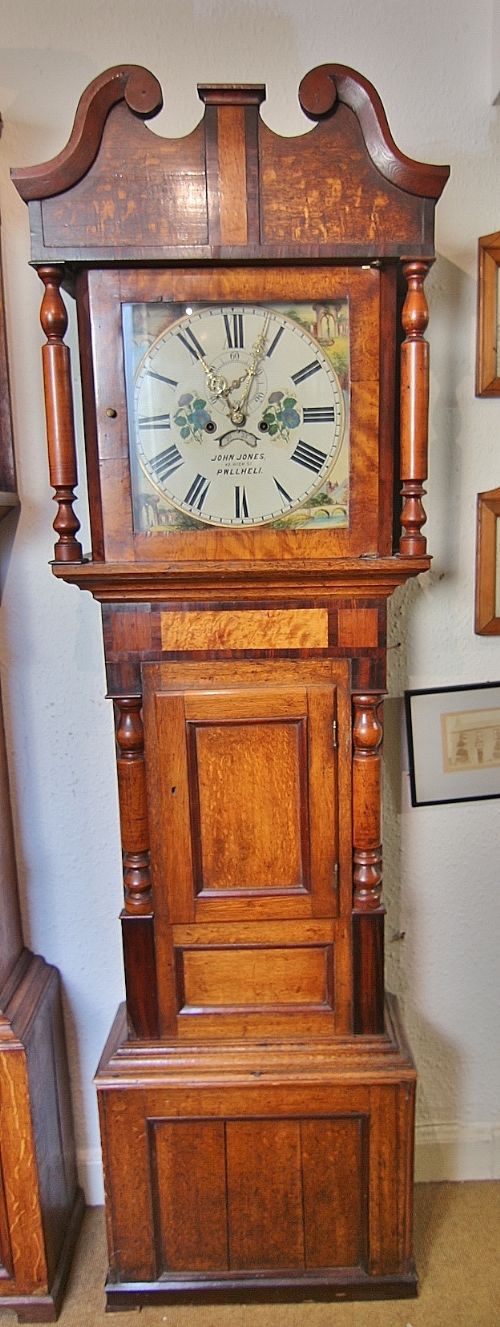
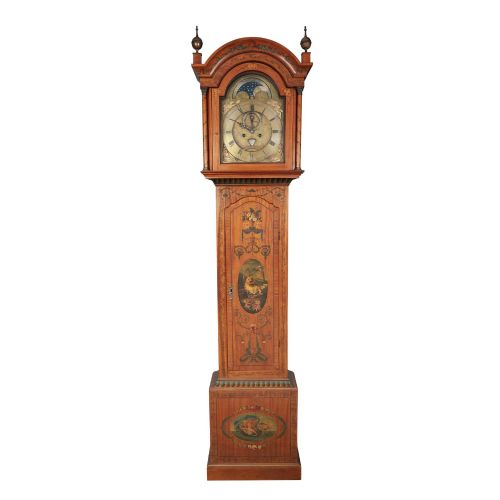
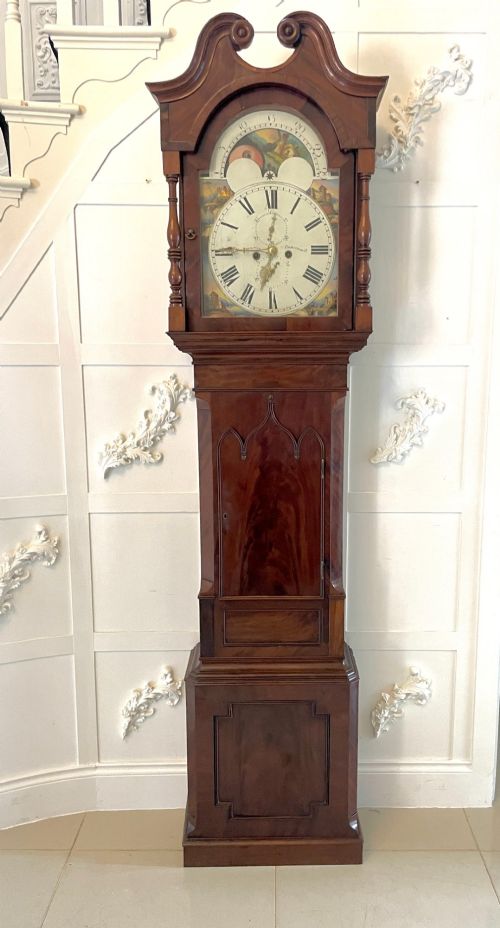
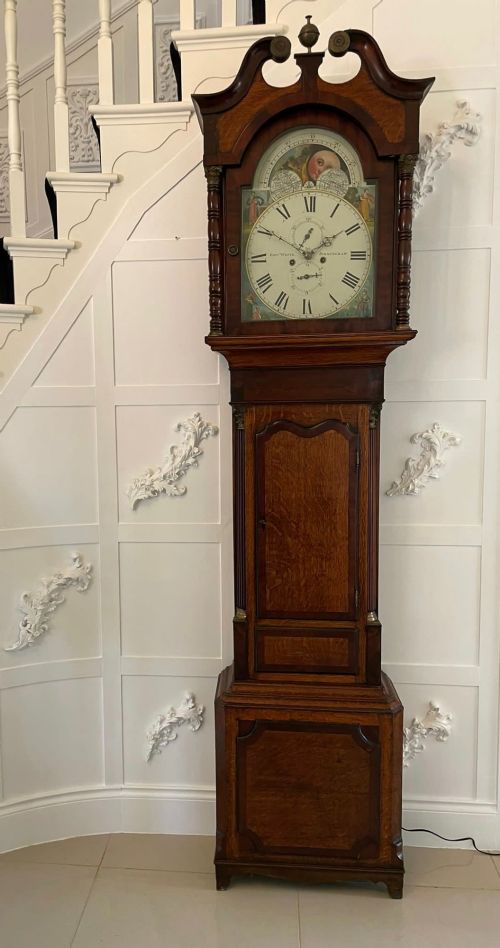
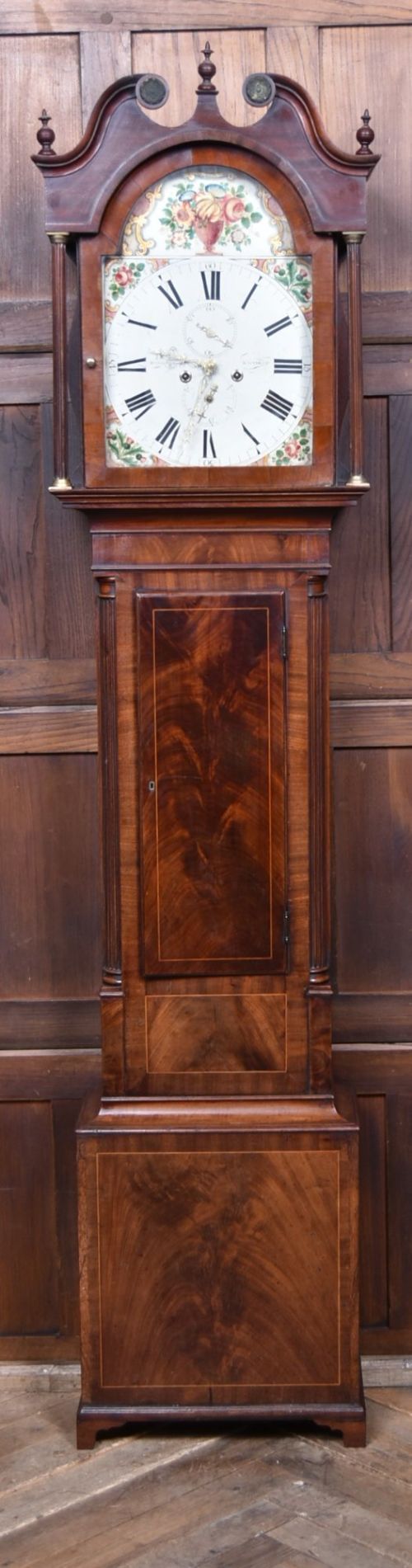
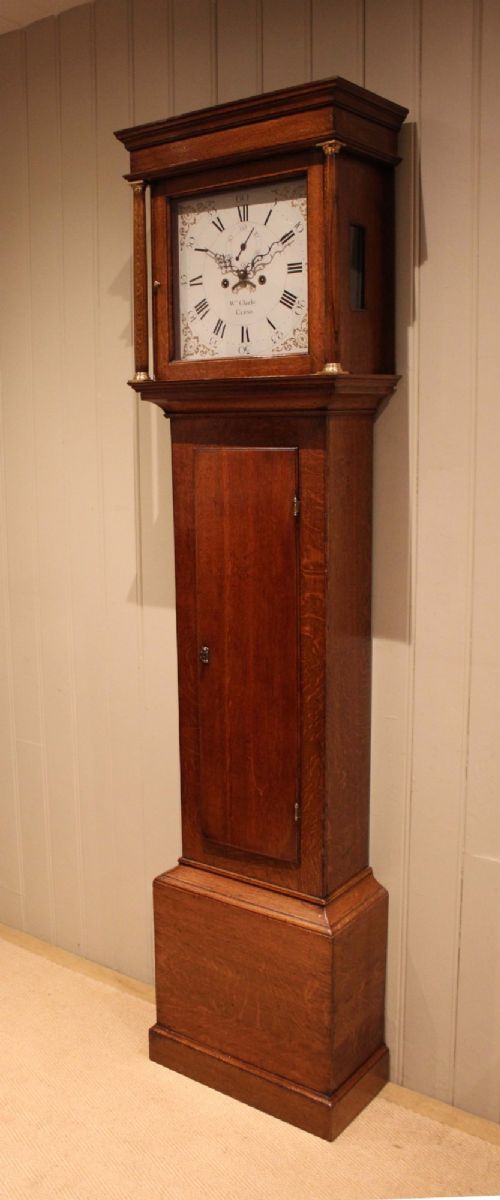
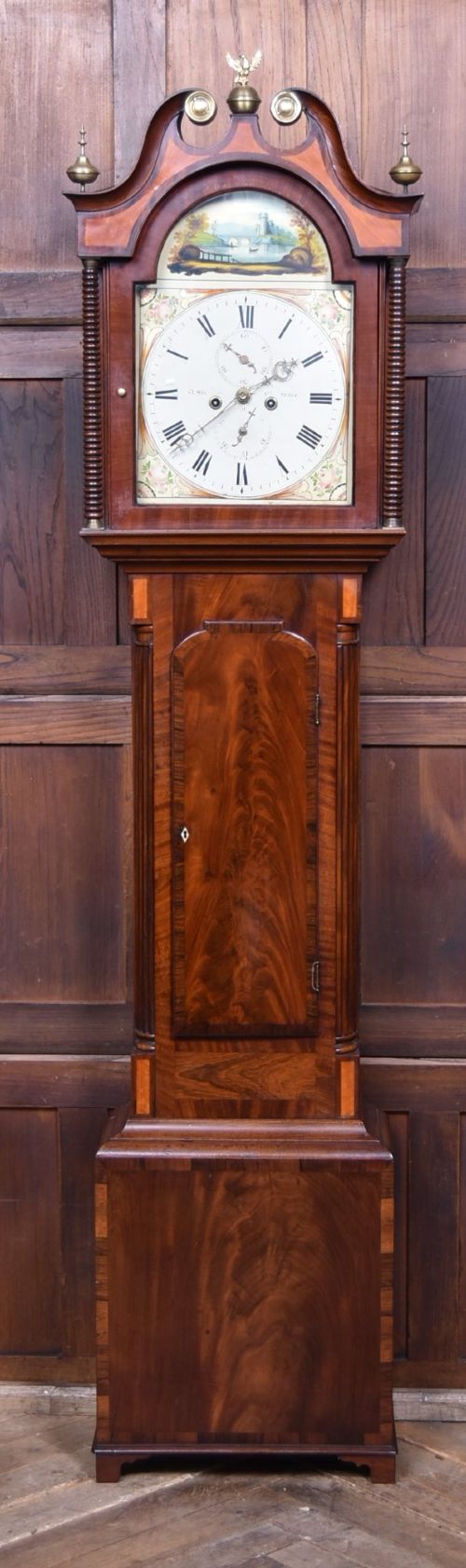
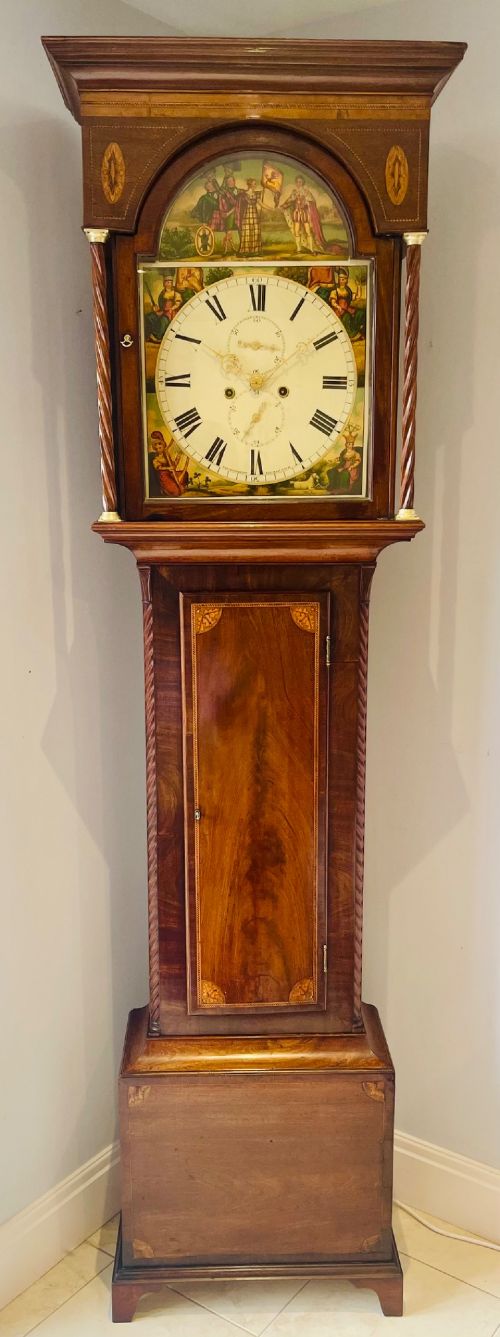
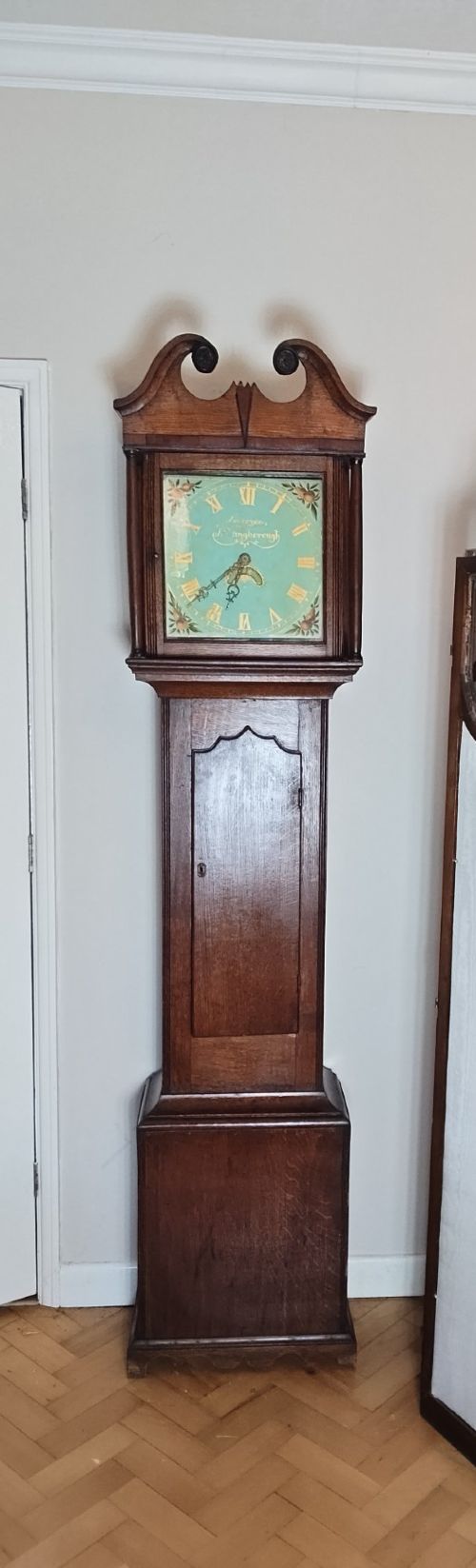
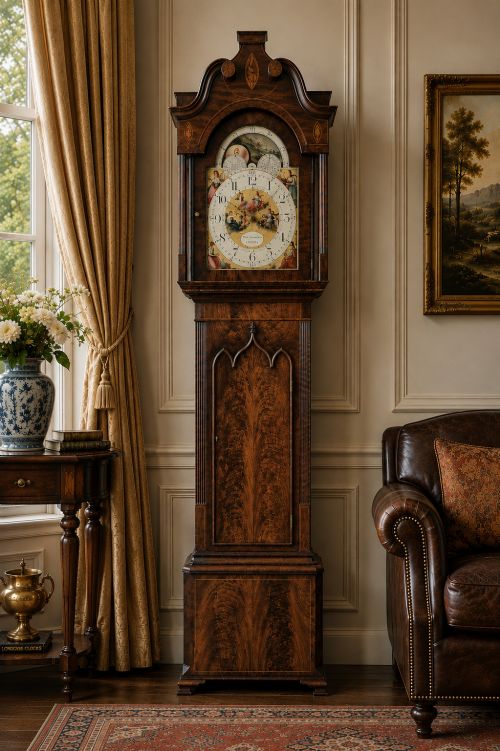
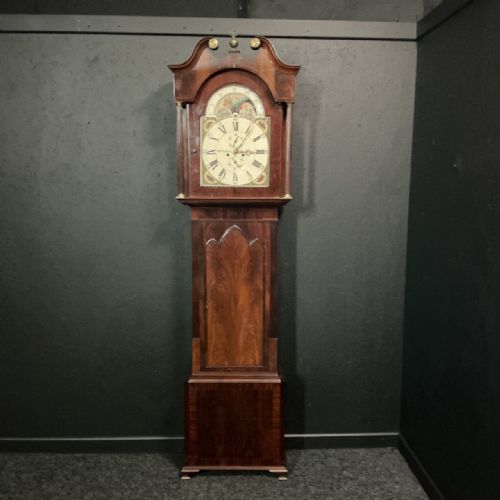
A painted longcase clock combines a tall wooden housing with a dial face decorated in pigment, spanning periods from the eighteenth century through the nineteenth century, with Victorian and later examples also appearing. Buyers encounter forms ranging from full-height grandfather clocks to more compact proportions such as grandmother clocks.
The styles recorded across these pieces encompass Georgian, George III, Regency, and Scottish regional variations, alongside distinct decorative treatments like Chinoiserie and lacquered finishes. The housing protects the weight-driven or spring-driven movement while displaying timber grain and painted scenes.
Makers inscribed on these dials span English towns and Scottish burghs, linking the domestic clockwork directly to regional horologists who signed their work on iron or brass faces.
Materials and Construction
Cabinetmakers utilised structural hardwoods like oak and figured timbers such as mahogany for the tall cases, sometimes enhancing surfaces with gold leaf, inlays, or coloured lacquer.
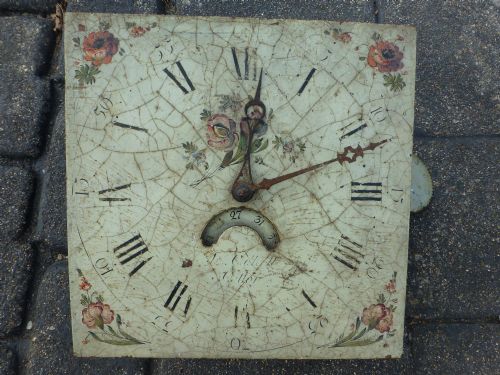
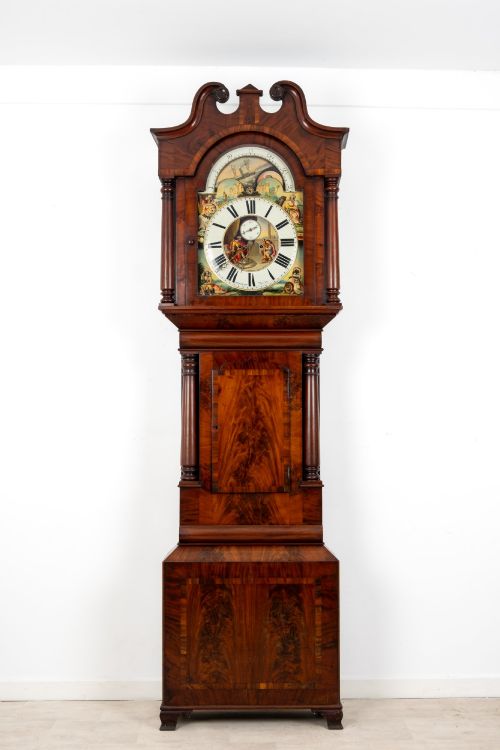
Dial faces were typically formed from painted iron or brass, upon which artisans brushed numerals, floral details, and subsidiary indicators for seconds, dates, or lunar cycles.
Movements combined brass wheels, plates, and arbors with glass inspection panels and iron weights, housed securely within the trunk and hood of the case.
Some Scottish clocks feature painted horses trotting across the dial alongside the standard hours.
Judging Quality and Execution
The refinement of the cabinetwork dictates the visual impact of a painted longcase clock, distinguishing simple regional joinery from sophisticated flame mahogany cases with intricate inlay and architectural hoods.
Artistry upon the dial face separates standard production from superior work, observable in the crispness of the hand-painted numerals, the detail of subsidiary dials like moon phases, and the legibility of the maker's signature.
The complexity of the internal movement, whether an eight-day mechanism or a specialised chime train, reflects the original commission's ambition and the horologist's skill.
Edward White Birmingham·John fielder of Alton·Hendrie Ogg Dunfermline·D. Straiton Montrose·Tait Peebles·Samuel Kellett of Bredbury·Parkinson Bros Batley·D Williams of Crickhowell·Edward Shepley of Manchester·Thomas Webbe of New Quay·Richard Sharkey Birmingham·Thwaites London·Charles Dowsett Of Canterbury·John Denbigh Merton Park·Will Lassell of Toxteth Park Liverpool·David Craig Ford Path head
The Painted Longcase Clock Glossary
- Longcase clock
- A tall pendulum clock enclosed in a wooden case resting on the floor, frequently termed a grandfather clock. These housing units protect the movement while serving as prominent furniture items.
- Moon phase
- A mechanical dial feature displaying the lunar cycle through a rotating painted disc showing the phases of the moon. This complication added both utility and visual charm to the clock face.
- Chinoiserie
- A European decorative style imitating Chinese artistic motifs, often rendered in lacquered finishes with painted figures and landscapes upon the clock case. This aesthetic was particularly popular during the Georgian era.
- Drum head
- A round-topped dial enclosure resembling a drum, characteristic of specific regional Victorian clock designs. This profile sits atop the waist trunk in place of the traditional architectural hood.
- Arch dial
- An arched upper section on the clock face that accommodates subsidiary displays such as calendar work or lunar tracking. This shape defines many fine Georgian and Regency examples.
Painted Longcase Clock: Frequently Asked Questions
What is a painted longcase clock?
A painted longcase clock is a tall floor-standing timepiece featuring a decorated iron or brass dial face housed inside a wooden trunk.
These pieces combine cabinetmaking with mechanical clockwork, often displaying regional signatures and decorative lacquer work.
How do I identify a Georgian clock?
Georgian examples typically display mahogany or oak cabinetry, architectural hoods, and hand-painted dials signed by period horologists.
Regional variations in Scotland and England also exhibit distinct stylistic markers associated with eighteenth-century production.
How do I care for my clock?
Keep the clock in a stable environment away from direct sunlight and damp conditions to protect the wooden case and painted dial surface.
Ensure the case stands level on the floor to maintain the correct beat of the pendulum.