
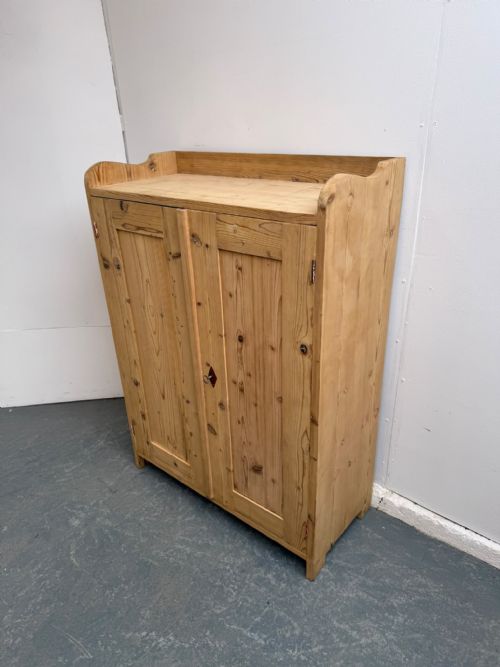


Painted Linen Press Dresser
A painted linen press dresser brings substantial storage and painted character to a room, drawing on centuries of domestic tradition.
Painted Linen Press Dresser
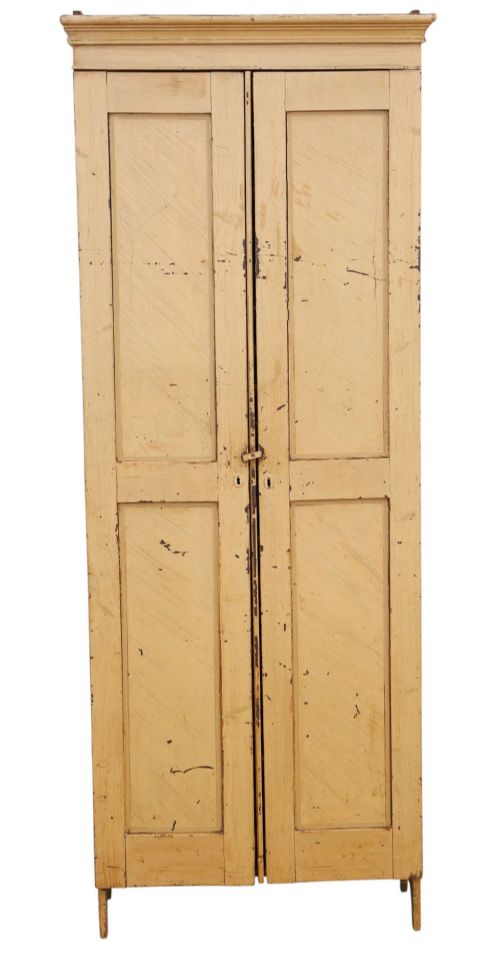
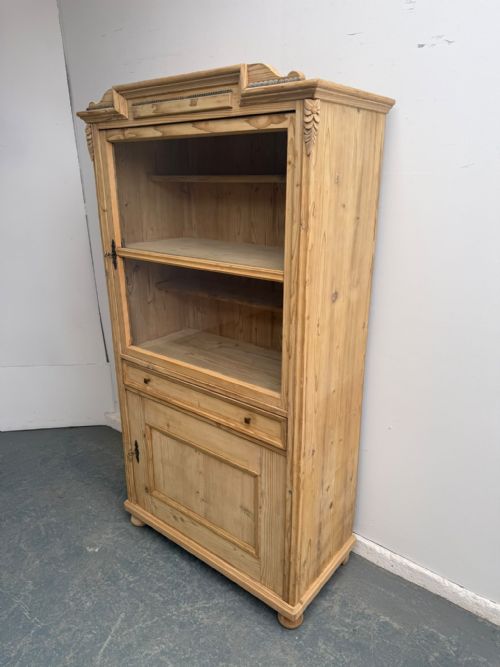
A painted linen press dresser brings together large-scale domestic storage and regional painted finishes across various styles. When you search for a painted linen press dresser, you encounter substantial cupboards, housekeeper's cupboards, and cabinets spanning the eighteenth and nineteenth centuries.
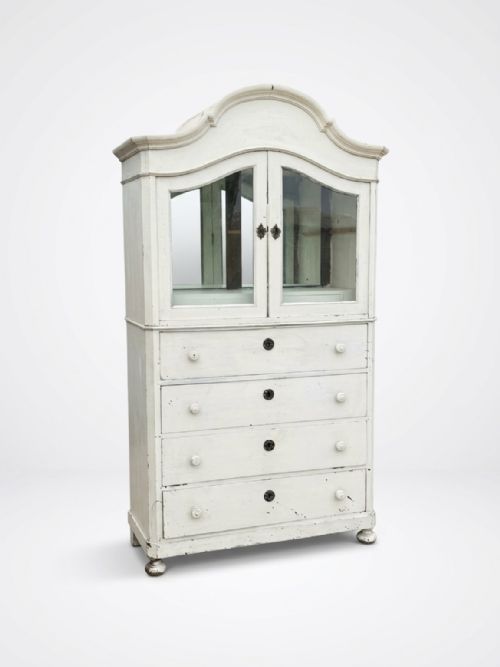
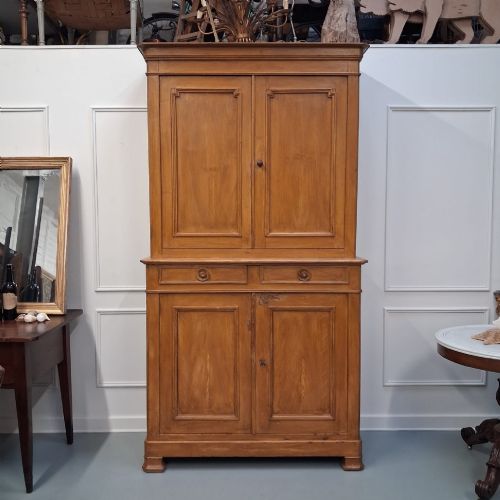
The pieces on this page originate from English, French, Scandinavian, and Irish workshops, showing vernacular forms like bonnet tops and glazed display sections. Pine and oak form the structural core of these heavy storage pieces, finished in old paint, cream pigments, or natural wax surfaces.
How they were made
Local joiners built these storage pieces using solid pine and oak timbers, assembled with traditional framing joints designed to withstand heavy daily use. Iron, brass, and glass fittings complete the construction, securing large doors and drawers.
Makers applied layers of paint directly onto the wood, often leaving surfaces in original pigment or preparing them for wax finishes. Regional variations in construction reflect the local timber availability and domestic requirements of English, French, and Scandinavian workshops.
Several cupboards still carry the faint aroma of dried lavender and old linen stored inside them generations ago.
What varies in quality
The distinction between standard utility cupboards and finer examples lies in the proportion of the carcass and the retention of original surface treatments. Pieces retaining their early paint layers or distinct regional characteristics hold greater visual interest than later stripped variants.
Joinery execution and the balance of secondary woods contribute to the overall integrity of the cabinet. Well-proportioned cornices and original iron hardware elevate the presence of a storage piece within an interior.
The Painted Linen Press Dresser Glossary
- Housekeeper's Cupboard
- A large storage cabinet traditionally used in country houses for linen, provisions, and domestic stores. These substantial pieces often feature multiple doors and internal shelving.
- Buffet à deux corps
- A traditional tall cabinet split into an upper and lower section, commonly found in French provincial workshops. This form offers generous shelved and enclosed storage.
- Bonnet top
- An arched or curved upper pediment crowning a cabinet, designed to give height and architectural presence to regional furniture. This feature appears frequently on Scandinavian storage pieces.
- Pine
- A soft timber widely utilised across English, Irish, and continental workshops for carcases and shelving. It accepts painted finishes readily and forms the primary material for country furniture.
- Original paint
- Surface pigment applied during the period of manufacture that has survived without modern stripping or repainting. This finish preserves the historical character of the piece.
Painted Linen Press Dresser: Frequently Asked Questions
Where should I place a large cupboard?
These tall storage pieces suit large kitchens, dining rooms, or hallways where their substantial scale can anchor the room. Ensure you measure ceiling height and floor space carefully before positioning.
Because they offer deep shelving and enclosed hanging or folding space, they function effectively as standalone larders or linen stores in busy living areas.
How do I care for painted wood?
Dust surfaces regularly with a soft, dry cloth to prevent dirt accumulation on historic paint layers. Avoid harsh chemical cleaners that might strip or soften the aged pigments.
Keep these cabinets away from direct heat sources and strong sunlight to prevent the timber from warping and the historic paint from fading or cracking.
Are these pieces made of solid timber?
Most examples utilise solid pine, oak, or regional softwoods throughout their construction, built by traditional joiners using heavy timbers. Secondary woods may appear in less visible areas like drawer linings and backboards.
This solid construction gives the pieces significant weight and durability, allowing them to survive centuries of domestic use.
How do I identify regional styles?
Regional pieces often display distinct architectural cues, such as the curved pediments on Scandinavian cabinets or the specific proportions of English and Irish housekeeper's cupboards. Hardware choices and construction details further point to their geographical origins.
French and West Country pieces each maintain unique moulding profiles and panel layouts characteristic of their local woodworking traditions.