




Painted Landscape Urns
These painted landscape urns bring together meticulous ceramic artistry and sweeping pastoral views across several centuries of production.
Painted Landscape Urns
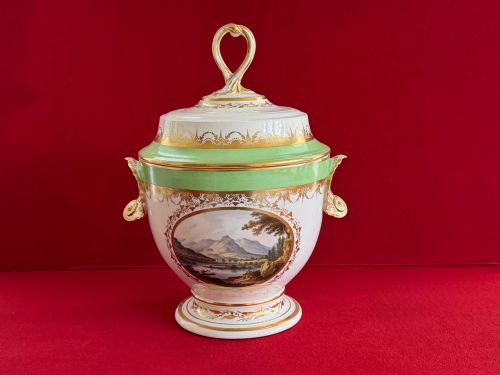
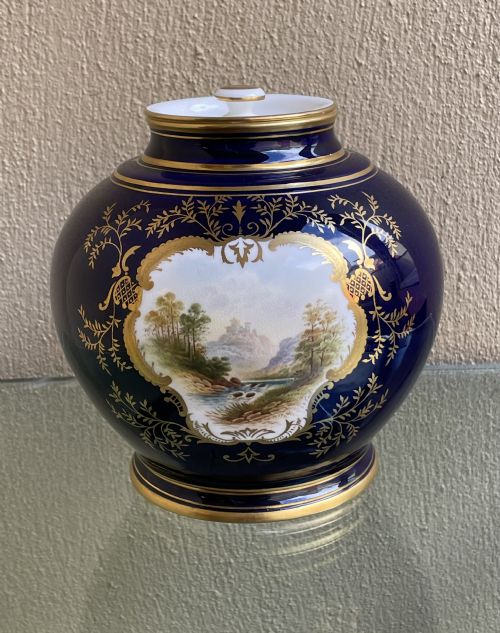
Painted landscape urns encompass a variety of ceramic vessels including vases, ice pails, bough pots, and jars decorated with scenic views. These pieces emerge from periods such as the Georgian, Regency, Edwardian, and the 19th century, reflecting diverse international traditions.
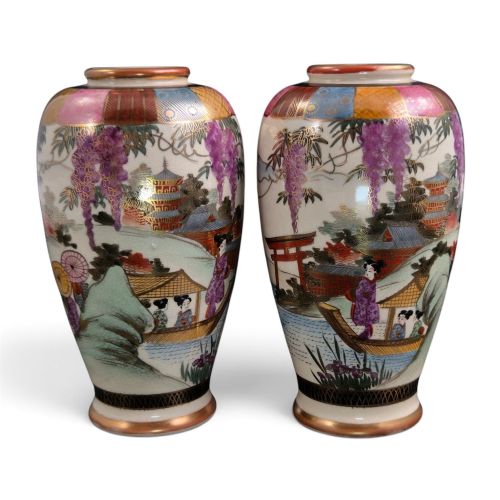
Makers and factories applied these landscapes to porcelain and earthenware using enamel paint, often enhanced with gold leaf and gilding. The forms range from classical Medici shapes to Japanese Satsuma and Kutani vessels featuring lakes, wisteria, and castles.
Collectors encounter both English porcelain manufactories and Japanese workshops within this group. The fusion of traditional vessel forms with detailed topographical or imaginary scenes defines the category.
Materials and Techniques
Potters shaped porcelain and earthenware into vessels and covers before applying detailed enamel paint to render pastoral and architectural scenes. Artisans frequently incorporated gold leaf, gilt, and gilding to highlight handles, rims, and borders.
Skilled painters worked within factories or specialised workshops to capture specific landscapes, utilising fine brushes for miniature detail on curved ceramic surfaces. Firing techniques fixed these pigments and precious metals onto the body of the vase.
Certain Japanese Satsuma vases present serene lake landscapes so minutely detailed that even the individual petals of surrounding wisteria find their place.
Qualities of the Work
The refinement of the painted landscape dictates the standard of the piece, separating standard production from masterwork execution. Fine brushwork depicting recognisable castles, highland cattle, or intricate foliage demonstrates superior hand-painting ability.
The integration of gilding and the preservation of the porcelain body contribute to the overall merit of the object. Weight, proportion, and the clarity of the enamel pigments distinguish the finest manufactories.
George Robertson·E O Ball·Zachariah Boreman·John H Plant·Flight Barr and Barr·Harry Stinton·Harry Davis
The Painted Landscape Urns Glossary
- Urn
- A decorative vase typically featuring a footed base and sometimes handles or a cover. These vessels served as ornamental centrepieces in period interiors.
- Gilding
- The application of gold leaf or ground gold onto the ceramic surface. This technique accents handles, rims, and borders to frame the painted landscape.
- Bough pot
- A specialised vessel designed to hold cut branches or flowers. They often feature pierced covers and painted landscape decoration.
- Enamel paint
- A vitreous composition fused to the ceramic body through firing. It provides durable colour for detailed landscape scenes.
Painted Landscape Urns: Frequently Asked Questions
How were these urns used?
Historically, these vessels functioned as ornamental objects displayed on mantelpieces, side tables, or within garniture sets. Bough pots specifically held seasonal greenery or flowers.
Over time, their primary role shifted to purely decorative display, showcasing the skill of the ceramic painter.
How do I care for antique painted urns?
These ceramic and porcelain items require gentle dusting with a soft, dry cloth to protect the enamel paint and gilding. Avoid using liquid cleaners or abrasive materials.
Keep the pieces away from direct sunlight to prevent any fading of the delicate landscape pigments over time.
How do I identify the period?
Stylistic clues such as Neoclassical shapes, Regency forms, or Edwardian motifs help determine the era of manufacture. Factory marks and painter signatures also provide specific dating evidence.
Comparing the style of the landscape painting with known factory output confirms the period of origin.