
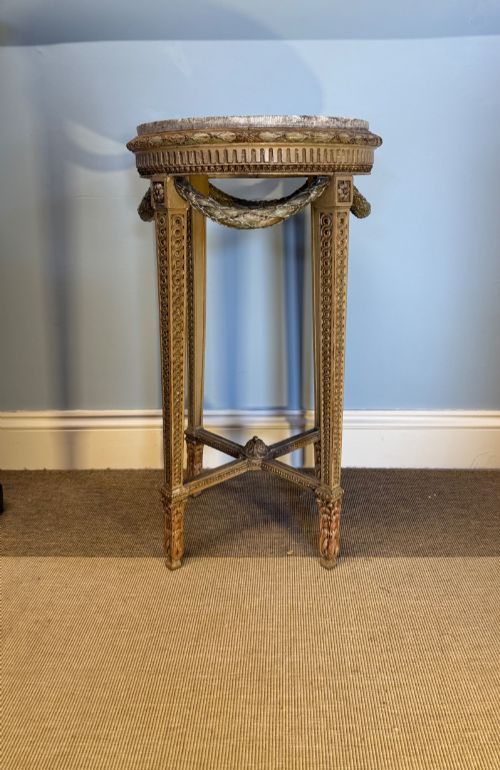
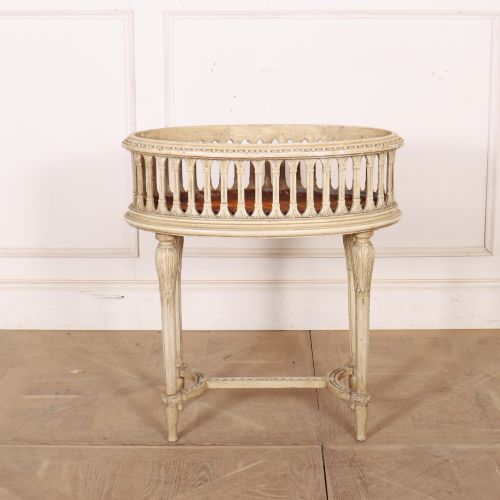
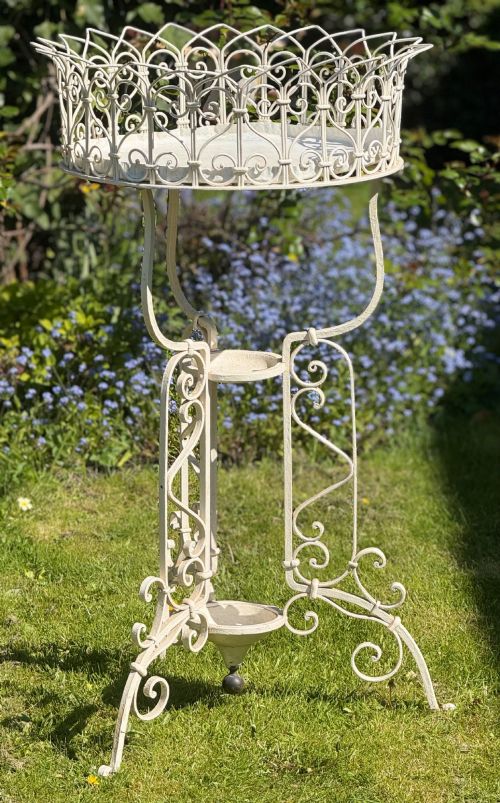


Painted Jardiniere Stand
A painted jardiniere stand holds heavy terracotta or porcelain pots, bringing structural height and botanical colour straight into a hallway or drawing room.
Painted Jardiniere Stand
When you search for a painted jardiniere stand, you are looking at elevated plant holders designed to display indoor foliage and floral arrangements away from damp floors. The pieces gathered here span from the Georgian era through the Victorian period and into the early twentieth century.
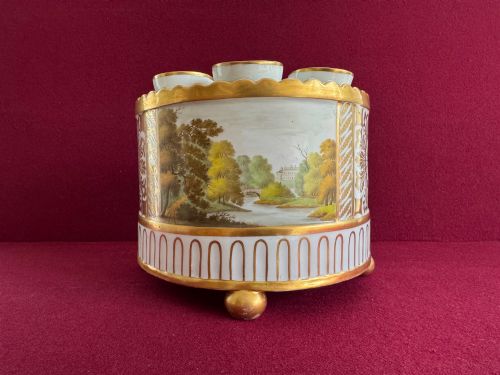
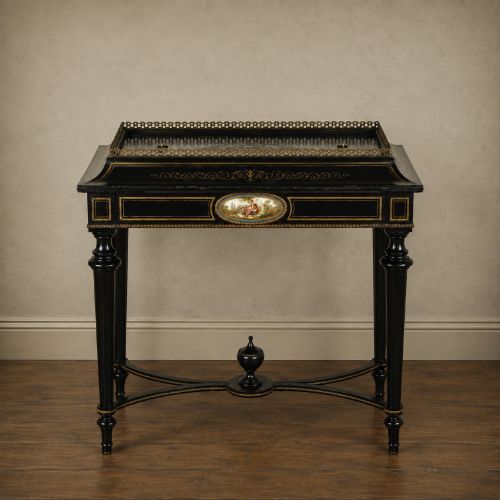
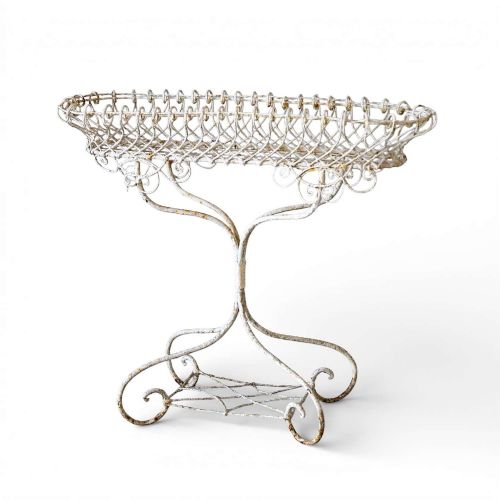
You are most likely to meet French and English examples constructed from wrought iron, wirework, pine, and ebonised wood. Forms range from simple tripod bases to elaborate tiered baskets and stands mounted with porcelain plaques.
The assortment includes related plant stands, umbrella pots, and majolica pedestals that serve the same domestic purpose of displaying greenery. These objects reflect the nineteenth-century obsession with indoor conservatories and parlour gardening.
How they were made
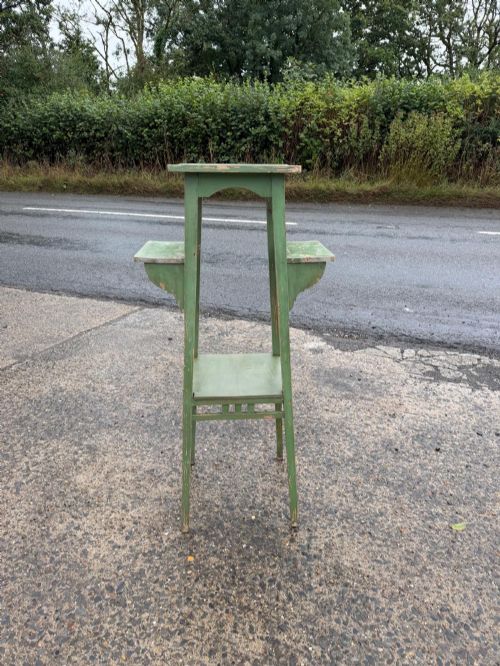
Makers utilised forged wrought iron and bent wirework to construct sturdy outdoor and indoor frames, often finishing them with scrollwork and lattice baskets. Timber stands relied on joinery using pine and satinwood, frequently receiving layers of decorative paint or ebonising to imitate more costly materials.
Surface treatment defines these objects, with original paint, floral decorations, and gilded finishes appearing alongside inset porcelain plaques and marble tops. These combined techniques allowed metalworkers and cabinetmakers to produce both rustic folk art pieces and refined salon furniture.
Listings feature periods spanning from Georgian and Victorian times to the 1930s, utilising wrought iron, pine, brass, and porcelain.
What varies in quality
The distinction between ordinary and superior pieces lies in the crispness of the ironwork scrollwork and the sophistication of the painted surface decoration. Hand-painted floral motifs and integrated porcelain plaques elevate a simple utility stand into a considered decorative object.
Structural integrity and the survival of original paint finishes dictate the standing of an example. Heavy cast and wrought iron versions depend on the original gauge of metal, while wooden stands rely on the preservation of their historic painted or ebonised surfaces.
Burmantofts
The Painted Jardiniere Stand Glossary
- Jardiniere
- An ornamental pot or stand for holding plants or flowers. They sit on the floor or upon dedicated pedestals.
- Ebonised
- Wood treated with a dark stain or finish to imitate ebony. This technique was popular in nineteenth-century French and English furniture.
- Wirework
- Metal strands bent and welded into intricate openwork structures. Victorian manufacturers used this technique for lightweight plant stands.
- Majolica
- Heavy earthenware pottery covered with an opaque tin-glaze and brightly coloured enamels. It frequently appears on Edwardian plant pedestals.
- Napoleon III
- A French design style spanning the mid to late nineteenth century. It incorporates eclectic revivals, ebonised surfaces, and applied porcelain plaques.
Painted Jardiniere Stand: Frequently Asked Questions
What is a jardiniere stand?
A jardiniere stand is a raised piece of furniture or metalwork designed to support a plant pot off the floor. They bring height and botanical decoration to interior spaces.
Historically, they allowed homeowners to display prized ferns and flowering plants in parlours and conservatories without damaging interior surfaces.
How old are these plant stands?
The pieces available range primarily from the nineteenth century through the Edwardian period and into the 1930s. Earlier examples date back to the Georgian era around 1820.
Age is determined by the construction methods, materials used, and the style of the paint finish or metalwork.
Can I use them outdoors?
Many wrought iron and wirework examples were originally built for garden use, weathering over decades to develop patinas. However, delicate painted wooden pieces and marble tops are better suited for indoor environments.
Check the material construction to decide whether a stand belongs in a conservatory, hallway, or patio.
How do I care for original paint?
Original painted surfaces require gentle cleaning with a dry or barely damp cloth to preserve historic finishes. Avoid chemical solvents that might lift old layers of paint or gilding.
Keep wooden and iron stands away from excessive moisture and direct heat sources to prevent cracking or flaking.