
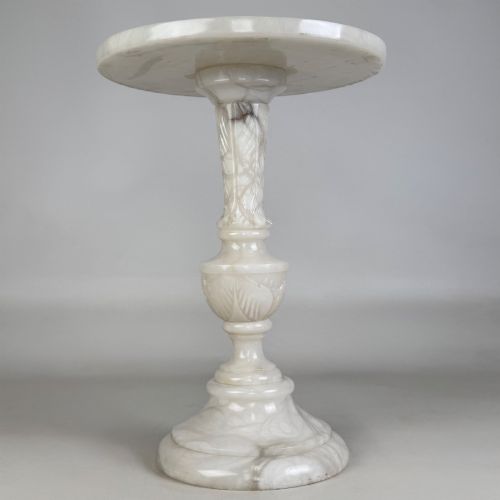
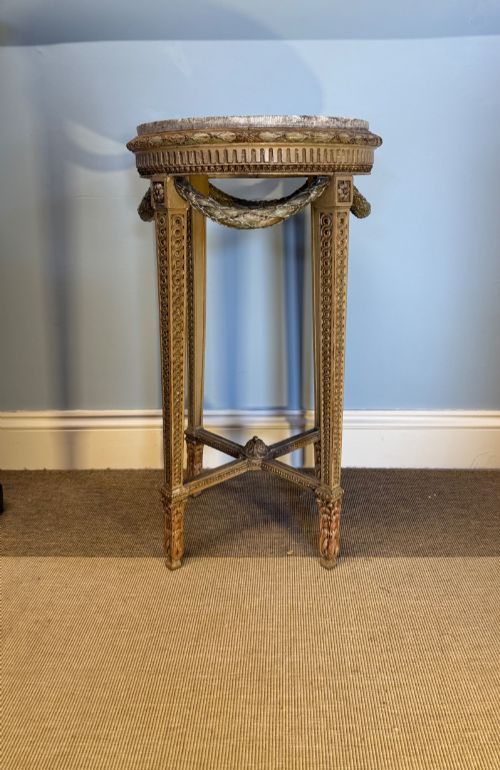
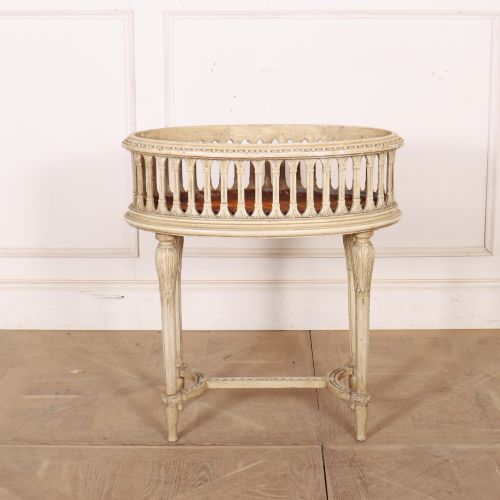


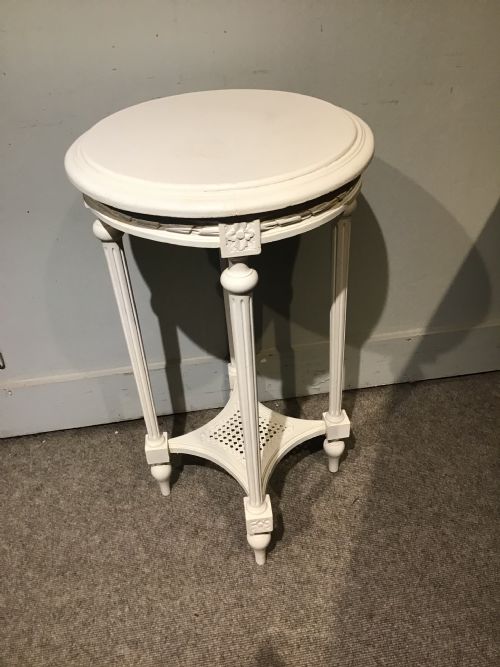


Carved Cream Plant Stand
A carved cream plant stand brings architectural presence and classical proportion into a room, supporting greenery or sculpture upon a shaped wooden or stone column.
Carved Cream Plant Stand
A carved cream plant stand combines functional support with decorative carving, originating across the nineteenth and early twentieth centuries in various European traditions.
The pieces on this page appear in forms such as columns, pedestals, and side tables, often finished in painted wood, gesso, or parcel gilt.
Makers drew on Louis XVI style, Venetian revival, and neoclassical motifs to create tall supports suitable for interiors.
How they were made
Carved wood provides the structural core for many examples, finished with paint, gesso, and touches of gold leaf to accentuate the relief work.
Stone elements such as marble, onyx, and alabaster form contrasting table tops and columns, offering cool textures alongside painted timber.
Listings feature items spanning the nineteenth century through the 1930s, incorporating materials such as marble, onyx, alabaster, and painted wood.
What varies in quality
Quality rests in the crispness of the carving and the cohesion of the painted or gilded surface over the wood or gesso substrate.
Heavier stone tops, such as arabescato marble or onyx, distinguish substantial architectural pieces from lighter occasional tables.
The Carved Cream Plant Stand Glossary
- Parcel Gilt
- Woodwork partially decorated with thin sheets of gold leaf to highlight specific carved details. This technique creates contrast against painted surfaces.
- Gesso
- A plaster mixture applied to wood surfaces as a smooth base for paint or gilding. It allows for sharp relief work.
- Neoclassical
- A style drawing on classical Greek and Roman architecture and ornamentation. It influences the column forms and symmetrical motifs seen on these stands.
- Jardiniere
- An ornamental pot or stand for holding plants or flowers. These items often double as decorative pedestals.
Carved Cream Plant Stand: Frequently Asked Questions
What is a carved cream plant stand?
A carved cream plant stand is a decorative pedestal or table designed to elevate plants, sculptures, or lamps. These pieces date from the nineteenth and early twentieth centuries.
They utilise materials like carved wood, painted gesso, and marble to create structured vertical forms for interior display.
How were these stands used historically?
Historically, these stands occupied corners and window spaces in drawing rooms and halls to display potted ferns, jardinières, or art objects. Their height brought greenery into the line of sight.
They also served as occasional tables or sculptural plinths within formal interior schemes.
How do I live with a painted plant stand?
Place a plant stand where its height and silhouette can break up the horizontal lines of standard furniture. Ensure heavy pots have protective pads to preserve the painted or polished top.
Keep them away from direct heat sources to protect the underlying wood and gesso finishes.
How do I tell different periods apart?
Nineteenth-century examples often lean heavily on classical proportions and dense timber carving. Edwardian and later twentieth-century pieces incorporate lighter painted finishes and revival styles.
Examining the materials, such as onyx columns or arabescato marble, helps contextualise the manufacturing era.