



Painted Iron Garden Chairs
These painted iron garden chairs bring enduring structure and colour to outdoor spaces, combining robust metalwork with the classic forms of past centuries.
Painted Iron Garden Chairs
When you search for painted iron garden chairs, you encounter a robust selection of outdoor seating that spans several distinct periods, from the ornate output of the nineteenth century through to the cleaner lines of the interwar years. These pieces serve as both functional garden furniture and architectural focal points, often surviving decades of exposure to the elements.
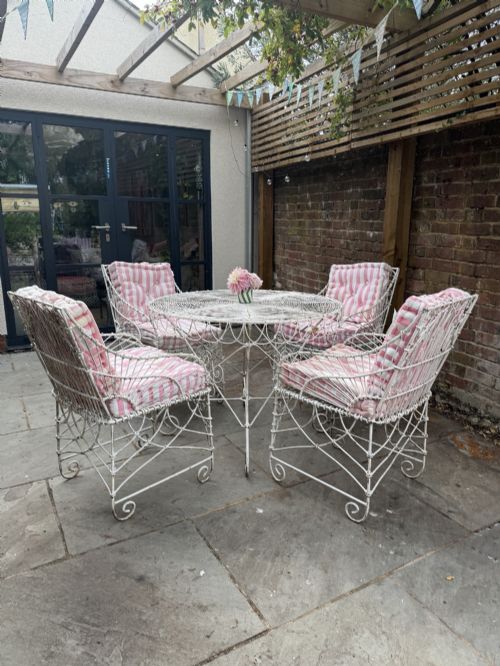
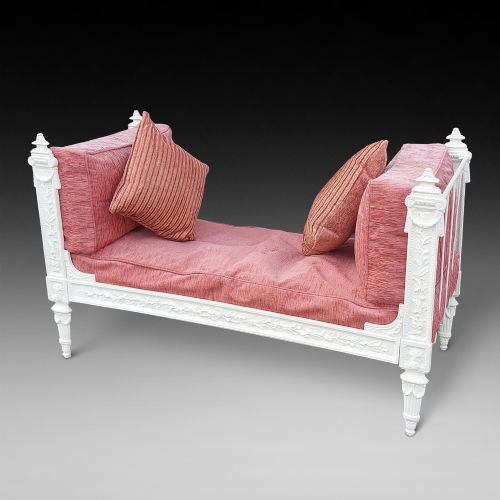
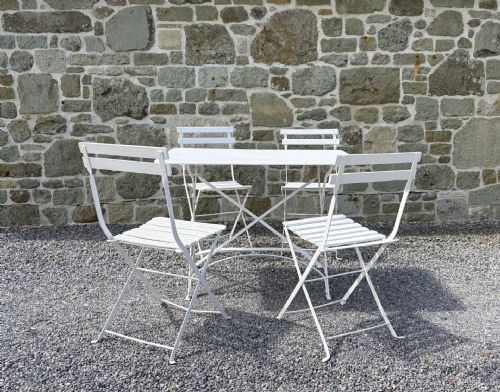
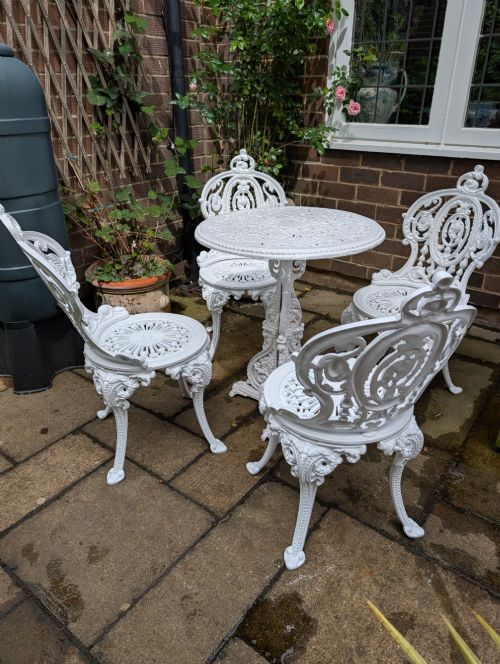
The versions you are most likely to meet on this page include Victorian cast iron designs featuring botanical motifs, paired armchairs from the nineteen-twenties, and French folding examples suited to smaller terraces. Alongside individual chairs, the selection occasionally encompasses matching tables, benches, and daybeds.
Origin and stylistic influence vary considerably, taking in English Victorian workshops, French country designs, and Gothic revival patterns. Whether configured as a matching set of four or found as isolated pairs, these metal seats reflect the changing domestic priorities of outdoor leisure over the last two centuries.
Materials and construction methods
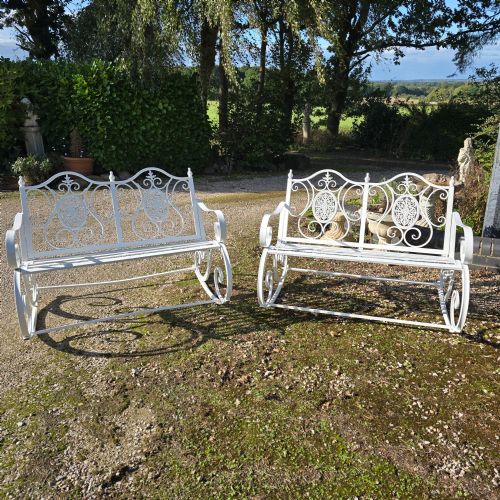
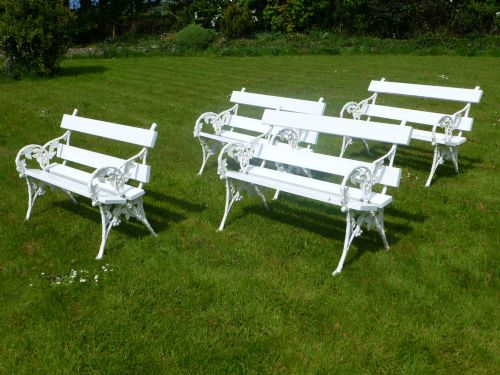
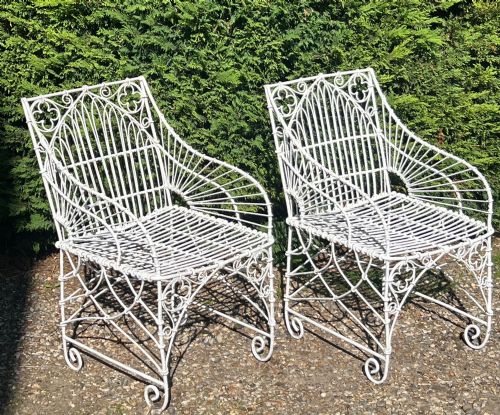
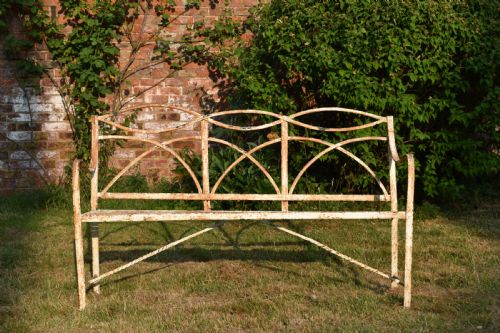
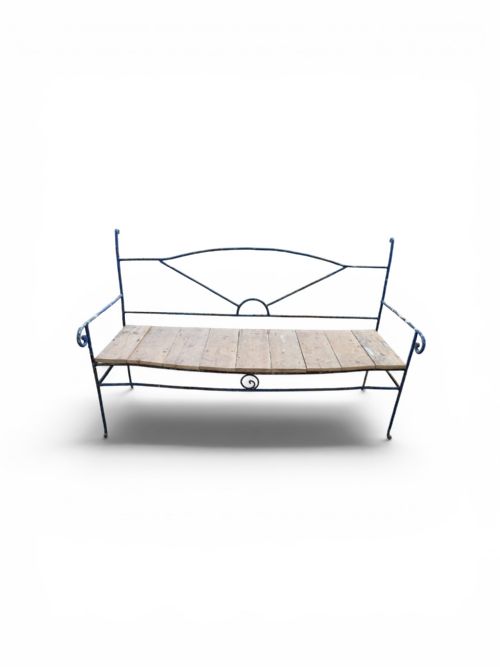
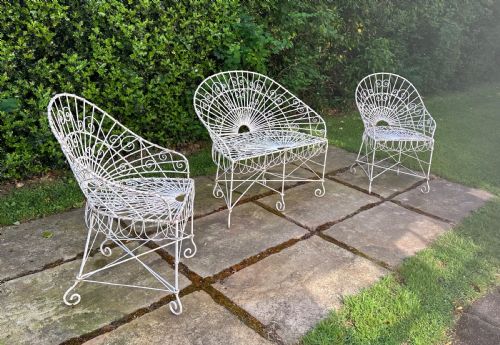
The construction relies heavily on two distinct forms of metalwork: cast iron, which allowed founders to produce ornate reliefs of leaves, fruit, and animal masks, and wrought or strap iron, which was heated and hammered into lighter, linear frameworks. Wirework also appears in specific nineteenth-century pieces, woven to create resilient grid patterns.
Surface finish is integral to the character of these pieces, utilising layered paint over iron to provide protection against rust while offering decorative colour. Timber and hardwood sometimes supplement the iron frames, particularly on seat slats or associated tables, introducing a contrasting texture to the metal.
Listings feature periods spanning from the Regency era through the Victorian period, Edwardian years, and into the interwar nineteen-thirties.
Assessing quality and craftsmanship
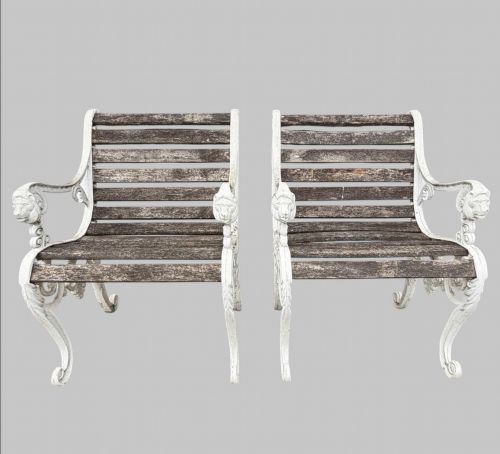
The distinction between ordinary utility pieces and finer examples often lies in the crispness of the casting and the ambition of the design. Foundries that employed detailed motifs - such as blackberry leaves, lion masks, or gothic tracery - produced work of greater visual depth than standard commercial manufacturers.
Structural integrity and the survival of original components dictate the standing of any given piece. Chairs that retain their balanced proportions, stable joints, and authentic painted surfaces without excessive structural loss occupy the higher end of the scale.
Falkirk foundry·Christopher Dresser
The Painted Iron Garden Chairs Glossary
- Cast iron
- A sturdy alloy poured into moulds while molten to create complex decorative patterns and robust garden furniture frames. It provides the heavy, sculptural quality seen in Victorian seating.
- Wrought iron
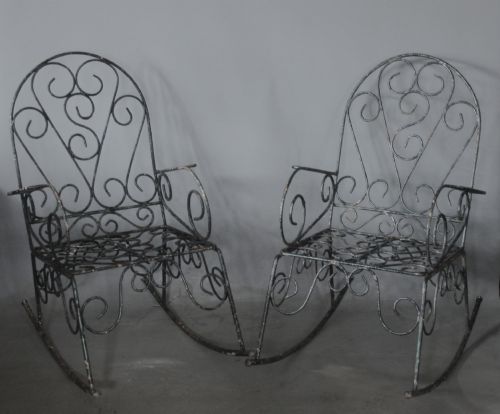
- Iron that has been heated and shaped by hand with tools, resulting in fibrous, resilient structures that often appear lighter and more linear than cast pieces.
- Strapwork
- Flat strips of metal arranged in geometric or interlaced patterns, frequently utilised in Regency and Victorian garden benches for backrests and seats.
- Gothic Revival
- A nineteenth-century stylistic movement drawing on medieval architectural forms, characterised in garden furniture by pointed arches and vertical tracery.
- Wirework
- A technique involving intertwined metal wires to form supportive, lattice-like surfaces for seats and tables, particularly popular during the late Victorian era.
Painted Iron Garden Chairs: Frequently Asked Questions
How do I care for painted iron garden chairs outdoors?
These chairs tolerate outdoor placement well due to their sturdy metal construction, but exposure to persistent moisture will eventually cause rust. Keeping them in a sheltered spot during the winter months helps preserve the painted surface.
Applying a fresh coat of suitable metal paint when the existing finish begins to weather will protect the ironwork for years to come. Avoid using harsh chemical cleaners that might strip the historic layers beneath.
Are cast iron and wrought iron chairs very heavy?
Cast iron garden furniture is notably heavy and solid, making these pieces stable in high winds but difficult to move about frequently. They remain best suited to a permanent spot on a lawn or terrace.
Conversely, wrought iron and wirework examples tend to be lighter and easier to reposition. Folding French designs offer even greater flexibility for storage during colder seasons.
Can I leave these chairs outside all winter?
While the iron is robust, freezing temperatures combined with trapped moisture can damage both the metal and any painted finishes. Storing them in a shed or under a protective cover during harsh weather extends their lifespan significantly.
If left out on grass, placing the feet on small pavers prevents moisture from rising directly into the base of the legs. This simple step minimises corrosion at the ground contact points.
How do I distinguish Victorian pieces from later designs?
Victorian examples often display heavier casting, deep botanical reliefs, and distinct stylistic cues like Gothic arches or naturalistic leaf motifs. Their construction tends to be substantial and ornate.
Later pieces from the interwar period or the nineteen-thirties lean towards cleaner lines, simpler strapwork, or the functional geometry of the Art Deco era. Examining the bolt types and assembly methods also offers clues to the decade of manufacture.