


Cast Iron Patio Chairs
Cast iron patio chairs are robust outdoor seats built from heavy metal, prized for enduring garden use and classical lines.
Cast Iron Patio Chairs
Cast iron patio chairs are heavy outdoor seats designed to withstand the elements while providing decorative garden seating. When you search for cast iron patio chairs, you encounter pieces originating from the nineteenth century, the Victorian period, and the interwar years up to nineteen thirty.
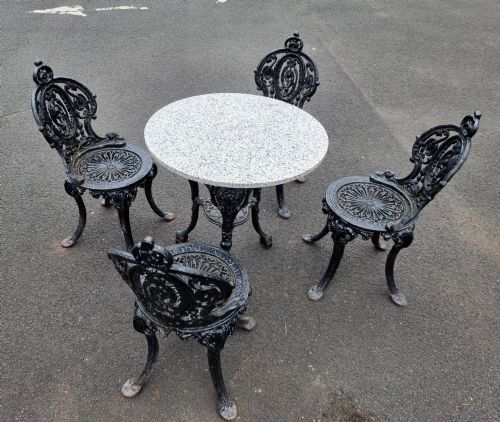
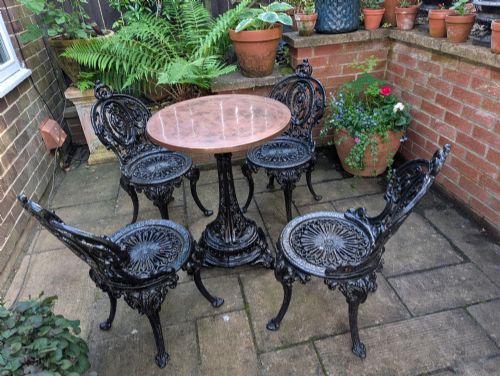
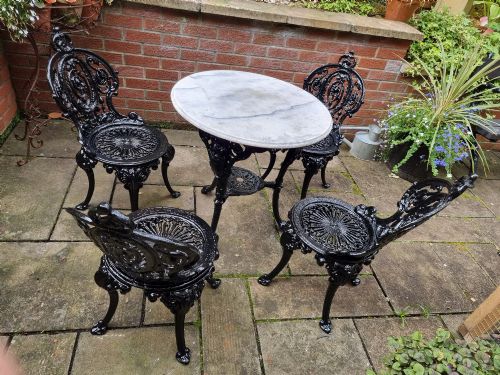
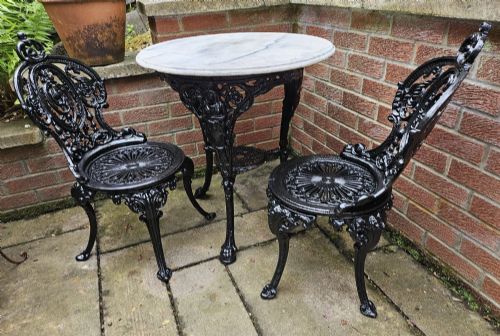
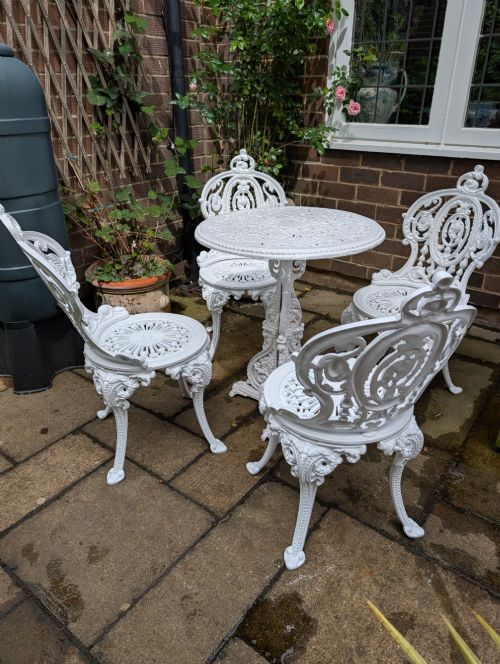
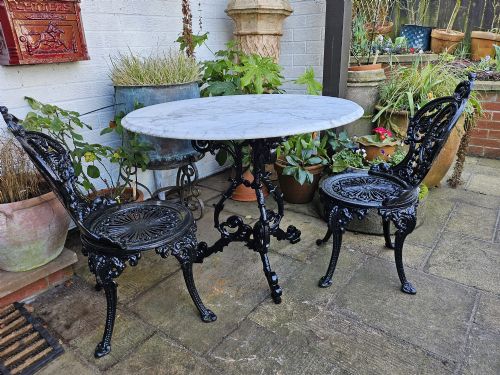
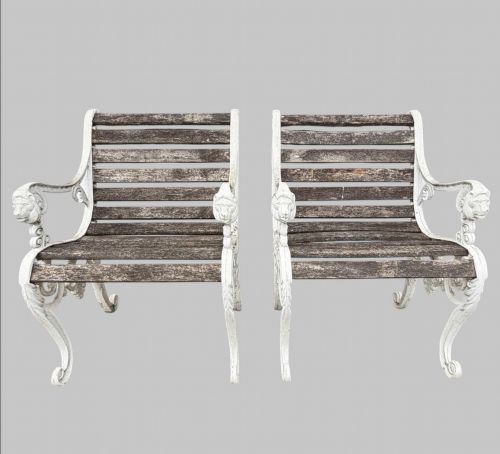
These items appear individually, as pairs of garden armchairs, or as part of larger garden dining sets and bistro sets. The most frequent forms include ornate Victorian designs, French bistro styles, and geometric art deco variations.
Certain examples incorporate distinct decorative motifs such as lion masks or gothic patterns. Others emerge from specific historical contexts, including pieces associated with nineteenth century institutional or club use.
Materials and construction
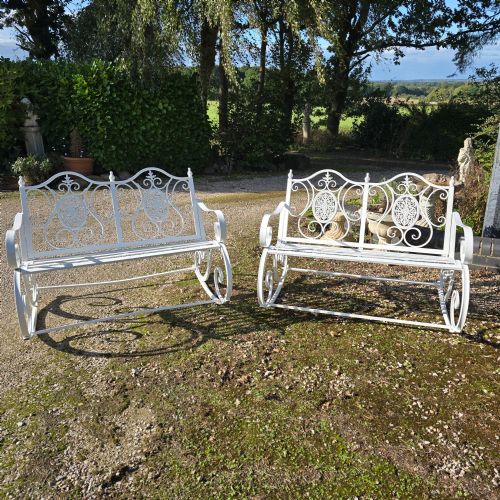
These chairs rely upon cast iron as the primary structural and decorative medium, shaped through traditional founding techniques to achieve intricate openwork patterns and robust frames. Many examples incorporate painted surfaces to protect the metal from weathering.
Certain companion tables feature contrasting materials such as marble or granite tops paired with the cast iron bases. Additional supporting elements occasionally utilise timber, wrought iron, or copper details.
Listings feature cast iron patio chairs spanning the nineteenth century, the Victorian era, and nineteen thirty, alongside materials like marble, granite, and paint.
Judging quality in cast iron
Quality rests upon the crispness of the casting and the depth of detail visible in the decorative motifs. Pieces featuring intricate relief work or named designs display superior workmanship compared to plain utility versions.
The integrity of the original metalwork and the survival of early painted surfaces dictate the standing of a piece. Retaining matching sets or integrated garden tables elevates the desirability of the seating.
Christopher Dresser·Val D Osne
The Cast Iron Patio Chairs Glossary
- Cast iron
- A strong, heavy iron-carbon alloy poured into moulds to create rigid forms. It allows for detailed ornamentation on outdoor furniture.
- Gothic revival
- An architectural and decorative style drawing on medieval forms. This aesthetic brings pointed arches and heavy tracery to nineteenth century garden chairs.
- Bistro set
- A small table accompanied by matching chairs designed for compact outdoor spaces. These sets frequently combine cast iron bases with stone tops.
- Victorian
- Pertaining to the reign of Queen Victoria, spanning the nineteenth century. This era produced heavily ornamented cast iron garden seating.
Cast Iron Patio Chairs: Frequently Asked Questions
How heavy are cast iron patio chairs?
These chairs possess substantial weight due to the density of the metal used in their construction. This heaviness ensures they remain stable on lawns and patios without blowing over in high winds.
Because of this mass, moving them requires deliberate effort, though it also contributes to their longevity and durability outdoors.
Can cast iron patio chairs stay outside all year?
Cast iron handles outdoor exposure well, but prolonged dampness leads to surface oxidation. Regular maintenance helps protect the metal from continuous moisture.
Many owners cover them during winter months or store them in sheltered garden buildings to preserve the painted finish and prevent weathering.
How do I identify a Victorian cast iron chair?
Victorian examples typically feature dense ornamentation, plant motifs, or gothic revival tracery cast directly into the iron backrest. The casting technique often displays high definition in the decorative scrolls and structural framing.
They frequently appear alongside matching garden tables or form part of larger matched dining sets dating from the nineteenth century.
Are these chairs comfortable without cushions?
The rigid metal seats feature contoured iron slats or solid cast panels designed to support the body without yielding. While functional on their own, many users add tailored fabric pads for extended seating.
The original designs relied on the ergonomic shape of the casting rather than upholstery to provide support.