



Vintage Garden Armchairs
These vintage garden armchairs combine sturdy iron and woven cane for outdoor seating with genuine character.
Vintage Garden Armchairs
Vintage garden armchairs span multiple decades from the nineteenth century through the interwar period, offering comfortable seating for lawns, patios and conservatories. Buyers searching for vintage garden armchairs encounter robust metal frames alongside lighter woven seating.
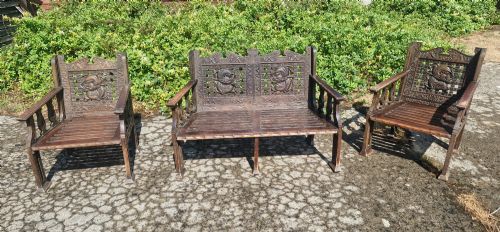
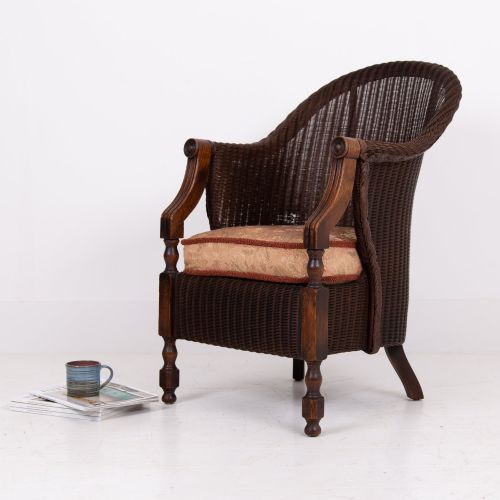
The selection on this page ranges from Victorian cast iron and Gothic style ironwork to 1930s Lloyd Loom, cane, rattan and timber deck chairs. French wrought iron Riviera chairs and Anglo-Indian conservatory pieces sit alongside British designs from Leicester makers.
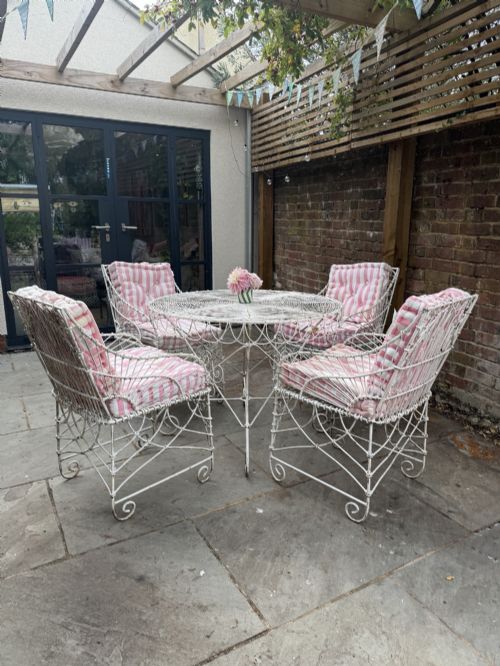
Forms include single rocking chairs, reclining deck chairs, and matching pairs or larger dining sets. These pieces bring functional period style directly to modern outdoor spaces.
How they were made
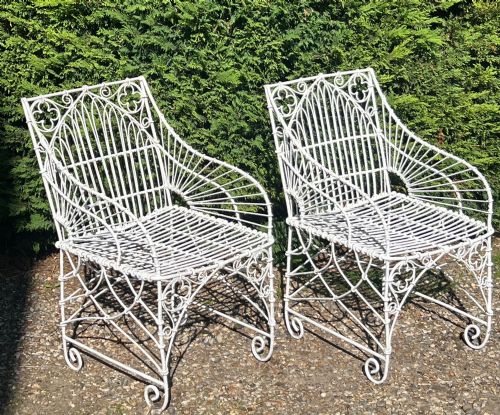
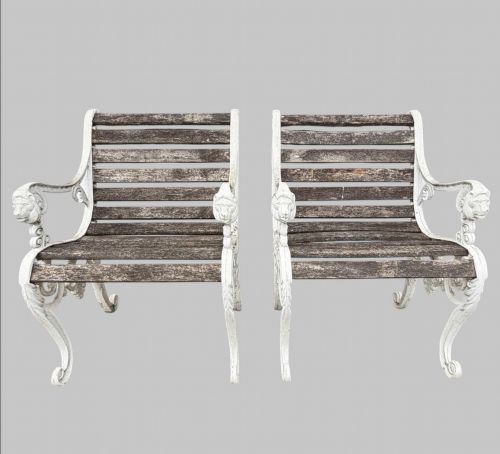
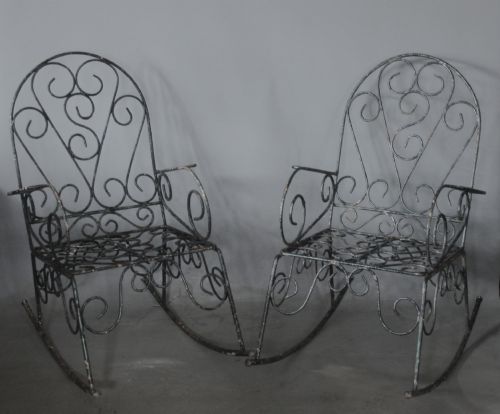
Metal frames rely on cast iron, wrought iron and wirework, often shaped with decorative motifs such as lion masks or Gothic arches. These structural elements provide the weight and durability needed for outdoor use.
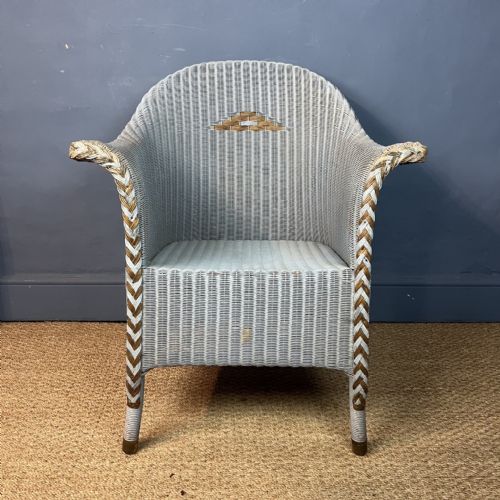
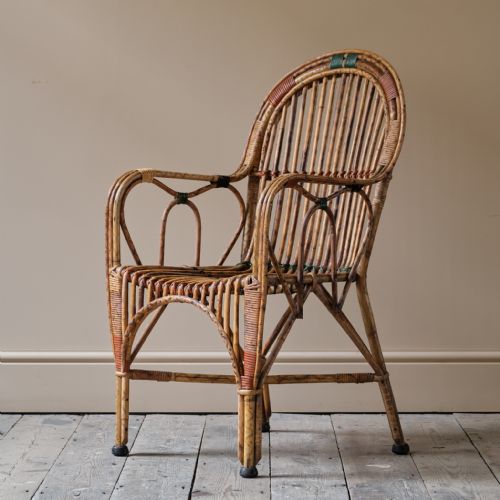
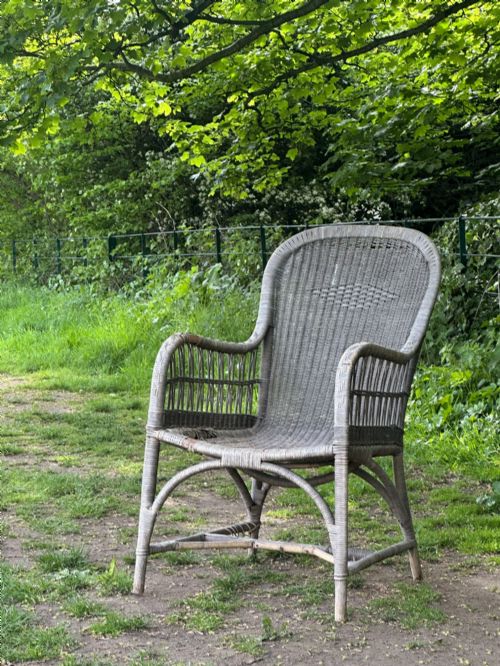
Woven examples utilise cane, rattan, wicker and bamboo, frequently handwoven over timber or wicker frames. Lloyd Loom items combine twisted paper fibre with sturdy wooden underframes for weather-resistant flexibility.
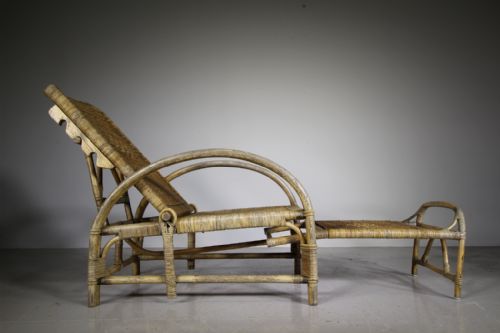
Surface treatments involve traditional paint finishes and treated timber frames, alongside walnut framing on folding steamer deck chairs.
Listings feature items spanning the 1900s to the 1940s, utilising cast iron, cane, rattan, fabric, timber and bamboo.
What varies in quality
The refinement of the casting and forging separates standard metal garden seating from finer examples. Crisp detailing in ironwork, such as well-defined lion masks or intricate wirework, indicates superior craftsmanship.
In woven pieces, the tightness and complexity of the cane or wicker work define the grade of the chair. Maker attribution, such as documented pieces from recognised Leicester workshops, elevates the standing of individual items.
Angraves of Leicester·Dryad of Leicester
The Vintage Garden Armchairs Glossary
- Cast iron
- Molten iron poured into a mould to create rigid garden chair frames and decorative patio sets. This material provides substantial weight and intricate ornamentation.
- Wrought iron
- Iron heated and hammered into shape by hand, resulting in resilient and slightly flexible garden frames like French Riviera chairs. It offers sturdy outdoor performance with graceful curves.
- Lloyd Loom
- A patented material made from twisted paper wire woven on a loom, invented in the early twentieth century. It delivers a smooth, durable surface that resists moisture.
- Rattan
- A naturally climbing palm used whole or split for flexible furniture weaving. It creates breathable, lightweight seating for conservatory and garden use.
- Steamer deck chair
- A folding wooden chair featuring an extended footrest, originally designed for ocean liners. These pieces adapt easily for relaxing outdoors.
Vintage Garden Armchairs: Frequently Asked Questions
Can vintage garden armchairs stay outside?
Cast and wrought iron chairs handle outdoor conditions well, though winter storage protects painted finishes and prevents unnecessary weathering.
Cane, wicker and timber pieces require shelter in dry conservatories or sheds to preserve the natural fibres from moisture damage.
How do I identify a 1930s chair?
Look for characteristic materials like Lloyd Loom woven fibre and tubular or bent elements typical of the interwar period. Art Deco influences and specific maker labels from this decade also help confirm the date.
Construction methods transition during this era from heavy Victorian casting towards lighter, more streamlined outdoor seating.
Are folding deck chairs sturdy?
Period folding chairs utilise dense hardwoods like walnut or robust timber frames designed for frequent movement and heavy use. Their folding mechanisms rely on solid metal pivots and interlocking wooden slats.
Testing the hinges and checking the tension of the canvas or cane webbing ensures the frame supports weight securely.
What is Victorian wirework?
Victorian wirework involves skilled bending and fastening of metal wires into intricate open patterns for garden furniture. This technique creates surprisingly resilient frames that drain rainwater quickly.
Pieces in this style often feature scrolling details and lightweight structures suited to nineteenth-century lawns.