
Vintage Metal Garden Benches
These vintage metal garden benches bring enduring character to lawns and patios, offering robust seating shaped by nineteenth and early twentieth-century ironwork traditions.
Vintage Metal Garden Benches
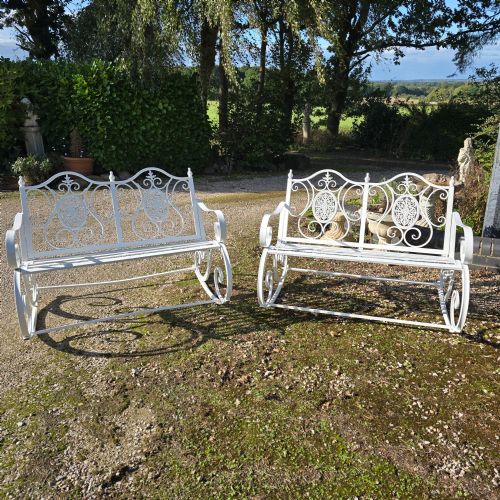
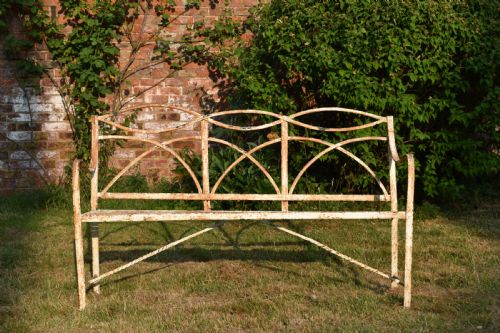
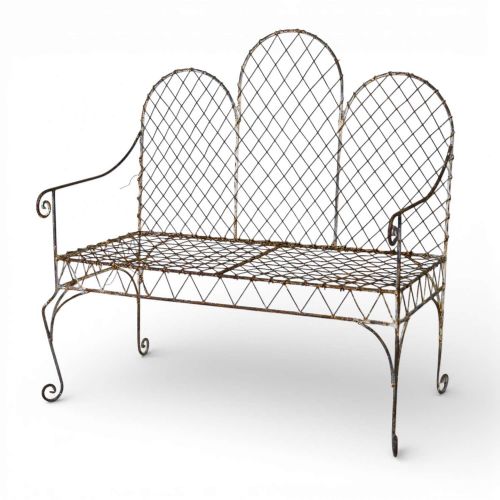
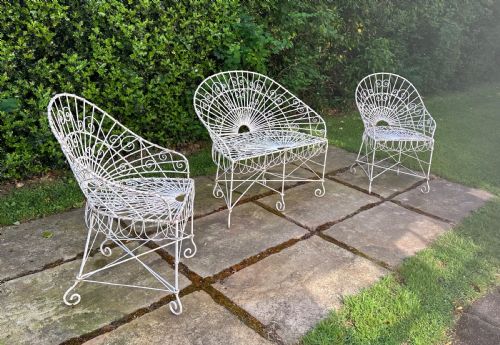
Vintage metal garden benches comprise heavy outdoor seating fashioned primarily in cast iron, wrought iron, and wirework across nineteenth and early twentieth-century periods. When exploring vintage metal garden benches, buyers frequently encounter Victorian examples alongside Regency strapwork designs and French industrial pieces.
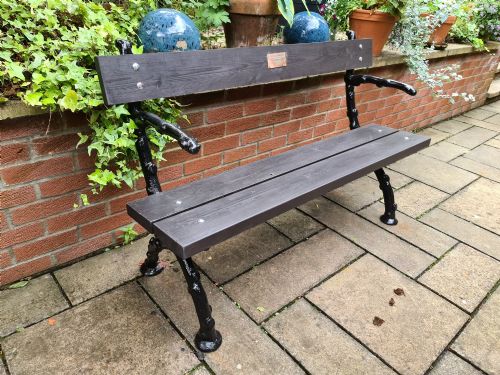
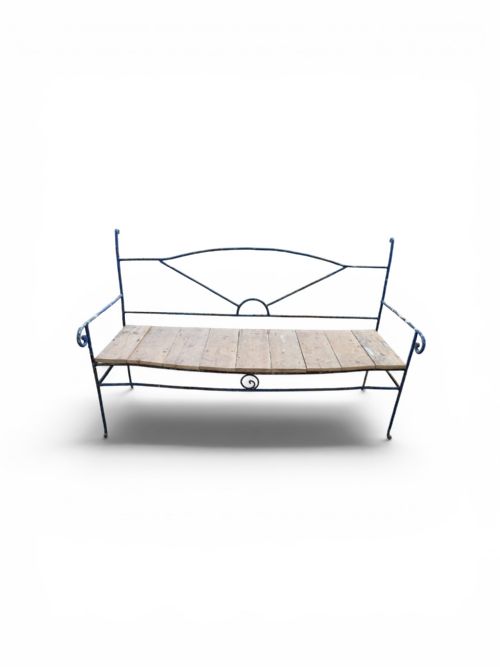
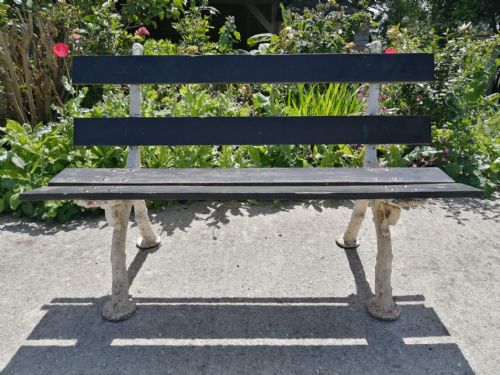
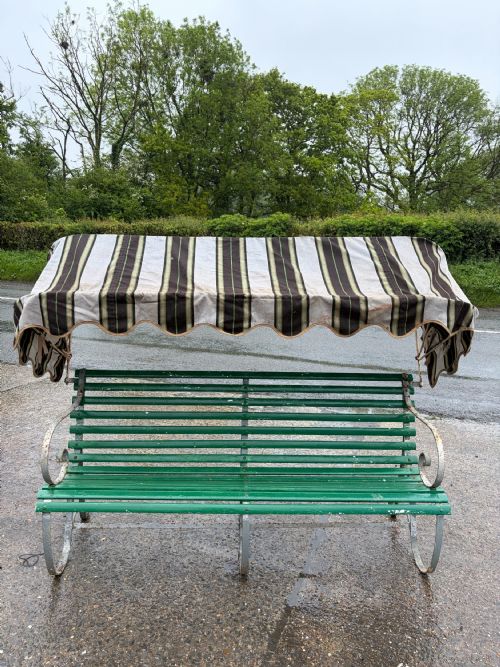
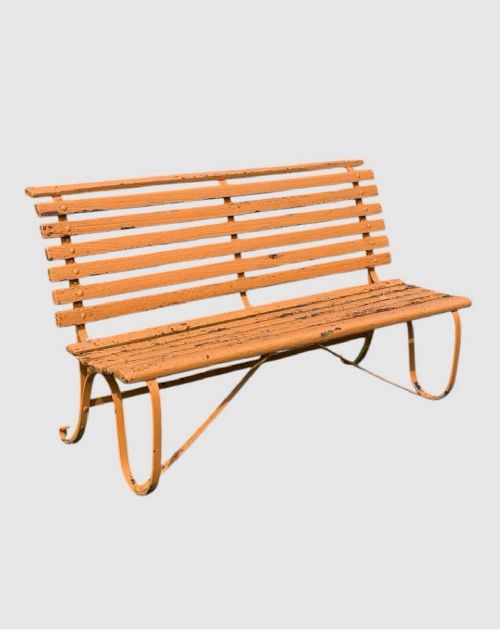
The selection ranges from simple two-seater forms to elaborate rustic designs incorporating faux bois detailing, lion masks, or integrated canopies. Many pieces combine metal frames with timber slats, while others utilise entirely metallic construction for permanent exterior placement.
How they were made
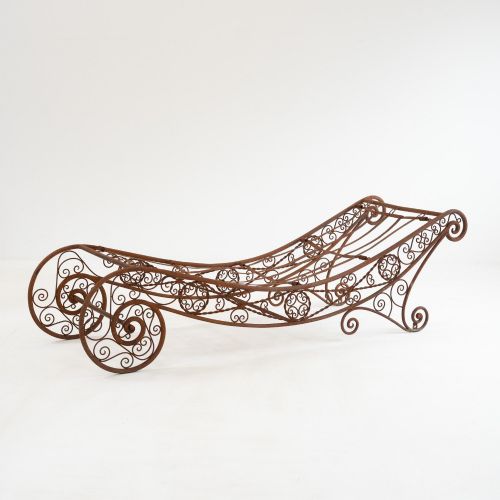
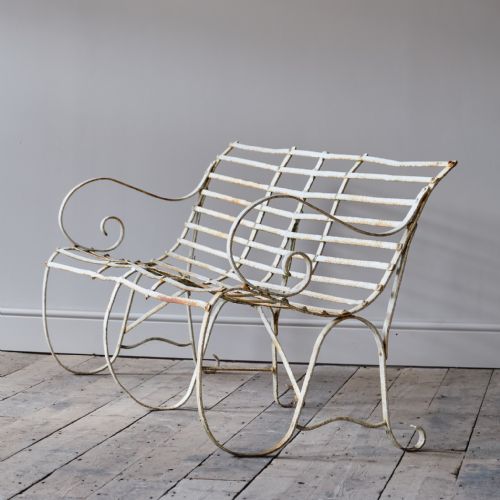
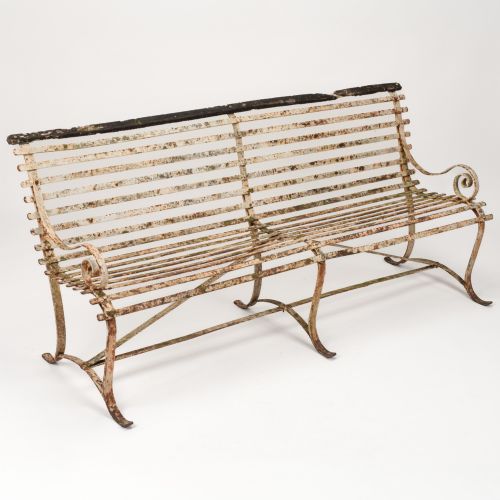
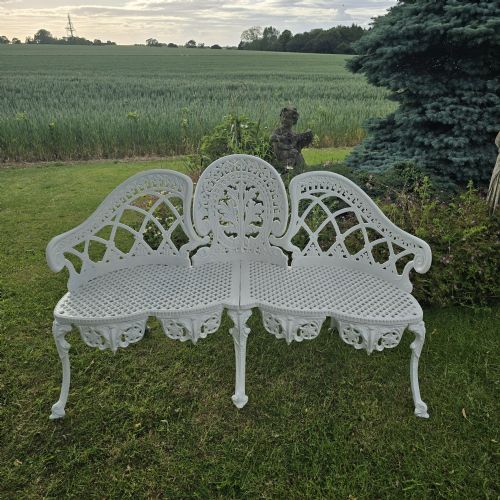
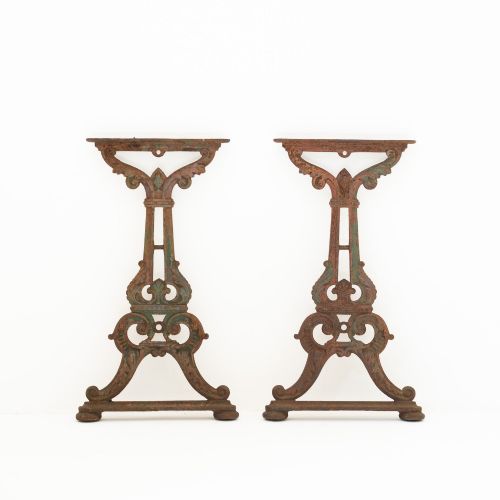
Foundries and smiths utilised cast iron for intricate decorative ends and structural supports, pouring molten metal into sand moulds to create repetitive patterns such as ferns, scrolls, and Gothic tracery. Wrought iron and steel were shaped by hand through heating and hammering, producing fluid strapwork and scroll motifs.
Makers finished these surfaces with protective layers of paint to withstand outdoor exposure. Over decades, weathering creates layered patinas of historic pigment and verdigris across the metal and timber elements.
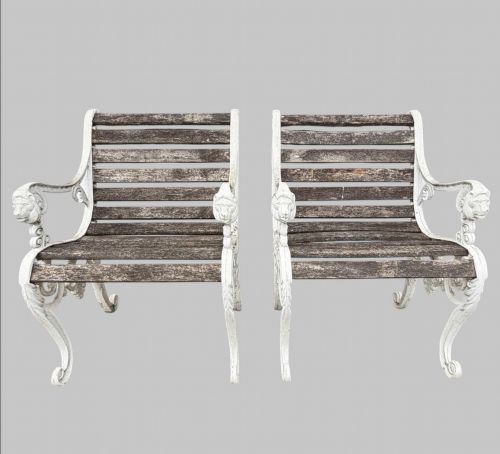
Certain Victorian benches feature stubborn iron armrests shaped like roaring lions, guarding the seat from unauthorized loungers.
What varies in quality
Quality rests in the crispness of the foundry casting and the complexity of the smith's strapwork execution. Finer examples display sharp relief in decorative motifs like lion masks and faux bois bark texture, whereas simpler iterations rely on plain channel iron or basic strap designs.
Structural integrity depends on the preservation of the original joints and the degree of metal fatigue. Pieces retaining layers of historic paint hold greater visual depth than those stripped down to bare, uniform metal.
Coalbrookdale
The Vintage Metal Garden Benches Glossary
- Strapwork
- Flat strips of iron riveted or welded into geometric patterns. This technique defines many Regency and Victorian bench backs.
- Faux bois
- Imitation wood grain modelled into cast iron. Victorian makers popularised this rustic style to mimic natural timber branches.
- Verdigris
- A green patina formed naturally on copper and iron through atmospheric oxidation. This surface coloration signals considerable age and exposure.
- Cast iron
- Molten iron poured into a mould to create rigid, highly detailed components. It provides the heavy structural ends for park benches.
- Wrought iron
- Puddled iron worked by hand while hot into flexible bars and scrolls. It offers high tensile strength for slender garden seats.
Vintage Metal Garden Benches: Frequently Asked Questions
Can these metal benches stay outside all year?
Cast and wrought iron withstand outdoor elements effectively due to their durable metallic composition, though winter moisture can accelerate surface corrosion on unprotected areas.
Positioning them on hard paving rather than directly on damp soil helps preserve the lower feet and any integrated timber components.
How do I identify a Victorian garden bench?
Victorian examples typically feature heavy cast iron ends moulded with naturalistic motifs like ferns, branches, or animal masks. They frequently incorporate timber laths for the seat and back.
Earlier Regency styles tend to rely on slender, linear wrought iron strapwork, while Victorian pieces lean towards heavier, more ornate ornamentation.
What is an Arras bench?
Arras furniture originates from the French town renowned for its distinctive perforated sheet metal and tubular iron construction. These pieces often bear maker plaques and exhibit utilitarian military-style riveting.
They combine robust metal frames with curved sheet seats designed for rapid drainage in public parks and private gardens.
Should I repaint a vintage garden bench?
Preserving original layered paintwork maintains the historic character and visual depth accumulated over decades of weathering. Many collectors prefer a distressed, patinated surface over a freshly applied coat.
If active rust threatens the structural integrity of the iron, targeted conservation proves more appropriate than total repainting.