



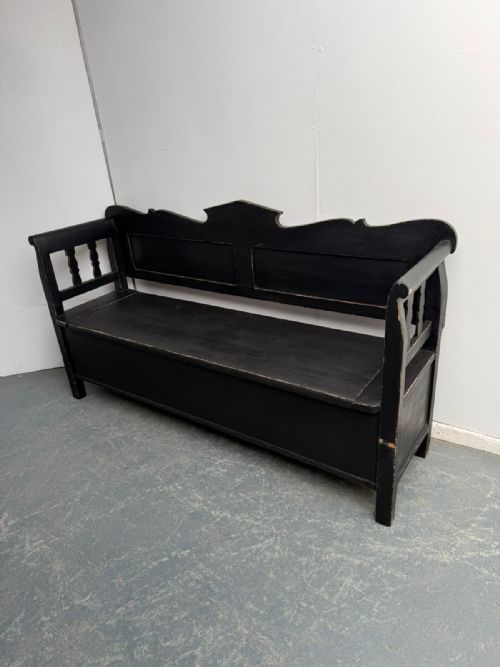
Painted Hall Seat
A painted hall seat offers a welcoming place to pause while setting the tone of a hallway through colour and form.
Painted Hall Seat
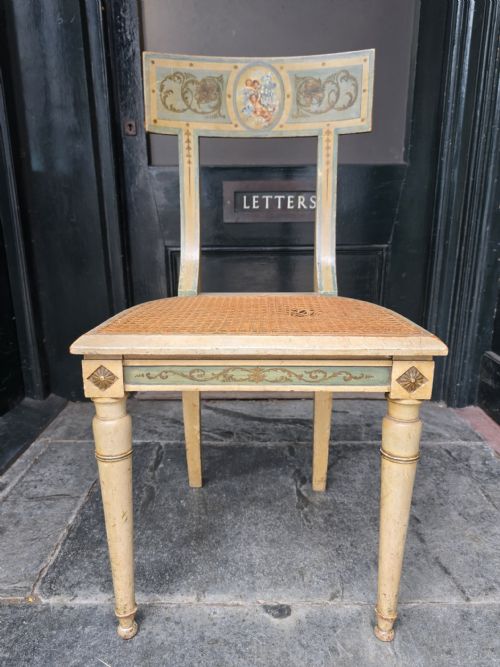
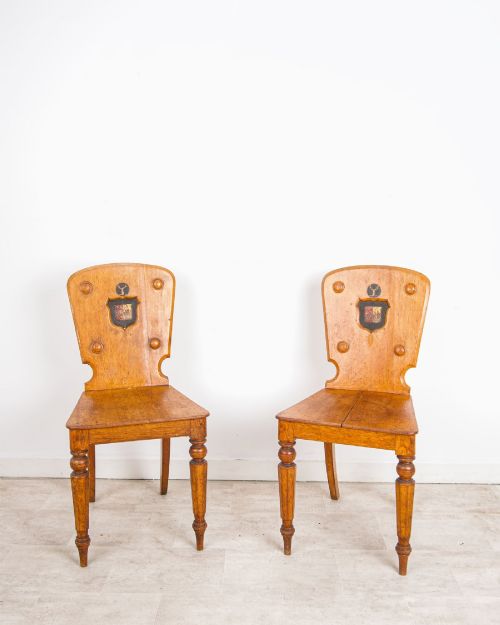
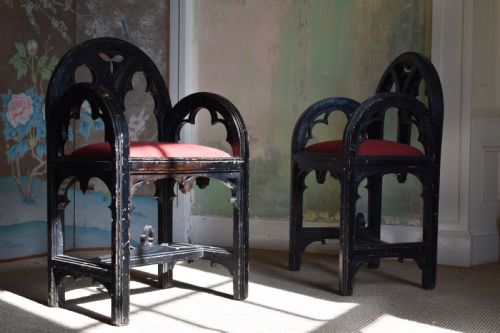
A painted hall seat serves as practical entrance furniture, taking the form of settles, benches, and hall chairs designed for communal spaces. These pieces emerge across the 18th, 19th, and early 20th centuries, spanning Georgian, Regency, and Victorian periods.
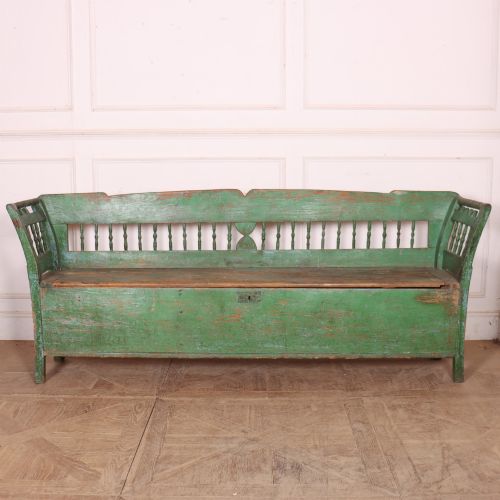
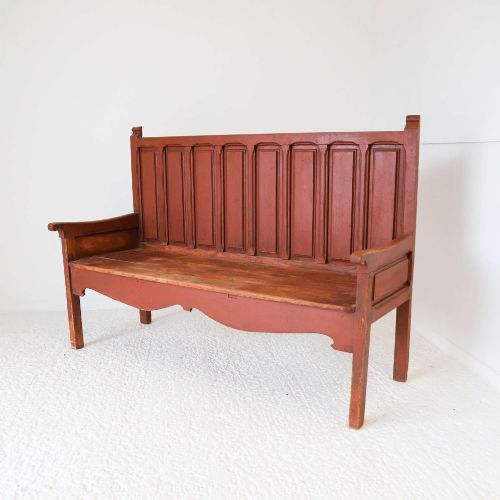
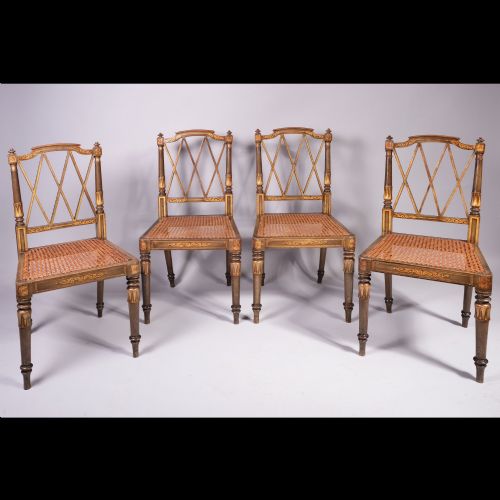
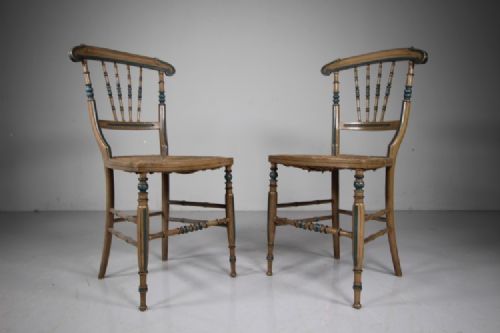
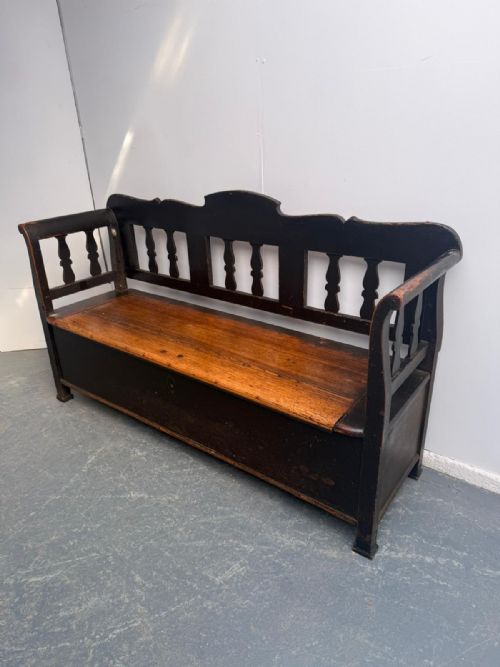
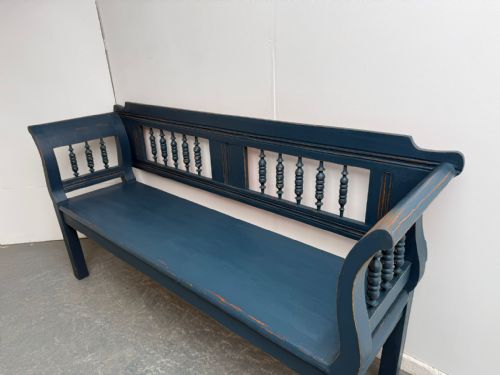
The selections found here frequently include Hungarian pine box settles and English or continental wooden benches. Buyers will also encounter smaller side chairs and window seats bearing painted finishes from country houses and farmhouses alike.
Assessing quality and authenticity
Quality rests in the survival of original painted surfaces rather than later retouches, as untouched historic pigment commands greater appreciation. The integrity of the underlying timber structure determines how well a bench or settle endures centuries of daily use.
Distinction also lies in regional vernacular design versus formal cabinetmaking. Pieces attributed to notable workshops display refined proportions and carved heraldic details, whereas country pieces rely on robust proportions and regional charm.
Some Hungarian settles retain deep layers of blue and green paint applied by generations of farm families who simply refreshed the colour when spring arrived.
Gillows·Liberty of London·Thonet·White, Allom & Co.
The Painted Hall Seat Glossary
- Settle
- A wooden bench with a high back, solid arms, and often a box compartment beneath the seat. This form provided shelter from drafts in traditional hallways.
- Hall chair
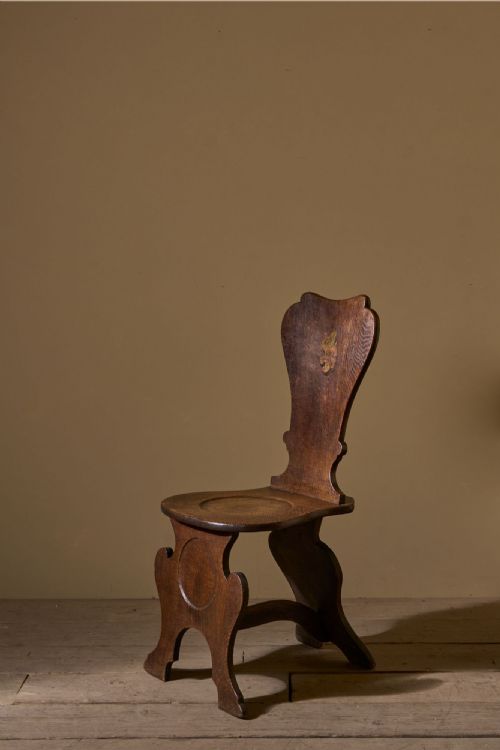
- A rigid wooden seat, usually without upholstery, placed in a grand entrance hall. These often display carved armorial shields or painted crests.
- Window seat
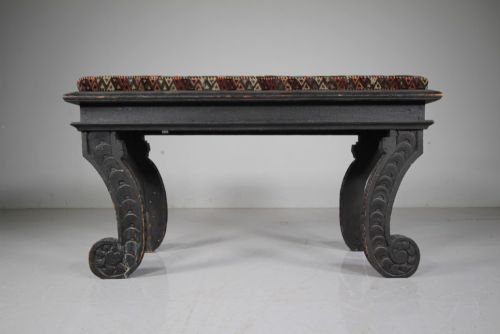
- A long, narrow seating form designed to fit beneath a window recess. They appear in painted pine and mahogany across Georgian and Edwardian interiors.
- Box settle
- A variation of the settle featuring a hinged seat that lifts to reveal storage space. They are frequently recorded in pine within Hungarian and English country homes.
- Cane-seat
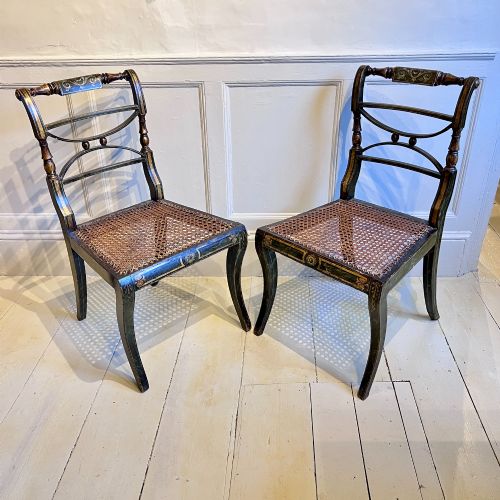
- A chair or bench seat woven from split rattan or cane strips. This technique lightens the visual weight of Regency and 19th-century seating.
Painted Hall Seat: Frequently Asked Questions
Where should a painted hall seat be placed?
These pieces suit entrance halls, boot rooms, and wide corridors where seating is required for removing footwear. Their durable wooden construction handles transitional traffic efficiently while establishing a decorative focal point.
Placing a bench or settle against a clear wall allows the painted finish and silhouette to stand out. Smaller hall chairs work well in pairs flanking a console or doorway.
How do I care for original painted surfaces?
Historic paint layers require gentle maintenance using a dry or barely damp microfiber cloth to remove dust. Avoid harsh chemical cleaners, modern furniture polishes, and direct sunlight that might degrade fragile pigments.
Wax is occasionally applied to unpainted timber elements, but painted areas benefit from minimal interference to preserve the original patina and crackleur.
Are box settles practical for modern storage?
The interior compartment beneath a settle seat provides functional space for storing blankets, shoes, or hallway clutter. The hinged lids operate simply, though historic hinges require gentle handling.
Original box settles were built precisely for this dual purpose of seating and concealed storage in domestic entryways.
How can I distinguish regional styles?
Hungarian pieces frequently utilise pine with distinct blue, grey, or green painted schemes and folk art motifs. English examples often draw on Georgian or Regency classical proportions, utilising mahogany or pine with heraldic motifs.
Continental country pieces display robust joinery and regional colour choices that contrast with the more formal output of urban cabinetmakers.