


Painted Haberdashery Cabinet
These painted haberdashery cabinet pieces offer immense practical storage, bringing authentic commercial character straight into the home.
Painted Haberdashery Cabinet
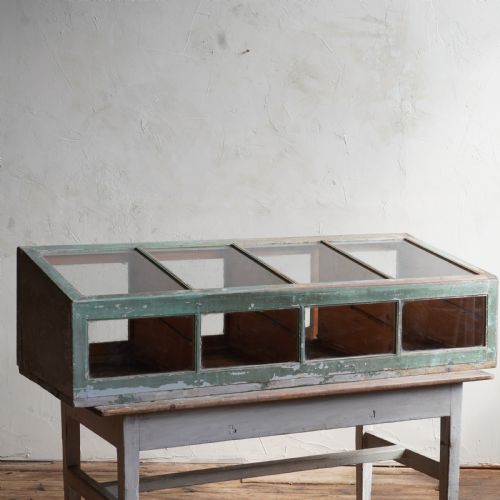
A painted haberdashery cabinet is a functional multi-drawer unit designed originally for retail environments such as drapers, chemists, and general stores. Buyers seeking a painted haberdashery cabinet will encounter various forms ranging from large banks of drawers to countertop display units. The items listed span multiple periods including Victorian and early twentieth century examples, originating from English, French, and Hungarian workshops.
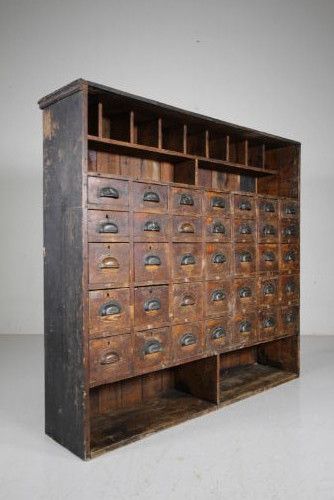
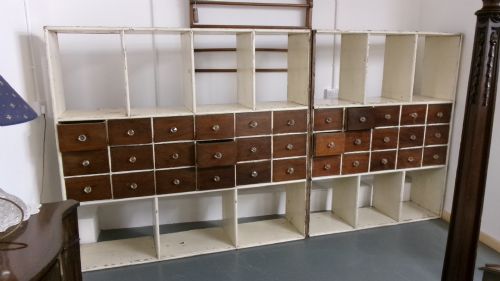
Most pieces function as banks of drawers or shop fittings, often featuring numerous small compartments ideal for sorting items. These storage solutions include fifty drawer shop fittings, twelve drawer shop counters, and pharmacy chests of drawers. Such furniture serves modern interiors as statement storage in kitchens, bedrooms, and living spaces.
How They Were Made
Construction relies primarily on pine and other timber frameworks, assembled with durable joinery to withstand heavy daily commercial use. Drawers often incorporate brass or iron pulls and handles, alongside glass panels on display variations. Surfaces receive layers of paint, with many surviving examples retaining original white, cream, light green, or black and gold finishes.
Makers built these commercial units for longevity, employing robust secondary woods like pine for internal carcases and drawer boxes. Distressed paint finishes and aged patinas develop naturally through decades of retail service. Metal hardware and glass components are integrated securely to endure frequent opening and closing.
Some multi-drawer units contain up to fifty individual compartments, offering an absolute labyrinth for losing and eventually rediscovering your paperclips.
What Varies in Quality
Quality in a painted haberdashery cabinet depends heavily on the scale of the drawer arrangement and the originality of the surface finish. Pieces retaining their early or original paint schemes command greater interest than those stripped or repassed later. The sheer number of drawers, such as twenty-five or fifty-drawer configurations, influences the architectural presence of the item.
Proportions and structural integrity dictate the upper tier of these commercial furnishings. Finer examples balance substantial size with delicate decorative details like original glazing and intact period hardware. The distinction between a standard workshop chest and a decorative display cabinet lies in the refinement of the moulding and the preservation of the painted surface.
The Painted Haberdashery Cabinet Glossary
- Bank of drawers
- A large chest featuring multiple rows of small, uniform drawers designed for systematic stock organisation. These units formed the backbone of nineteenth-century retail interiors.
- Shop fitting
- Fixtures and furniture built specifically for commercial retail premises rather than domestic use. They are characterised by heavy-duty construction and utilitarian practicality.
- Drapers drawers
- Multi-drawer storage units originally utilised in fabric and drapery shops for organising textiles, ribbons, and notions. They typically feature shallow drawers to keep items visible.
- Collectors cabinet
- A specialised storage piece with numerous small drawers or glass-fronted display areas intended for specimens or small objects. These items often display finer decorative qualities than standard utility furniture.
- Distressed paint
- Surface finishing showing wear, chipping, and fading accumulated through age and active use. This characteristic appearance is valued for visual texture in interior design.
Painted Haberdashery Cabinet: Frequently Asked Questions
How were haberdashery cabinets used originally?
These cabinets served as essential shop fixtures in drapers, haberdasheries, and mercers to keep small wares organised and accessible. Merchants stored buttons, threads, ribbons, and lace within the numerous shallow drawers for quick customer service.
The large number of compartments allowed shopkeepers to categorise vast inventories efficiently behind a tidy counter facade. Today, that same compartmentalisation suits modern storage needs for craft supplies, stationery, or kitchen sundries.
What is the difference between a shop fitting and a collectors cabinet?
Shop fittings were built strictly for commercial trade durability, featuring utilitarian designs meant to handle constant daily use by staff and customers. Collectors cabinets generally incorporate more refined decorative detailing, finer timbers, and display glass tailored for private domestic display.
While both share a multi-drawer format, shop fittings tend to have larger drawer counts and simpler exterior construction. Collectors pieces focus more on aesthetic presentation and the safe housing of delicate items.
How do I identify a Victorian piece?
Victorian examples display traditional construction methods such as hand-cut dovetail joints on the drawer boxes and heavy timber carcases. Materials like solid pine and oak predominate, often paired with cast iron or brass hardware appropriate to the nineteenth century.
Stylistic cues include proportions governed by practical retail utility rather than modern minimalism. Original paint finishes from this era, where present, exhibit a dense, chalky composition distinct from modern synthetic paints.
Can these cabinets fit in a domestic kitchen?
Many buyers utilise these multi-drawer units as kitchen islands, sideboards, or pantry storage alternatives. The shallow drawers prove ideal for cutlery, linens, and dry goods, while the sturdy top surface provides usable workspace.
Measuring the floor space and ceiling clearance beforehand is essential due to the substantial depth and width of multi-drawer banks. Ensuring doorways can accommodate the cabinet dimensions is also necessary prior to purchase.