
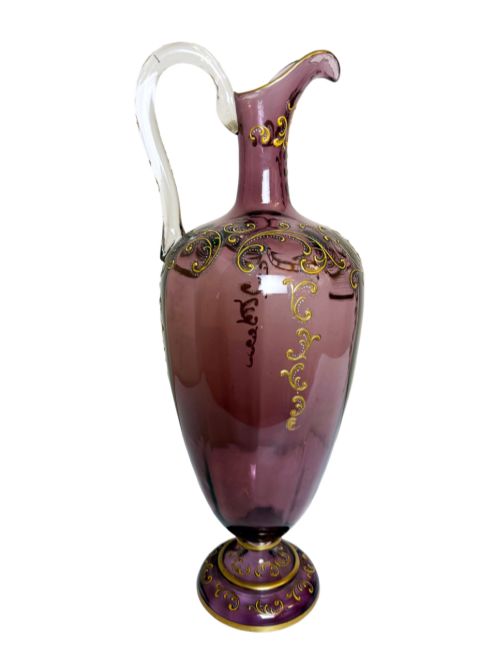
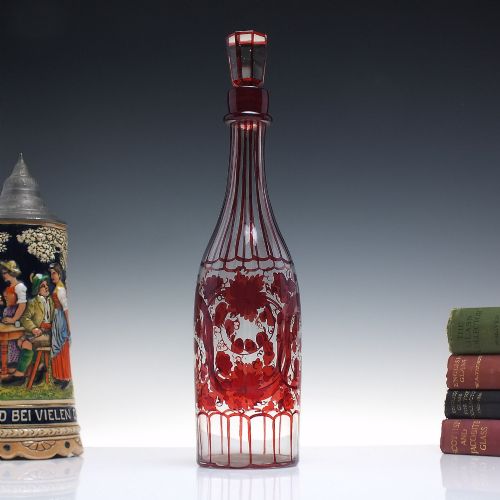


Painted Glass Decanter
A painted glass decanter brings colour and hand-finished detail to a table, offering both function and rich decorative character.
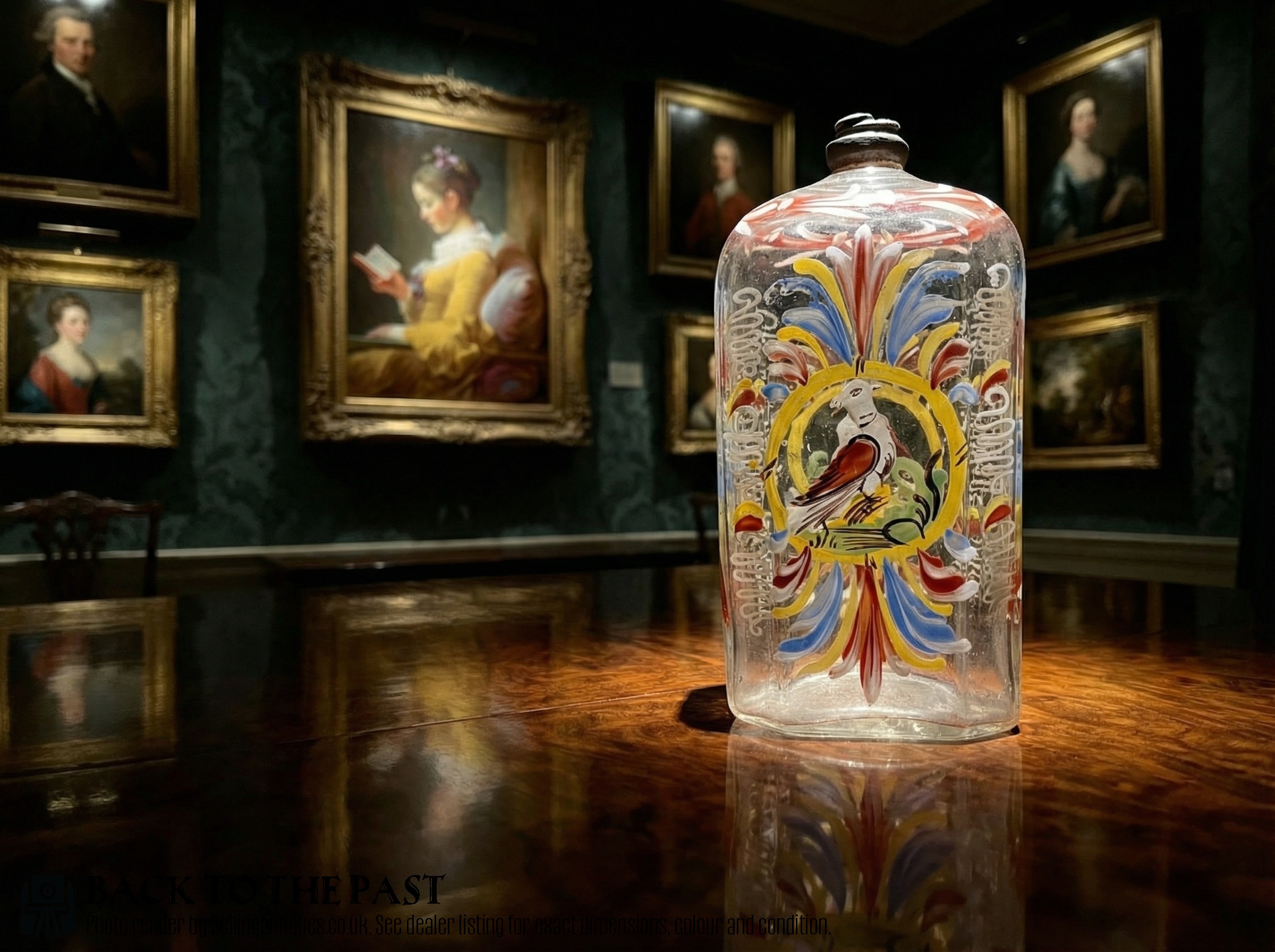
Painted Glass Decanter
A painted glass decanter combines blown vessel forms with applied enamel, gilt, or polychrome decoration. When searching for a painted glass decanter, buyers encounter examples ranging from Georgian Bristol blue whiskey mell bottles to ornate Victorian cranberry and green ewers.
Most entries on this page take the form of decanters, serving bottles, pitchers, and liqueur sets. Buyers frequently meet Victorian green and cranberry glass pieces adorned with white enamel figures or gilt highlights.
What varies in quality
Quality depends upon the skill of the glassblower and the precision of the enamel painting. Finer pieces display crisp, hand-mixed enamel colours with well-defined outlines and secure gilding that resists rubbing.
The weight and clarity of the base glass also distinguish better examples, alongside the harmonious pairing of original stoppers with their respective bottles.
Listings span the eighteenth, nineteenth, and early twentieth centuries, featuring Venetian, Bohemian, French, and British origins.
Moser·Salviati
The Painted Glass Decanter Glossary
- Enamel
- Opaque glass-based paint fused to the surface through firing. It creates raised, colourful designs that endure on antique glassware.
- Opaline glass
- A dense, translucent art glass popular in pastel shades. It provides a pale, solid background well suited to enamel painting.
- Gilt applique
- Applied gold leaf or gold paint forming decorative borders or motifs. It adds metallic lustre to the exterior of the glass.
Painted Glass Decanter: Frequently Asked Questions
How do I clean a painted glass decanter?
Wash the vessel gently by hand using lukewarm water and mild soap. Avoid soaking the exterior where enamel or gilt decoration sits.
Dry the glass promptly with a soft cloth to protect the painted surfaces and prevent water spots.
Can I use these decanters for serving wine?
Many historical decanters were designed for wine, spirits, or water and remain structurally suitable for serving beverages today. Inspect the interior for staining or residue before use.
Hand-painted decoration on the outside does not interfere with contents held safely within the glass chamber.
How do I identify Victorian pieces?
Victorian decanters often feature vibrant cranberry, green, or opaline glass paired with heavy enamel work and applied gilding. Common motifs include botanical patterns and white silhouette figures.
Exact dates rely on stylistic markers, pontil marks, and traditional manufacturing traits typical of the nineteenth century.
What is Mary Gregory glass?
Mary Gregory glass refers to glassware decorated with white enamel silhouettes depicting Victorian children playing in natural settings. The style became widely popular during the nineteenth century.
These pieces typically appear on coloured glass backgrounds such as green, blue, or cranberry.