


Painted Giltwood Overmantel Mirror
A painted giltwood overmantel mirror brings architectural presence and reflected light to a room, combining painted surfaces with gilded detail above a fireplace.
Painted Giltwood Overmantel Mirror
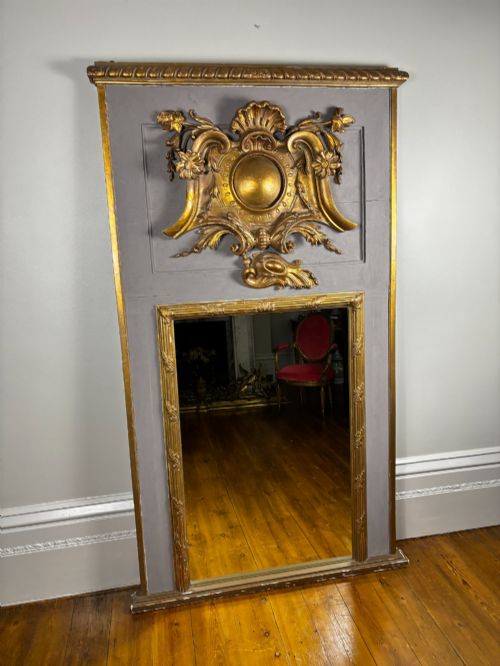
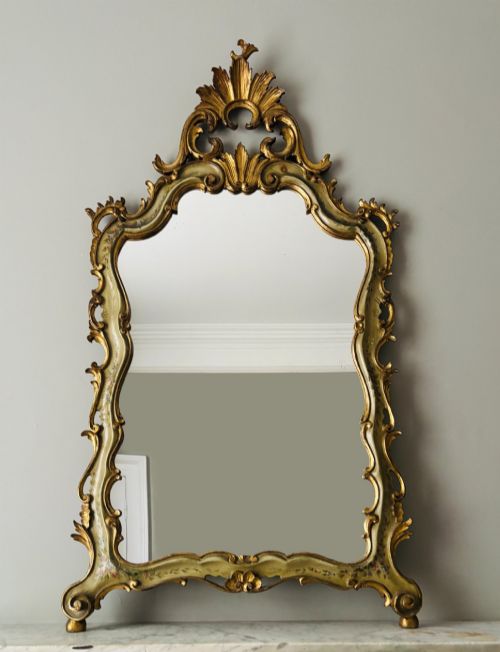
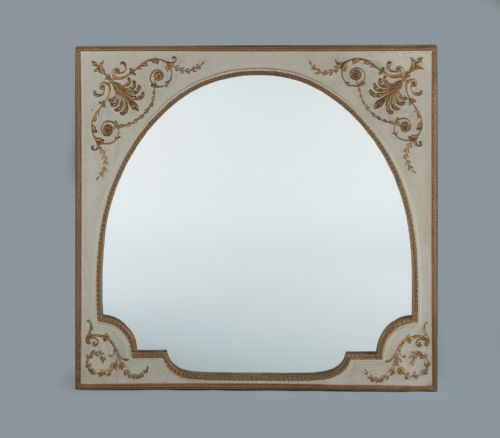
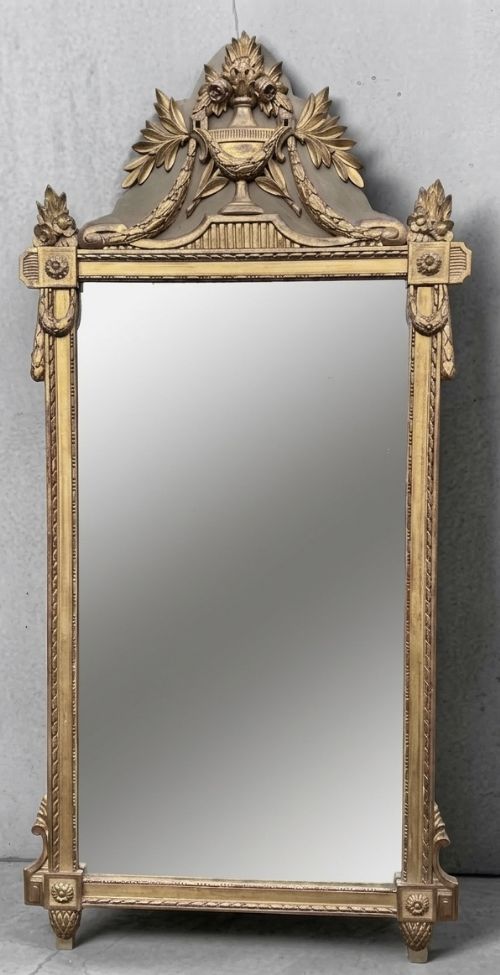
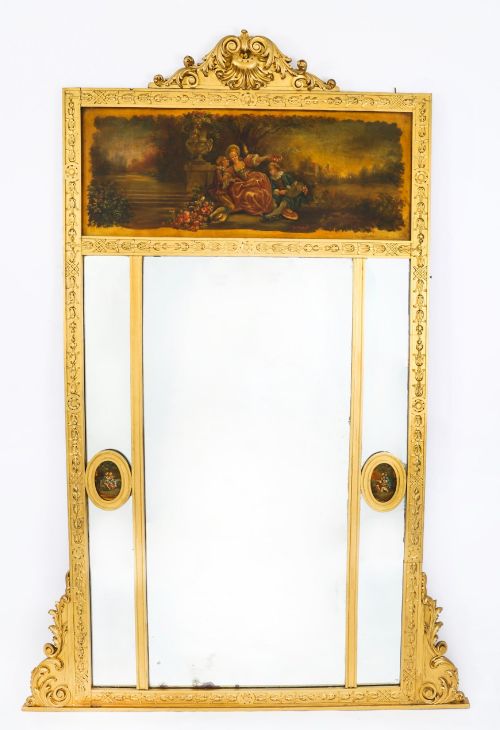
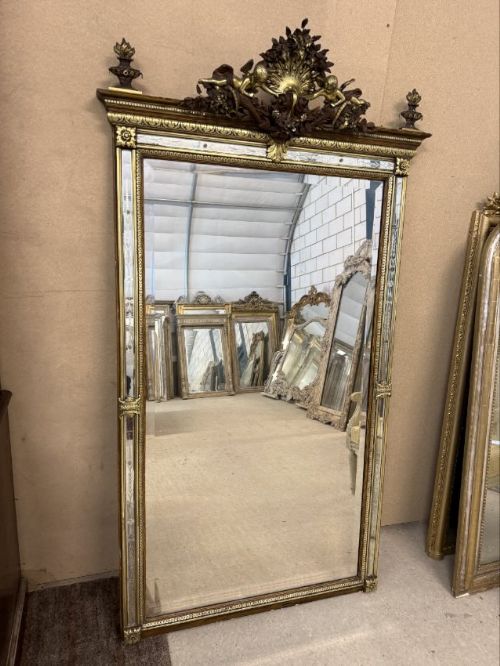
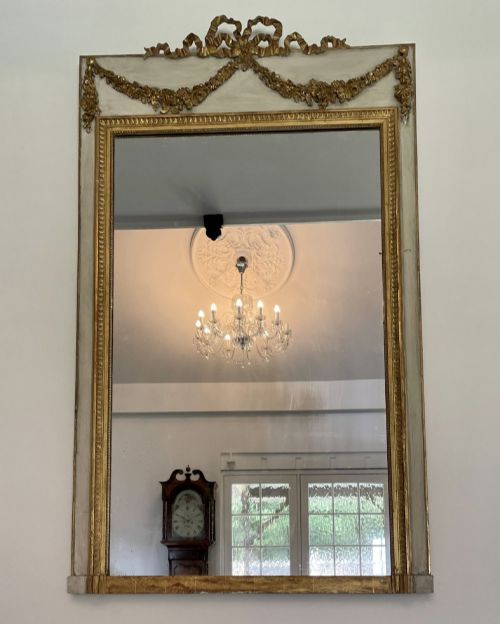
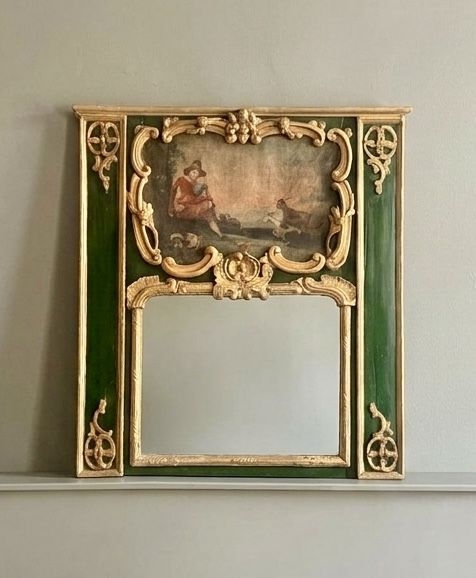
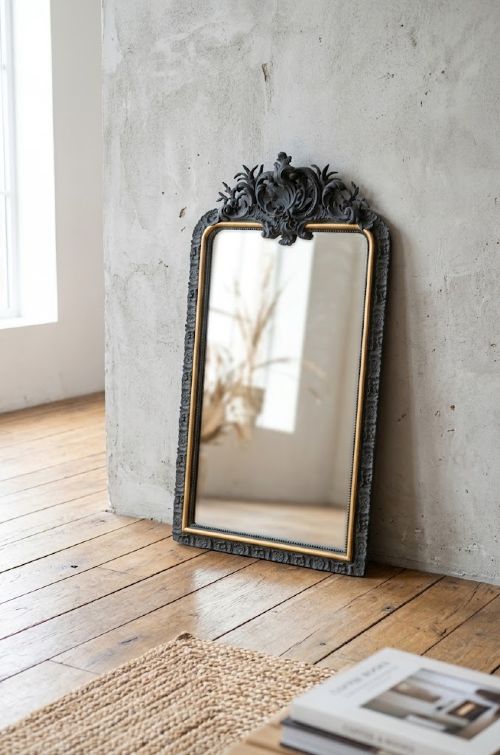
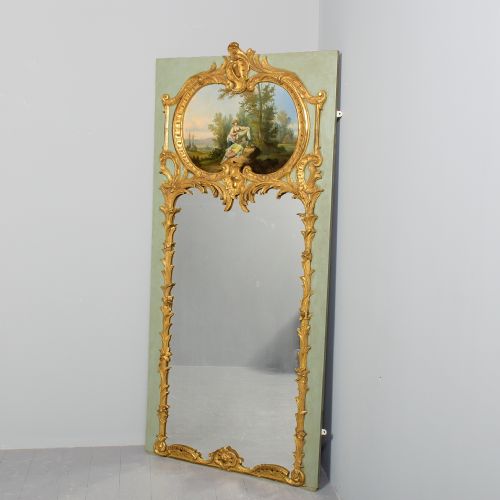
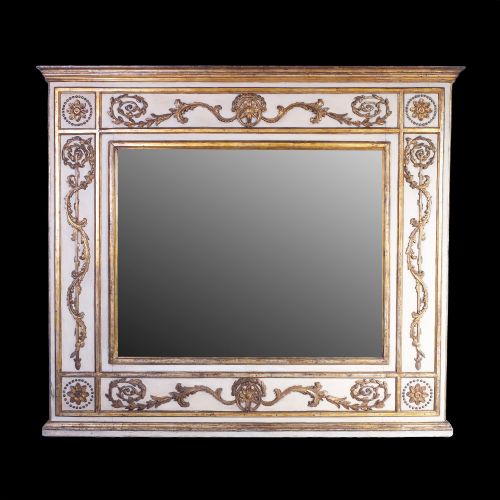
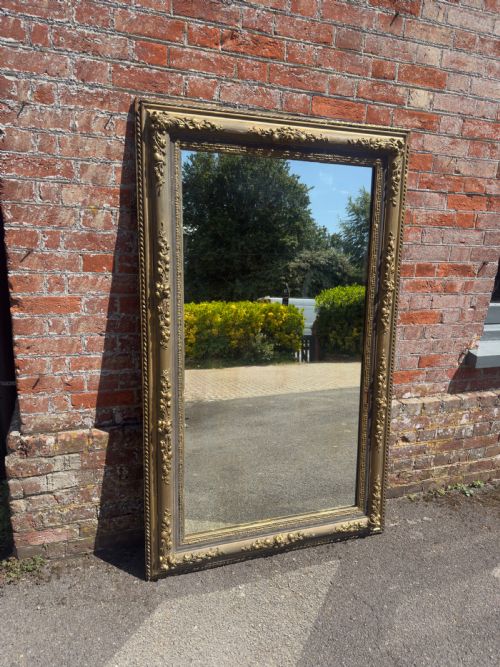
A painted giltwood overmantel mirror sits above a fireplace mantel, combining painted wooden frames with gilded highlights to anchor the chimney breast. Buyers examining this page encounter large horizontal overmantels, tall vertical pier mirrors, and trumeau panels fitted with oil paintings or decorative reliefs.
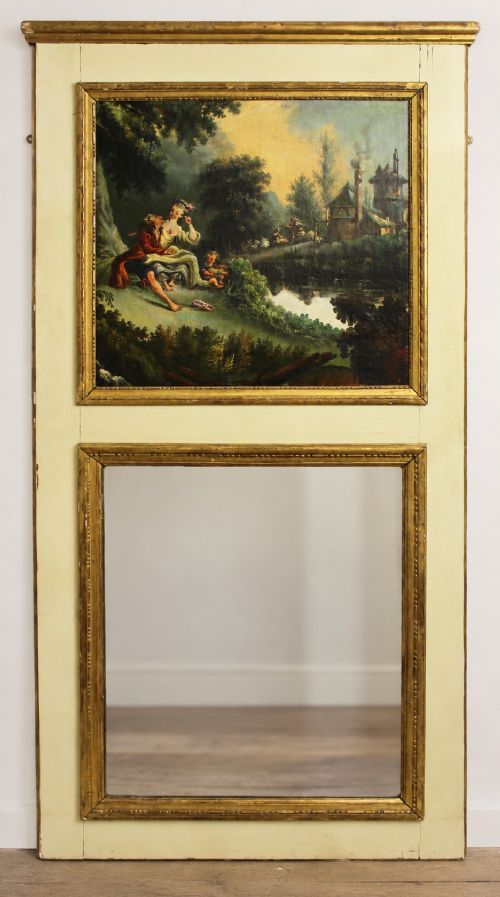
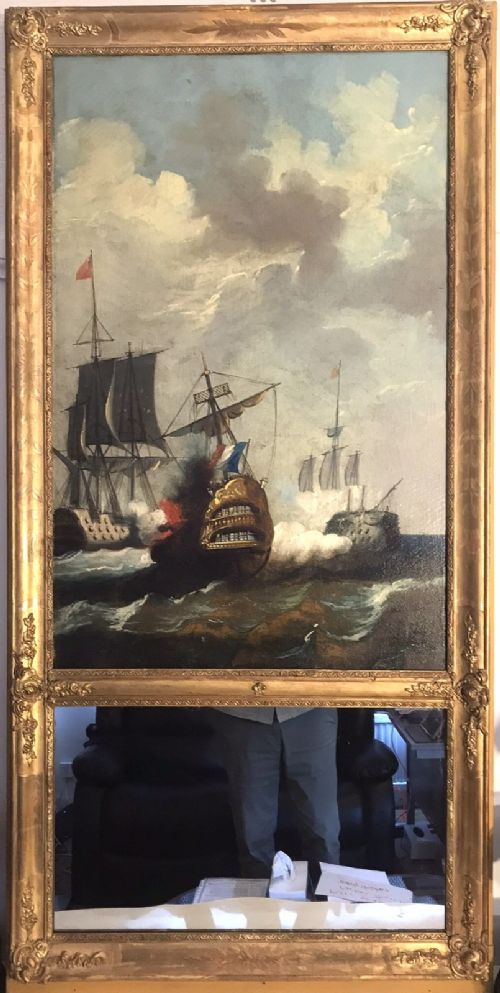
The inventory spans the Georgian period through the nineteenth century, with French Empire, Victorian, and Louis XV Rococo styles appearing frequently alongside English and French regional designs. Trumeau variants integrate canvases depicting galleons or classical figures directly into the wooden framework above the glass.
Materials and construction
Frames rely on timber foundations coated in gesso, a prepared plaster mixture that accepts fine carving and holds relief ornament before gilding. Artisans applied gold leaf alongside oil paint to create dual-tone surfaces that combined matte painted areas with reflective metal.
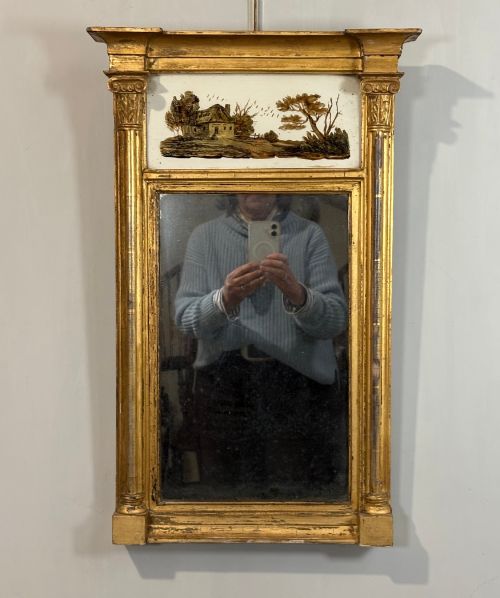
Mirrors utilise original glass plates, occasionally accompanied by verre eglomise panels featuring reverse-painted glass decoration. Canvases set into trumeau frames use oil paint on stretched fabric to display seascapes or pastoral scenes.
Painted Giltwood Overmantel Mirror Retail Price Guide 2026
Typical asking prices for painted giltwood overmantel mirror among the pieces listed under this phrase on Sellingantiques today, from the lower quarter to the upper quarter. They describe what is for sale here now, not the wider market.
Sailors on antique seascapes within trumeau panels brave perpetual painted gales above quiet modern mantelpieces.
Judging quality and craftsmanship
Quality rests in the depth of the carved wood and gesso ornamentation, where crisp relief work on acanthus leaves, classical figures, and floral garlands distinguishes superior pieces from flat mouldings. The integration between the painted surface and the gold leaf reveals the maker's hand.
Original mirror glass with authentic foxing and age shows greater character than modern replacements, while intact original painted panels and undisturbed oil paintings maintain historical integrity.
The Painted Giltwood Overmantel Mirror Glossary
- Overmantel mirror
- A large mirror designed specifically to hang on the wall directly above a fireplace mantelpiece. These pieces often feature wide horizontal proportions to match the width of the fireplace below.
- Trumeau mirror
- A decorative wall mirror incorporating a painted panel, oil painting, or carved relief directly above the mirror plate. They originated in eighteenth-century interior decoration.
- Giltwood
- Timber carved and coated with gold leaf or gold powder. It provides a bright, reflective surface that catches candlelight and daylight.
- Gesso
- A plaster-like mixture of binder and chalk applied to wood frames to create a smooth surface for carving and gilding. It allows for intricate relief details.
- Verre eglomise
- A cold decoration technique involving painting and gilding on the reverse side of glass panels. This process produces a reflective, metallic sheen with intricate borders.
Painted Giltwood Overmantel Mirror: Frequently Asked Questions
Where should an overmantel mirror hang?
These mirrors hang centrally above a fireplace mantel, resting directly on the shelf or secured to the wall at a low height. Their proportions suit wide expanses of wall space where they can reflect light across the room.
In period rooms, they anchor the chimney breast and draw the eye upward, balancing the heavy masonry of the fireplace below.
What is a trumeau mirror?
A trumeau mirror includes an integrated upper panel containing an oil painting, a painted scene, or a carved wooden relief. The artwork forms a single decorative composition with the mirror plate below.
French workshops produced many variations during the nineteenth century, often featuring pastoral landscapes, seascapes, or classical motifs.
How do I identify the period?
Dating relies on stylistic clues such as the bold symmetry of Georgian frames, the classical motifs of French Empire design, or the ornate scrollwork of Louis XV Rococo revival pieces. Construction methods, including the composition of the gesso and the backing boards, also indicate age.
Nineteenth-century examples frequently combine white painted surfaces with gilt highlights, while earlier pieces lean towards heavier carved giltwood.
Are the mirror plates original?
Many surviving pieces retain their original glass plates, which often display characteristic silver degradation, dark spots, and light foxing. These natural imperfections confirm the age and authenticity of the mirror.
Some pieces feature replacement glass installed during later restorations to improve the clarity of the reflection.
How do I care for painted giltwood?
Dusting requires a soft, dry cloth used gently across the carved gesso and painted surfaces to prevent moisture damage. Avoid chemical cleaners and polishes, which can strip the delicate gold leaf or dull the painted finish.
Keeping the mirror away from direct heat sources and damp walls protects both the wooden frame and the underlying gesso foundation.