

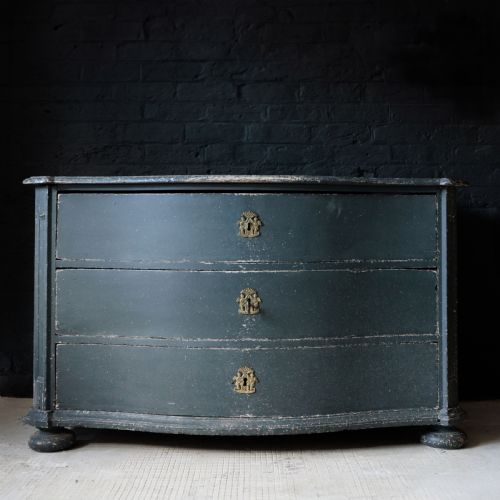


Painted French Dresser
A painted french dresser brings provincial character and practical storage to a room, ranging from grand eighteenth-century commodes to rustic pine cupboards.
Painted French Dresser
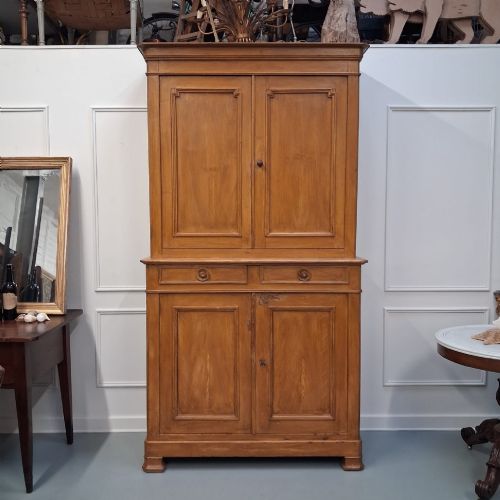
A painted french dresser encompasses a wide variety of storage furniture found in domestic spaces, stretching from eighteenth-century provincial commodes to nineteenth-century glazed cupboards and kitchen dressers. Buyers searching for a painted french dresser encounter forms that include serpentine chests of drawers, buffet à deux corps, and housekeepers cupboards originating from continental workshops.
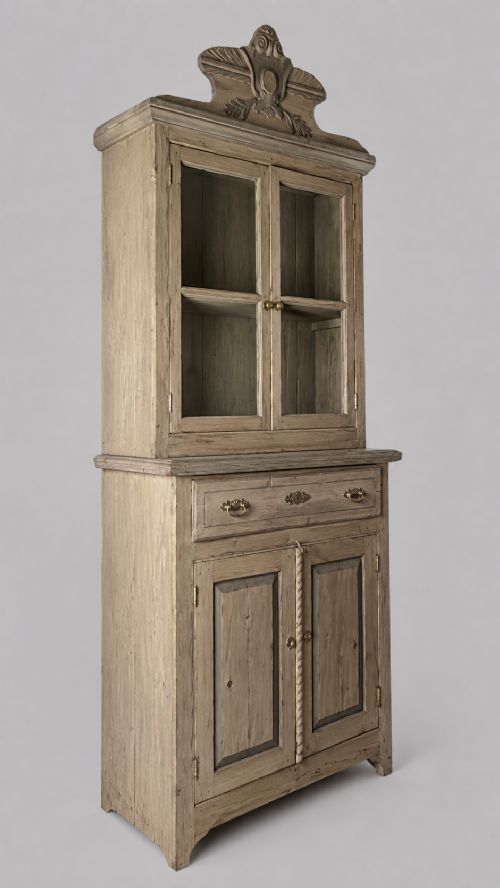
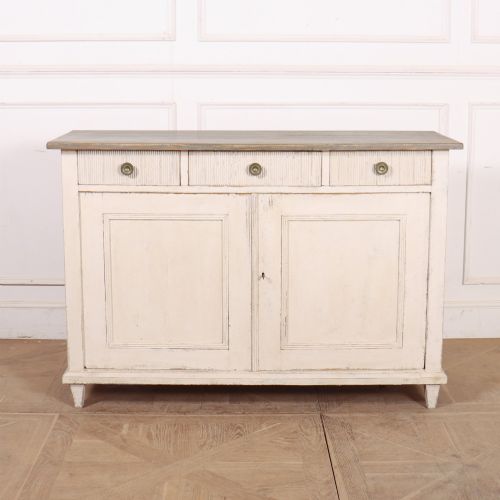
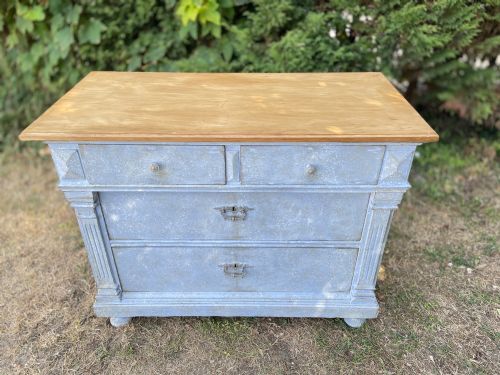
The pieces appearing on this page lean heavily towards nineteenth-century examples alongside eighteenth-century commodes and later twentieth-century interpretations. These items display regional French styles such as Gustavian, Louis XVI Revival, and French Provincial, often rendered in pine, oak, or mixed woods beneath layered paint finishes.
Utility defines many of these items, which served historically for linen storage, crockery display, or general household provisions in country houses and chateaus. Today, they function primarily as statement storage pieces in dining rooms, hallways, and living spaces, providing surface area alongside enclosed cabinet or drawer space.
How they were made
Carpenters constructed the carcases of these cabinets predominantly using regional timbers like pine and oak, frequently employing dovetail joints for drawer construction and pegged joints for structural stability. Surviving examples demonstrate hand-carved detailing, shaped aprons, and serpentine fronts shaped from solid wood rather than manufactured boards.
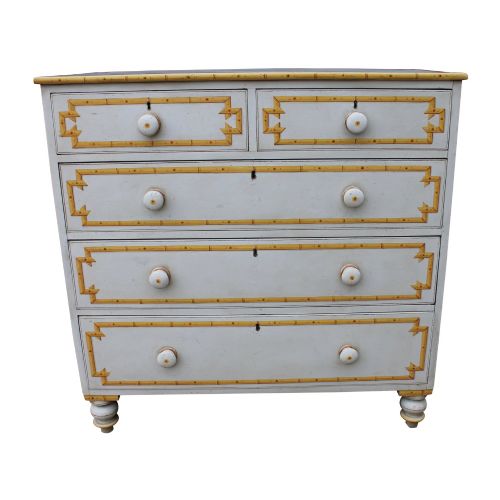
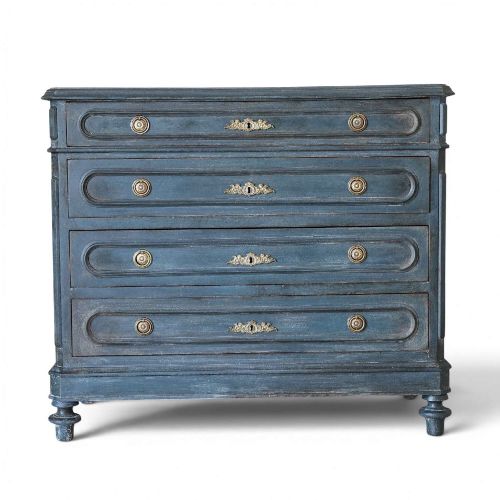
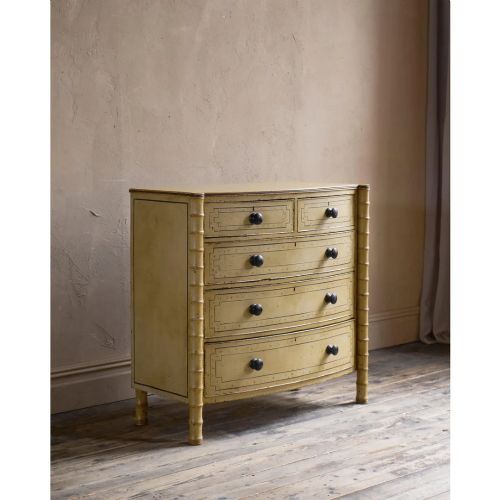
Surface treatments rely on traditional paint applications, ranging from early layered lead-based or distemper paints to later decorative finishes including faux bamboo, chinoiserie, and gilt detailing. Many pieces feature hardware cast from brass or ormolu, complementing the hand-painted porcelain plaques or marble tops integrated into specific commodes and cabinets.
Listings incorporate items spanning the eighteenth century through to the 1930s, featuring pine, oak, and painted wood alongside marble and glass.
What varies in quality
The integrity of the original paint surface distinguishes superior examples from those with later or over-cleaned repainting, as intact period pigment retains historical value and softer patination. Cabinets retaining their original hardware, working locks, and unwarped panel doors demonstrate careful preservation over centuries of domestic use.
Structural refinement separates standard provincial items from high-end urban or revival pieces, visible in the precision of the serpentine curves, hand-carved mouldings, and tight joinery. Pieces featuring secondary materials such as genuine marble tops or fire-gilt ormolu mounts indicate a higher initial commission cost and superior workshop execution.
Edwards and Roberts
The Painted French Dresser Glossary
- Commode
- A low chest of drawers or cabinet originating in France, often featuring a serpentine or bow-front shape. These pieces frequently incorporate marble tops and decorative painted motifs.
- Buffet à deux corps
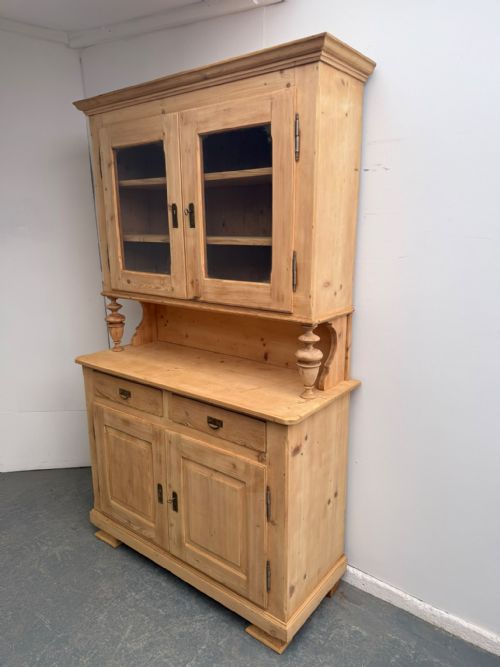
- A large two-part cabinet consisting of a lower buffet base surmounted by an upper cupboard section. This architectural form provided substantial storage in traditional French dining rooms.
- Gustavian
- A Swedish neoclassical style heavily influenced by French design under King Gustav III. It is characterised by pale painted finishes, restrained carving, and functional elegance.
- Faux bamboo
- A decorative technique where solid wood is carved or turned to imitate the segmented stalks of bamboo. This style gained popularity during the nineteenth century due to Asian trade influences.
- Serpentine
- A furniture front or shelf edge curved in a wave-like form, typically convex in the centre and concave at the sides. Executing this shape requires skilled woodworking and precise hand-carving.
Painted French Dresser: Frequently Asked Questions
What is a buffet à deux corps?
A buffet à deux corps is a substantial two-part storage cabinet featuring a lower cupboard or drawer base beneath an upper shelved section. These architectural pieces dominated French provincial dining spaces for storing provisions and display wares.
They require adequate ceiling height and wall space due to their imposing scale. Their division into two distinct sections assists with transportation and placement in domestic interiors.
How do I care for a painted wood finish?
Painted wooden surfaces require gentle cleaning with a dry or lightly damp cloth to preserve fragile historical layers. Avoid modern chemical solvents and excessive moisture that might lift aged distemper or oil paint.
Wax can be applied sparingly to unpainted interior pine or oak elements for protection. Keeping antique furniture away from direct heat sources prevents timber shrinkage and subsequent paint cracking.
Are marble tops original to these commodes?
Marble tops frequently accompany nineteenth-century French commodes and dessert d'appoint pieces, serving as durable surfaces for everyday use. Many were fitted specifically to protect the wooden carcase below from water and liquid spills.
Original marble slabs often show minor surface wear and natural veining appropriate to their age. Replacements can be identified by unusually crisp edge profiles or lack of historical underside staining.
What distinguishes Louis XVI Revival furniture?
Louis XVI Revival pieces draw inspiration from late eighteenth-century classical symmetry, straight tapering fluted legs, and restrained geometric mouldings. Makers during the nineteenth century adopted these motifs to create formal commodes and display cabinets.
This aesthetic contrasts with the earlier flamboyant curves of Rococo design. Painted finishes on revival pieces often utilise softer greys, creams, and pale blues.