



Painted French Chateau Table
A painted french chateau table brings understated elegance to a room through weathered pigment and time-worn timber.
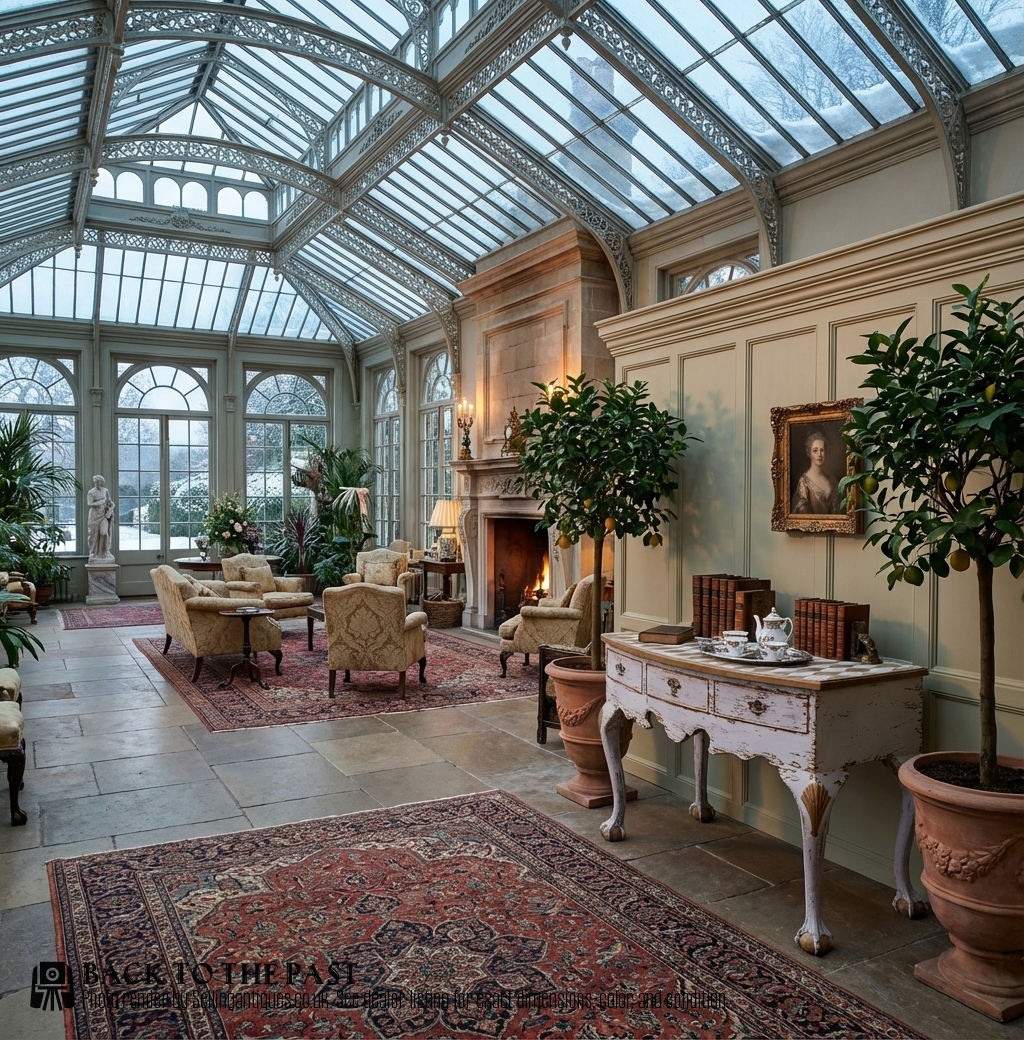
Painted French Chateau Table
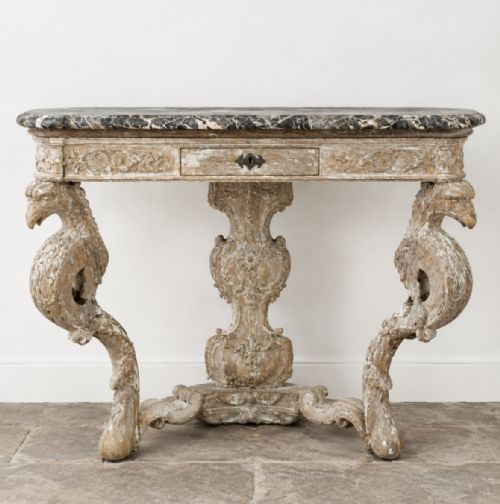
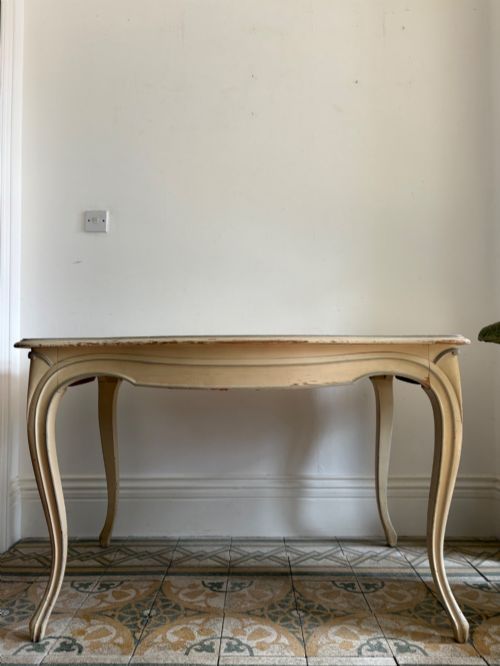
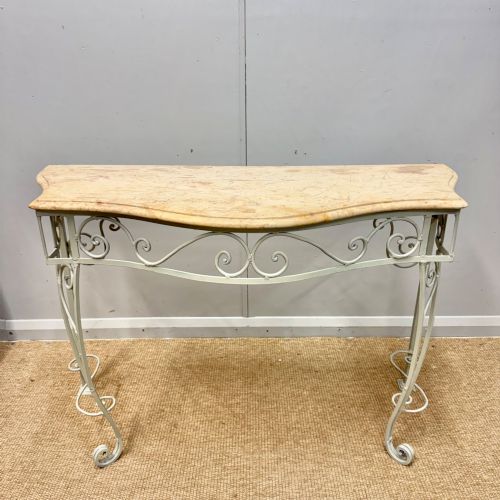
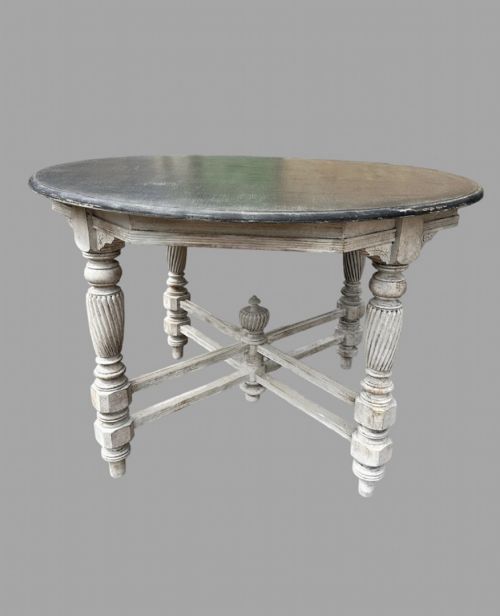
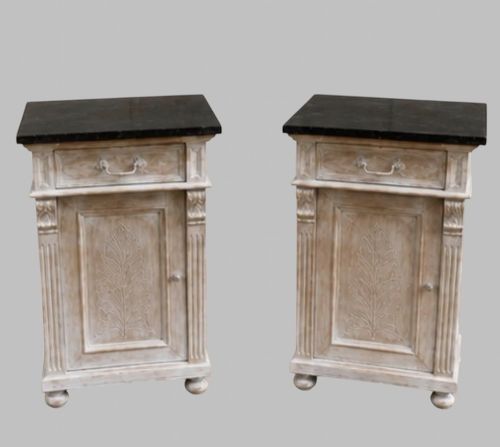
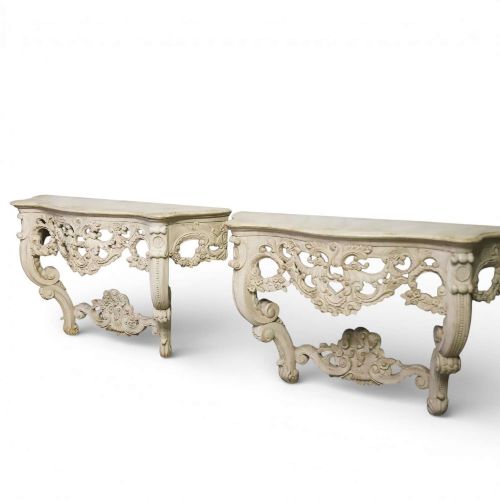
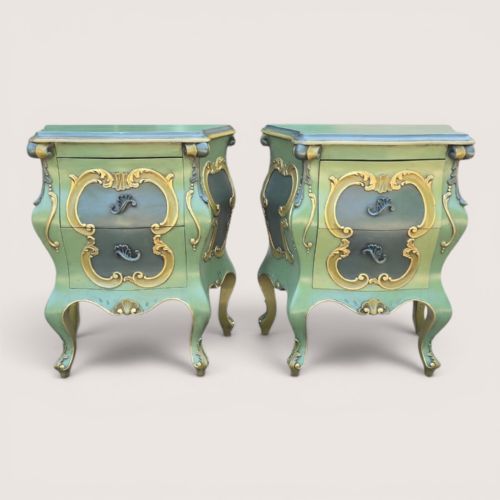
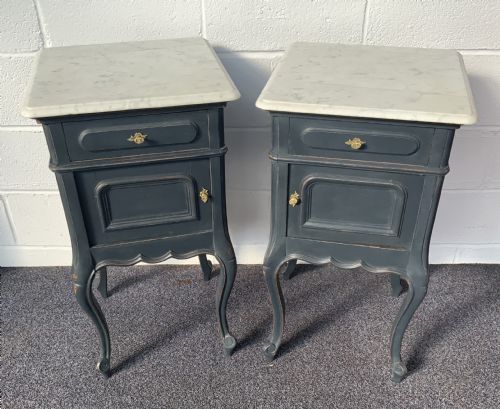
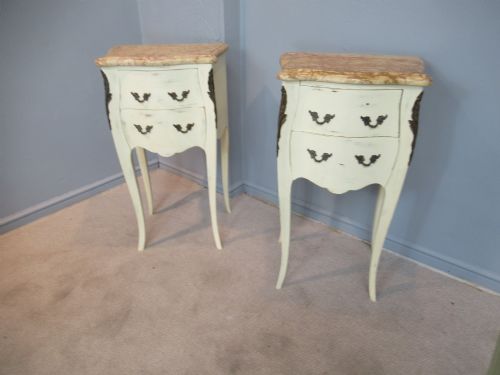
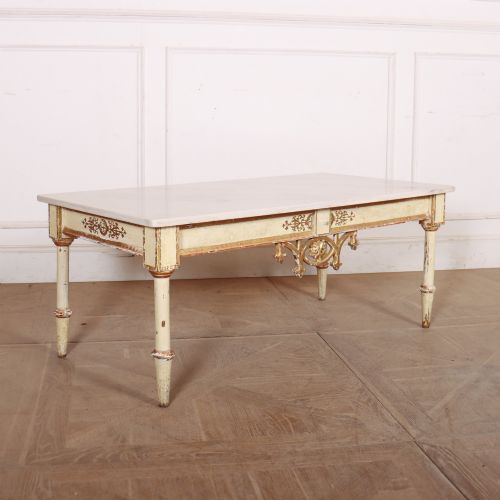
A painted french chateau table encompasses console tables, side tables, and coffee tables originating from periods spanning the eighteenth century through the early twentieth century. Buyers seek these forms to introduce historical character and functional surface area into domestic spaces. The selection on this page relies heavily on console tables and bedside cabinets finished with painted or gilt surfaces.
Makers and designers drew upon french provincial, rococo revival, and louis xvi styles when shaping these forms. Surviving examples often display serpentine fronts, cabriole legs, or inset marble tops supported by carved wood and wrought iron. While some pieces date back to the eighteenth century, many representative items stem from later nineteenth and early twentieth century revivals.
How they were made
Craftsmen utilised solid wood substrates, applying multiple layers of paint, gesso, and occasional parcel gilt to achieve depth and texture. Carved wooden ornamentation adorned frames and legs, whilst structural integrity was reinforced through traditional joinery and wrought iron elements.
Surfaces frequently integrated inset marble slabs or suede inserts, held within moulded wooden rims. The finishing process relied on hand-applied pigments that matured naturally over decades of use, creating the characteristic worn patinas seen today.
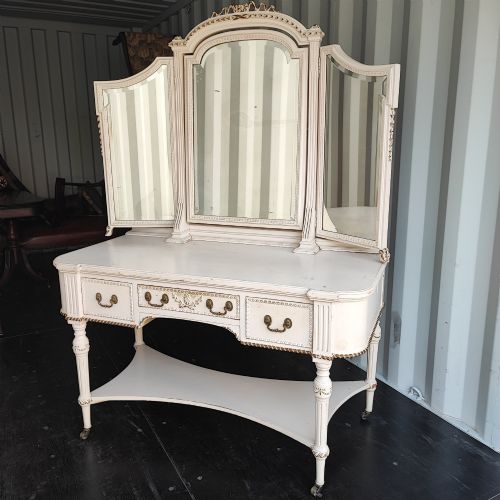
Maples of London and Paris left their mark on a triple mirror dressing table, uniting two capitals in the pursuit of grand morning vanity.
What varies in quality
Quality rests upon the integrity of the original surface finish and the depth of hand-carved detailing on the wooden frame. Pieces retaining authentic period paint layers hold greater aesthetic interest than later repainted interpretations.
The choice of secondary materials, such as heavy marble tops or finely cast brass and gilt bronze mounts, distinguishes finer console and side tables from simpler utilitarian forms.
maples of london and paris
The Painted French Chateau Table Glossary
- Console table
- A table designed to stand against a wall, frequently secured with brackets or resting on front legs. These forms often feature marble tops and decorative carved aprons.
- Cabriole leg
- A furniture leg that curves outward and then tapers inward, finishing in a pad or scroll foot. This shape is characteristic of rococo and louis xvi furniture designs.
- Gesso
- A plaster mixture applied to wood surfaces to provide a smooth base for painting or gilding. It allows for crisp, intricate relief ornamentation.
- Parcel gilt
- A decorative technique where specific carved details or raised edges are highlighted with thin gold leaf. It creates contrast against a painted wooden ground.
- Serpentine front
- A furniture front characterised by a central convex curve flanked by two concave curves. This undulating shape adds movement and visual complexity to side tables.
Painted French Chateau Table: Frequently Asked Questions
Where should I place a console table?
A console table sits naturally in an entrance hall, living room, or bedroom against a blank wall. Its shallow depth provides a practical surface for lamps and decorative objects without obstructing pathways.
Pairing the table with a mirror or wall console above creates a balanced focal point within the room.
How do I care for a painted wooden surface?
Dust the painted wood regularly with a soft, dry cloth to prevent dirt accumulation. Avoid harsh chemical cleaners or excessive moisture that might soften aged paint layers.
Applying a gentle beeswax occasionally can help protect the finish on unsealed wooden areas.
Are marble tops original to these tables?
Many french console and side tables were designed specifically to hold heavy marble slabs. These stone inserts provided durable, heat-resistant surfaces for daily use.
Checking the fit and edge moulding helps confirm whether the marble corresponds to the period of the wooden base.
How do I identify a louis xvi style piece?
Louis xvi style furniture is distinguished by straight fluted legs, neoclassical symmetry, and restrained geometric carving. This aesthetic contrasts with the earlier, more flamboyant curved lines of rococo designs.
Look for motifs such as wreaths, ribbons, and urns incorporated into the carved wooden framework.