





Painted Display Mirror
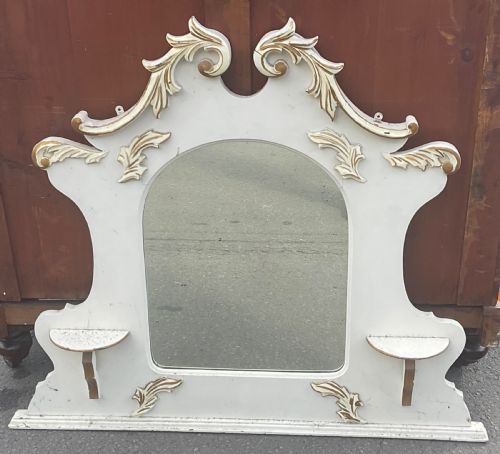
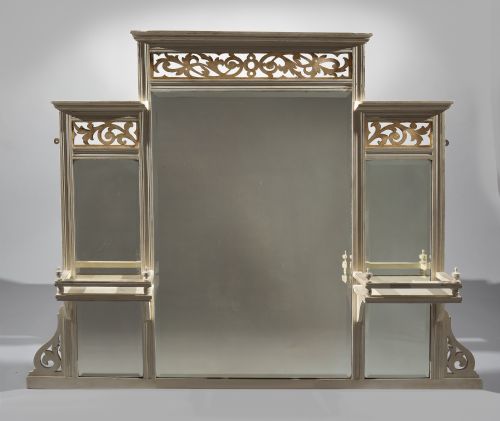
These painted display mirror pieces combine reflective glass with decorative woodwork and colour, offering a functional surface alongside ornamental presence for the room.
Painted Display Mirror
When you search for a painted display mirror, you encounter a selection of wall-hanging and overmantel forms that integrate glass with painted timber structures. These pieces draw from styles including the Aesthetic Movement, French Rococo Revival, Victorian, Edwardian, and Sheraton Revival, spanning periods from the Georgian era through to the early twentieth century.
The objects on this page primarily take the shape of overmantel mirrors, wall cabinets, and display shelving units. Materials encompass painted wood, ebonised wood, mahogany, kingwood, and satinwood, frequently enhanced with gold leaf, gilt highlights, and painted decoration.
How they were made
Makers utilised timber substrates such as mahogany, satinwood, and ebonised wood as the structural foundation for these pieces. Surfaces were then prepared for decorative treatments, incorporating paint, gold leaf, and parcel gilt highlights to accentuate carved or moulded details.
Mirrored glass was integrated into frames and cabinets alongside display shelves or majolica panels, combining utilitarian reflection with ornamental storage and display capabilities.
Painted Display Mirror Retail Price Guide 2026
Typical asking prices for painted display mirror among the pieces listed under this phrase on Sellingantiques today, from the lower quarter to the upper quarter. They describe what is for sale here now, not the wider market.
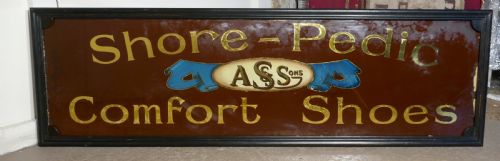
One unexpected survival in the selection is a shoe shop mirror advertising sign for Shore Pedic Shoes.
What varies in quality
The standard of execution in the painted decoration and gilding sets examples apart, distinguishing simple surface colour from nuanced parcel gilt detailing and hand-painted motifs. The choice of underlying timber, whether standard painted wood or finely figured satinwood and kingwood, also distinguishes pieces within the range.
Structural complexity influences quality, separating straightforward mirror frames from multi-tiered wall étagères, cabinets with integrated shelving, and pieces incorporating specialised elements such as majolica panels.
The Painted Display Mirror Glossary
- Aesthetic Movement
- A late nineteenth-century design style emphasising visual beauty and decorative arts over narrative content, often featuring ebonised wood and gilt highlights.
- Parcel Gilt
- A technique where only specific portions of an object are covered in gold leaf, leaving the painted or wood surface visible elsewhere.
- Overmantel Mirror
- A large mirror designed specifically to be hung or placed on the wall directly above a fireplace mantelpiece.
- Étagère
- A piece of furniture consisting of a set of open shelves for displaying small objects or ornaments.
- Majolica
- A type of earthenware decorated with opaque colourful tin glazes, often incorporated into nineteenth-century furniture and cabinetry.
Painted Display Mirror: Frequently Asked Questions
Where should a painted display mirror be hung?
These items suit placement above a fireplace mantelpiece or on prominent living room walls where their reflective glass and decorative framework can catch the light.
Wall-hanging versions with shelves also function effectively in hallways or reception rooms for displaying small ornaments alongside the mirror.
How do I identify the period of a mirror?
Dating relies on observing stylistic markers such as the ornate curves of French Rococo Revival or the geometric simplicity associated with the Aesthetic Movement.
Materials also offer clues, as specific timbers like satinwood or ebonised mahogany align closely with nineteenth and early twentieth-century manufacturing traditions.
Are these mirrors suitable for daily use?
The reflective glass functions fully for everyday room reflection, while the accompanying shelves and cabinets provide stable display space for lightweight decorative items.
Care should be taken to mount heavier wooden frames securely to wall structures given their combined timber and glass weight.
What maintenance do painted wooden frames require?
Dusting with a soft, dry cloth helps protect painted surfaces and gilt highlights from abrasive particles accumulating over time.
Moisture and direct sunlight should be avoided to preserve the integrity of the painted wood, gold leaf, and mirror backing.