





Painted Shelf Mirror
These painted shelf mirror pieces bring practical surface space and reflected light together in one hanging form, finished with decorative pigment or gilding.
Painted Shelf Mirror
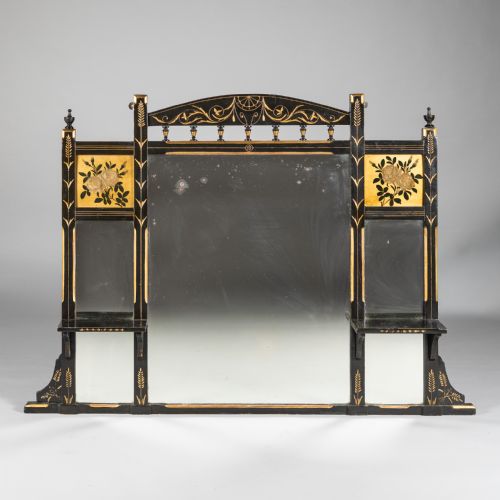
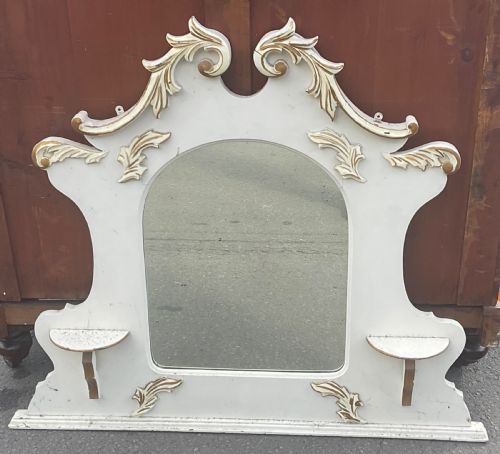
When you search for a painted shelf mirror, you encounter wall-mounted furniture combining a looking glass with integrated display ledges or brackets. The examples seen here range across the nineteenth and early twentieth centuries, taking forms such as overmantel mirrors and wall étagères.
Edwardian black lacquer versions and Victorian aesthetic period ebonised pieces form a significant portion of these listings. Alongside these, French rococo revival and Asian-style decorative pieces appear, showing varied stylistic influences from different decades.
How they were made
Construction relies primarily on wood as a base material, shaped into frames, brackets, and shelves before receiving surface decoration. Artisans applied paint, lacquer, or ebonisation directly to the wooden surfaces to achieve distinct matte or polished finishes.
Many pieces incorporate gold leaf or parcel gilt highlights to accentuate carved details and architectural mouldings. Glass plates are fitted within the frames to create the mirror element, often paired with accompanying console surfaces or display cabinets.
Painted Shelf Mirror Retail Price Guide 2026
Typical asking prices for painted shelf mirror among the pieces listed under this phrase on Sellingantiques today, from the lower quarter to the upper quarter. They describe what is for sale here now, not the wider market.
What varies in quality
The refinement of the painted or lacquered finish largely dictates the distinction between standard and superior pieces. Hand-applied giltwork and complex decorative motifs require greater skill than plain painted surfaces.
Structural complexity also separates pieces, with integrated shelving, shaped heart mirrors, and intricate revival stylings demanding more advanced cabinetmaking expertise.
The Painted Shelf Mirror Glossary
- Ebonised Wood
- Wood stained or painted to imitate ebony, giving a dark, dense finish popular during the Victorian aesthetic period. This technique provides a stark contrast for parcel gilt highlights.
- Overmantel Mirror
- A large looking glass designed specifically to hang on the wall above a fireplace mantelpiece. These often incorporate integrated shelves or ledges for displaying small ornaments.
- Étagère
- A piece of furniture consisting of a set of open shelves for displaying small objects or ornaments. In mirror forms, it combines shelving with a central glass plate.
Painted Shelf Mirror: Frequently Asked Questions
Where should I hang a painted shelf mirror?
These pieces suit positions above fireplaces or low console tables where the integrated shelf can hold small decorative objects. They also function well on prominent living room walls to reflect light across the space.
Ensure the wall fixings can support both the weight of the wooden frame and the glass plate securely before mounting.
How do I clean the painted frame?
Dust the painted or lacquered wooden surfaces gently with a soft, dry cloth to prevent accumulation of dirt. Avoid using chemical sprays or abrasive cloths that might damage the delicate giltwork or paint.
For the glass plate, apply a mild glass cleaner to a cloth rather than spraying directly onto the mirror to protect the surrounding wood.
What periods do these mirrors come from?
The listings span several eras, including the Georgian period, the nineteenth century, and specific decades such as eighteen-eighty and nineteen-hundred. Edwardian and Victorian aesthetic styles appear frequently alongside revival designs.
Earlier pieces often feature heavier ebonised finishes, while Edwardian examples show lighter painted lacquer treatments.
Can the shelf hold heavy items?
The integrated shelves on these mirrors are typically designed for light decorative objects, small ornaments, or framed photographs. Loading them with heavy items risks straining the joints where the shelf meets the main frame.
Check the construction of the specific brackets and ledges to gauge their load capacity before placing objects on them.