
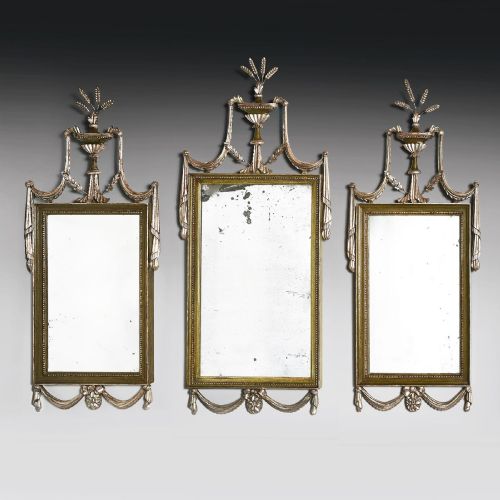
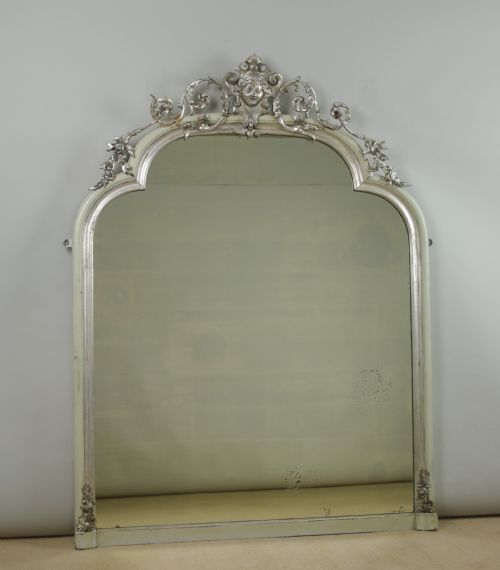


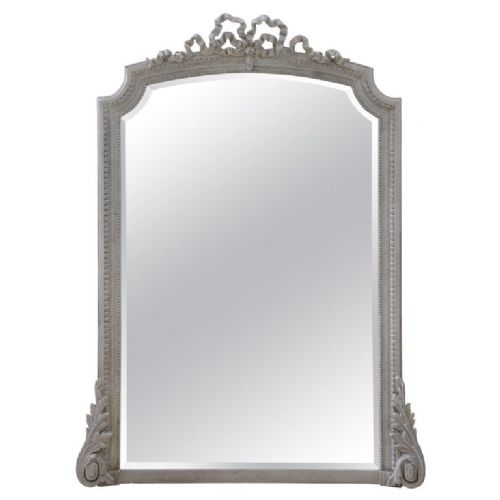


Painted Crest Mirror
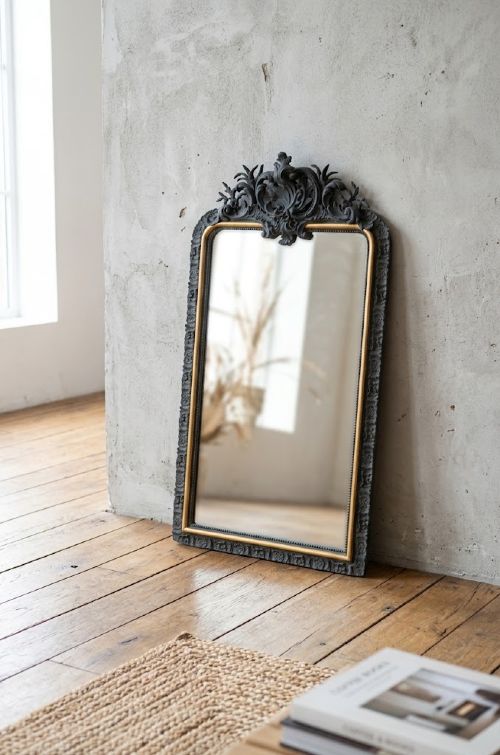
These painted crest mirror pieces combine timber frames with decorative painted surfaces and ornate upper crests.
Painted Crest Mirror
A painted crest mirror combines a reflective glass plate with a timber frame finished in paint, often accented with giltwood or gesso. These pieces span wall-hanging formats, pier mirrors, and wide overmantel designs intended for placement above fireplaces.
The painted crest mirror selection heavily reflects nineteenth-century production, particularly French and English examples drawing on Rococo, Neoclassical, and Louis styles. Buyers encounter both restrained Georgian styles and elaborate continental designs with carved wooden crests.
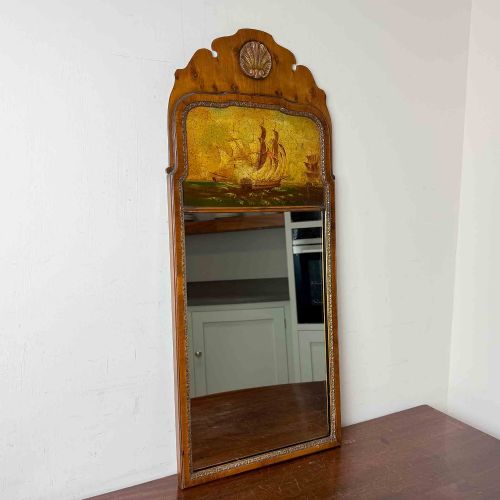
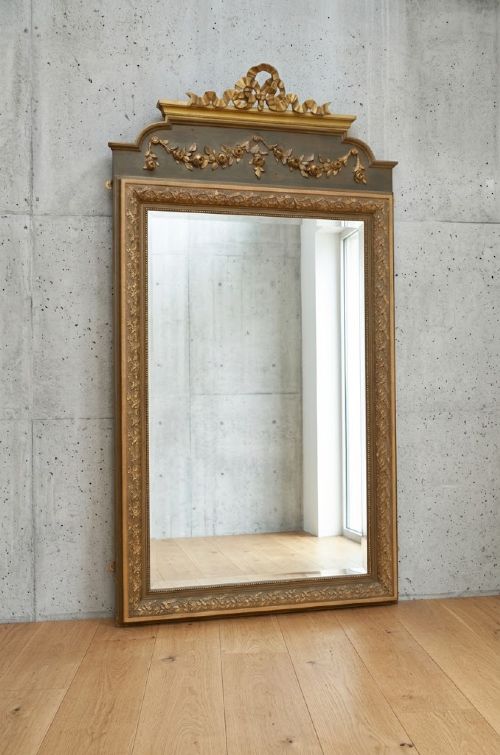
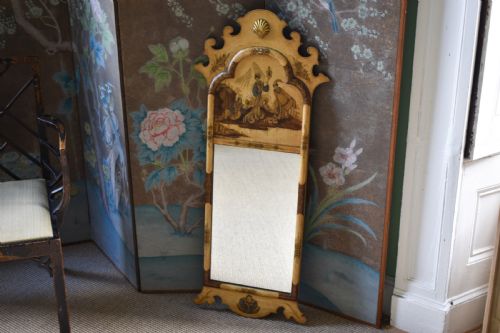
Makers integrated decorative motifs ranging from traditional ribbon crests and urns to maritime scenes and Chinoiserie decoration directly into the upper wooden framing. The resulting objects function simultaneously as wall art and practical reflective glass.
Materials and construction methods
Frames rely on carved wood or moulded gesso built over a wooden foundation, providing the structural base for subsequent layers of paint and gilding. Artisans applied gold leaf alongside oil-based paint finishes, creating contrasting textures across the frame and crest.
Glass plates in these pieces often display bevelled edges or distinct silvering patinas appropriate to their nineteenth-century or earlier origins. The integration of hand-painted panels, foliage, and decorative crests required collaboration between woodworkers and specialist decorative painters.
Listings feature wood, gesso, glass, and paint across Victorian, Edwardian, and eighteenth-century periods.
Assessing quality in construction and detail
Quality rests on the crispness of the carved wooden or gesso crest and the depth of the applied paint and gold leaf layers. Superior examples demonstrate fluid carving in the framing elements and careful preservation of the original painted surface rather than later overpainting.
The integrity of the original glass plate and the precision with which the crest joins the main frame distinguish finer pieces. Workshop execution determines whether decorative elements like urns, ribbons, or figural motifs retain their intended proportion and detail.
Gillows Of Lancaster
The Painted Crest Mirror Glossary
- Gesso
- A plaster-like mixture applied to wooden frames to create a smooth surface for painting or gilding. Artisans carved intricate details directly into this hardened compound before applying decorative finishes.
- Giltwood
- Timber that has been decorated with thin sheets of gold leaf. This material frequently appears alongside painted surfaces on French and English frames.
- Pier mirror
- A tall, narrow looking glass specifically designed to hang on the wall space between windows. These pieces often feature prominent painted crests to draw the eye upward.
- Overmantel mirror
- A wide mirror format constructed to sit directly on the mantelpiece above a fireplace. Evidence shows these frequently incorporated carved wood and gesso crests.
- Trumeau
- A decorative wall mirror incorporating an integrated painted panel or artwork above the glass plate. These French pieces often display Neoclassical or Rococo styling.
Painted Crest Mirror: Frequently Asked Questions
What is a painted crest mirror?
A painted crest mirror is a framed looking glass featuring a decorative upper ornamentation, known as a crest, finished with paint. These pieces often incorporate carved wood, gesso, and giltwood details.
Originating largely from the nineteenth century, they take forms such as tall pier mirrors and wide overmantel designs.
Where should I hang an overmantel mirror?
Overmantel mirrors are traditionally positioned directly above a fireplace mantelpiece to reflect light and anchor the room's proportions. Their wide formats suit horizontal spaces on main reception room walls.
Secure installation is essential due to the substantial weight of carved wood and gesso frames.
How do I identify French styles?
French styles like Louis XV, Louis XVI, and Rococo show distinct decorative vocabulary including flowing asymmetry, scrollwork, and ribbon crests. Painted surfaces on these pieces frequently pair with original gilding.
Makers often employed carved wood and gesso to achieve elaborate cartouche and urn motifs.
Are the mirror plates original?
Many nineteenth-century pieces retain their original glass plates, which frequently exhibit characteristic foxing, light oxidation, and minor silvering losses. These age-related marks confirm the period authenticity of the glass.
Replacement glass plates occasionally occur when earlier mirrors underwent historic restoration.