






Painted Classical Urns
Painted classical urns bring sculptural dignity and finely brushed mythological or floral scenes into a room, spanning cast iron garden pieces and delicate porcelain mantle displays.
Painted Classical Urns
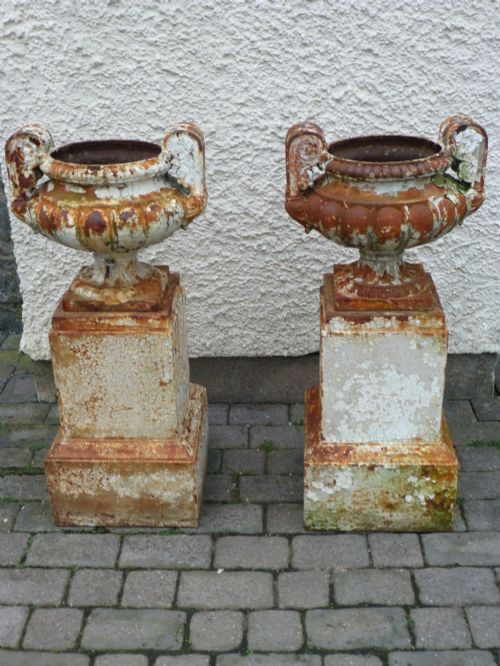
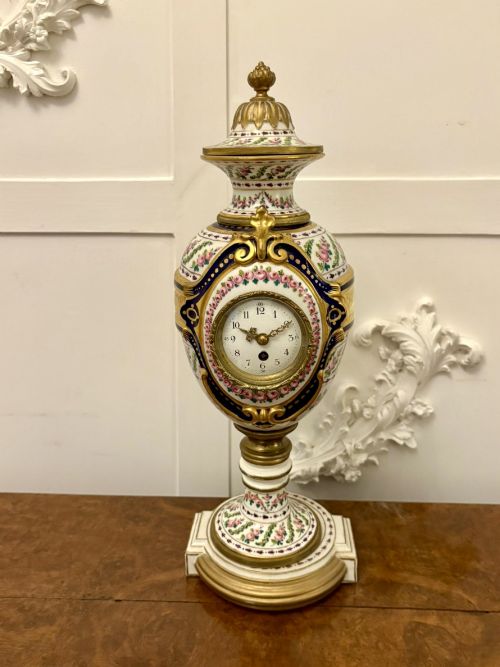
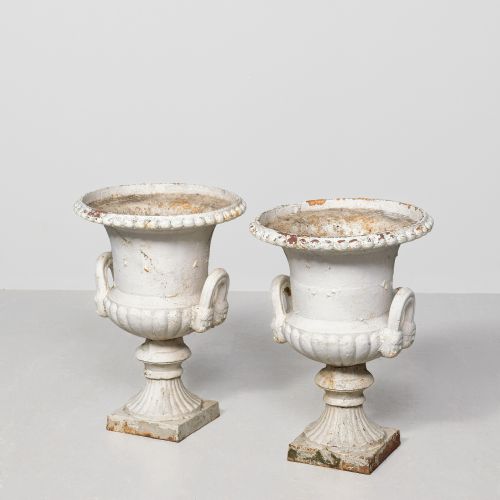
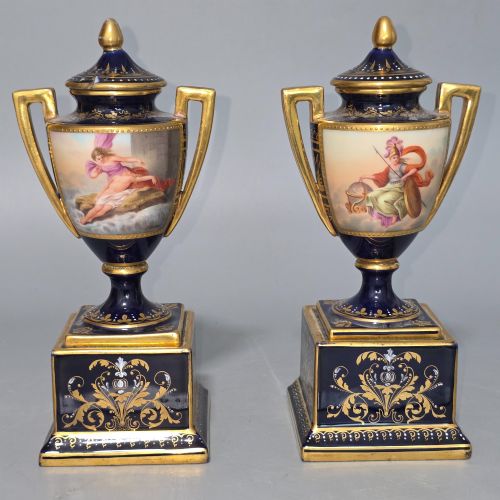
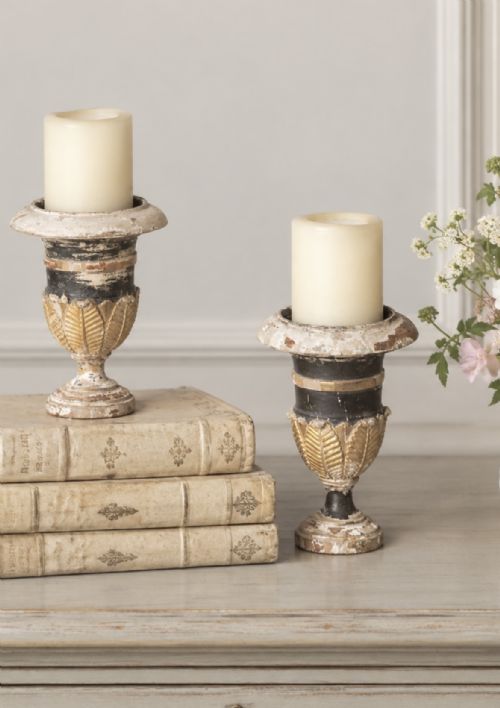
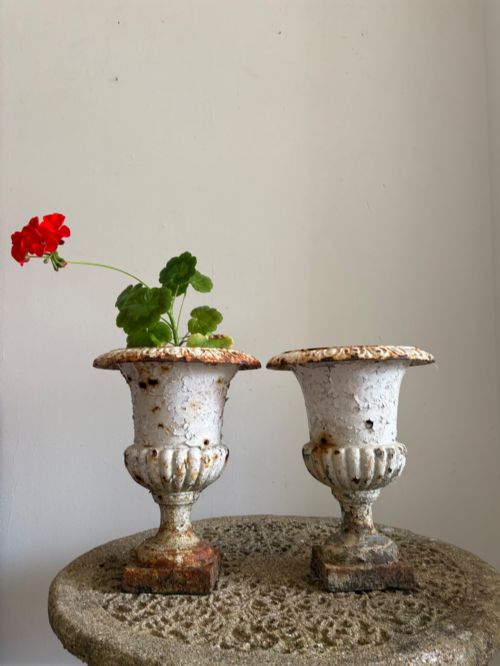
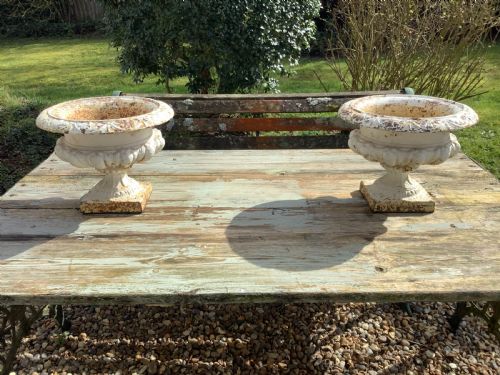
When you search for painted classical urns, you encounter a distinct cross-section of heavy metal garden vessels and delicate porcelain interior pieces. The selections divide primarily between robust cast iron garden urns bearing traces of original distressed paint and refined porcelain vases, ewers, and mantle clocks produced across the nineteenth century.
The dominant aesthetic draws heavily upon neoclassical, Empire, and Regency vocabularies, channeling ancient Greek and Roman forms through later European workshops. Many items arrive as matched pairs, whether standing upon original plinths in iron or decorated with hand-painted panels on fine ceramic bodies.
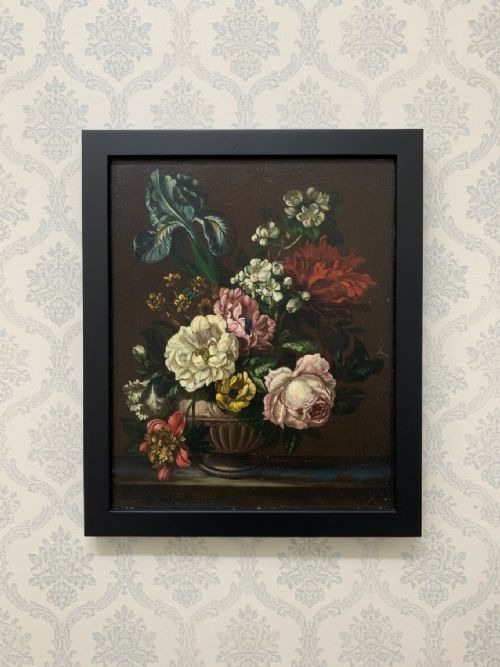
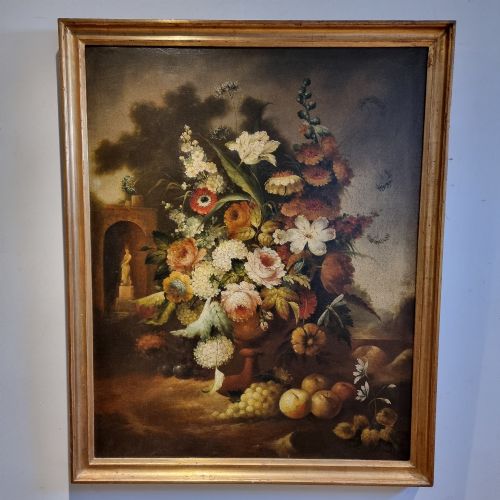
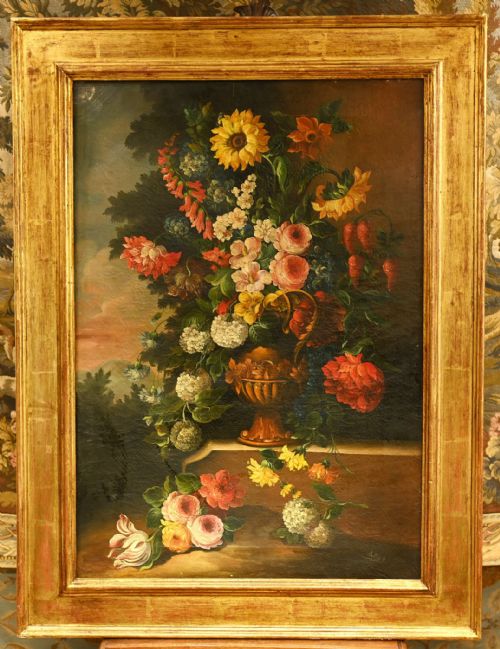
Alongside three-dimensional vessels, the selections occasionally encompass oil paintings depicting still life arrangements and portraits that share the classical palette. These diverse forms share a grounding in antiquity, translated through nineteenth-century manufacturing methods into decorative objects meant for display.
How they were made
Makers utilised durable casting techniques for iron garden vessels, pouring molten metal into moulds to achieve crisp acanthus leaf details and classical silhouettes. These cast iron surfaces frequently received layers of protective paint, which weathered over decades to create the textured patinas seen today.
Porcelain and ceramic bodies underwent high-temperature firing before artists applied detailed hand-painted scenes, often incorporating gilt bronze mounts or gold leaf accents. Toleware examples similarly combined metal shaping with surface painting to imitate more costly materials, finished with decorative pigments.
Listings span the eighteenth, nineteenth, and early twentieth centuries, uniting cast iron garden forms with delicate porcelain mantle clocks and oil paintings.
What varies in quality
Quality rests significantly in the precision of the casting and the execution of the painted surface. Superior porcelain examples display delicate, hand-painted brushwork signed by skilled artists, whereas lesser versions rely on simplified transfer printing or heavier, less refined ceramic bodies.
For cast iron garden pieces, desirability depends upon the crispness of the classical relief ornamentation and the retention of original surface paint rather than later overpainting. Heavy, well-proportioned castings with intact structural integrity sit at the upper end of the scale compared to simpler, lighter table versions.
Falkirk Carron foundry·Coalbrookdale·Royal Vienna·Meissen·Sevres
The Painted Classical Urns Glossary
- Campagna urn
- A bell-shaped garden vessel with a flared rim originating from classical Roman designs. These heavy iron examples typically sit on square pedestals.
- Gilt bronze
- An alloy treated with a fine layer of gold to produce a rich metallic lustre. It often mounts porcelain vases and clock garnitures.
- Toleware
- Painted and lacquered metalware produced for decorative utility. These objects replicate the visual weight of ceramics through surface decoration.
- Empire style
- A neoclassical design movement favouring grand Roman motifs and military symbols. Pieces from this period display formal symmetry and restrained gilding.
- Garniture set
- A matched group of three or five decorative vases and clock containers designed for mantle display. They share coordinated painting and gilding.
Painted Classical Urns: Frequently Asked Questions
Where were painted classical urns displayed?
These vessels served multiple architectural and domestic functions depending on their material. Iron versions stood outdoors upon garden terraces and lawns, while porcelain counterparts decorated nineteenth-century drawing rooms and mantlepieces.
Interior pieces frequently arrived as part of garniture sets flanking a central clock, whereas larger pedestal urns occupied prominent hallway spaces.
How do I care for cast iron garden urns?
Cast iron garden pieces require management of their surface patinas to prevent active rust from compromising the metal. Maintaining them outdoors involves gentle cleaning without harsh chemical strippers that remove original historic paint layers.
Placing them on stable stone plinths prevents ground moisture absorption during wetter months, preserving the structural integrity of the heavy iron base.
What distinguishes Old Paris porcelain?
Old Paris porcelain encompasses items produced by numerous independent workshops operating around Paris during the nineteenth century. These pieces are characterised by generous application of gold leaf and vibrant hand-painted floral or classical motifs.
Unlike factory-marked wares, many Old Paris items remain unmarked, identified instead by their distinctive paste composition and French neoclassical styling.
Are these urns waterproof?
Cast iron garden urns generally accommodate soil and planting when properly lined, though historic painted interiors benefit from protective liners to prevent moisture damage. Ceramic and porcelain urns are strictly decorative interior objects unsuited for heavy garden planting.
Porcelain bodies and joined gilt bronze mounts remain sensitive to freezing temperatures and moisture expansion.
How do I identify Regency ironwork?
Regency iron urns display distinct classical proportions, often featuring heavy cast iron construction with crisp acanthus leaf moulding and stepped square bases. Foundry marks, when present, point to prominent Scottish or English ironworks operating during the early nineteenth century.
The presence of original distressed paint layers further indicates longevity and period manufacturing techniques.