


Painted Chinese Cabinet
A painted chinese cabinet brings bold red or black lacquer, intricate floral motifs and substantial storage to a room.
Painted Chinese Cabinet
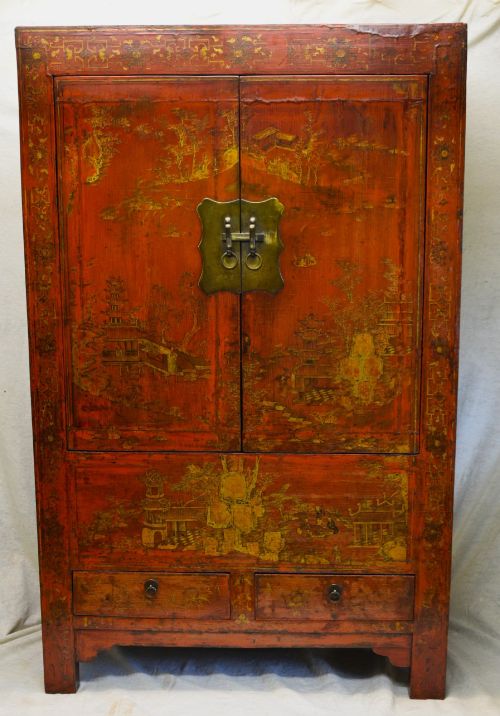
When you search for a painted chinese cabinet, you encounter substantial storage furniture finished in vibrant pigments, often taking the form of wedding or marriage cabinets, side cupboards and cocktail cabinets. These items originate from periods ranging through the eighteenth, nineteenth and early twentieth centuries, spanning Qing Dynasty traditions and British interpretations.
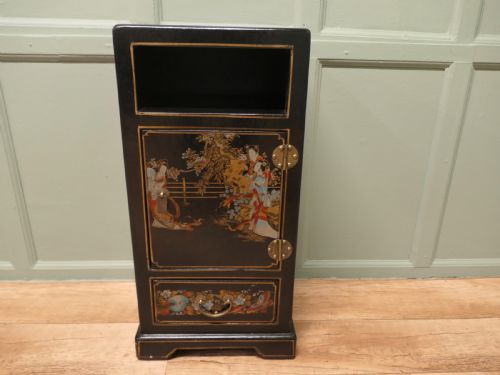
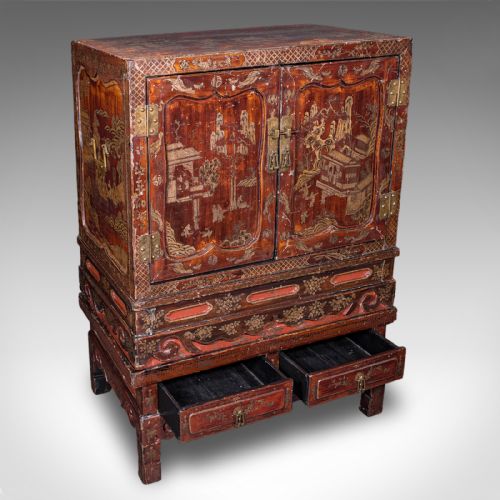
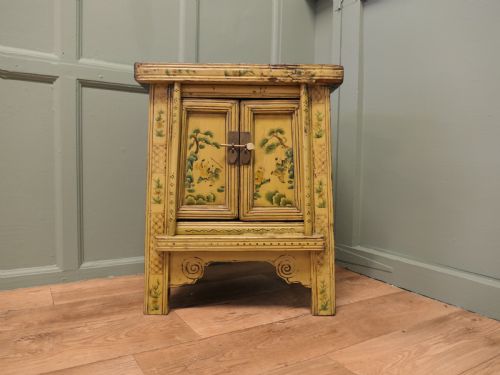
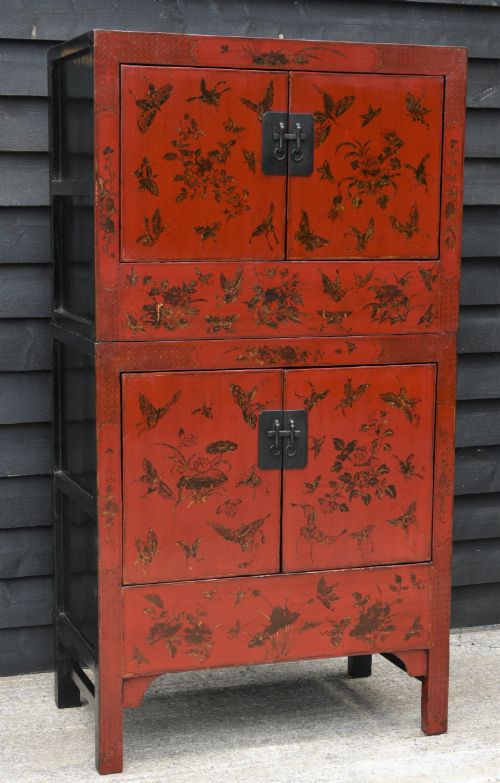
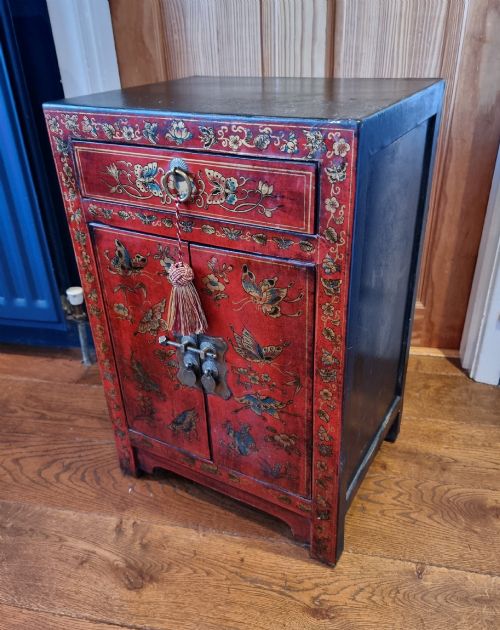
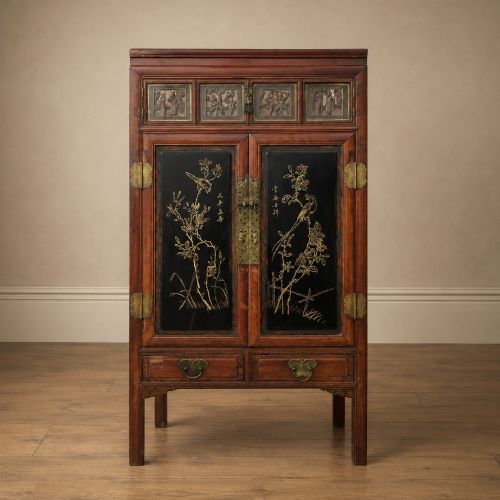
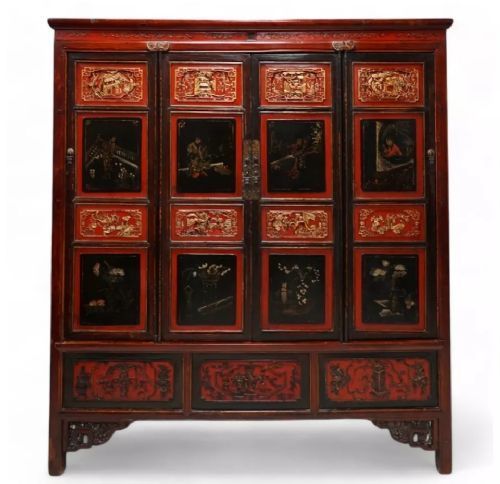
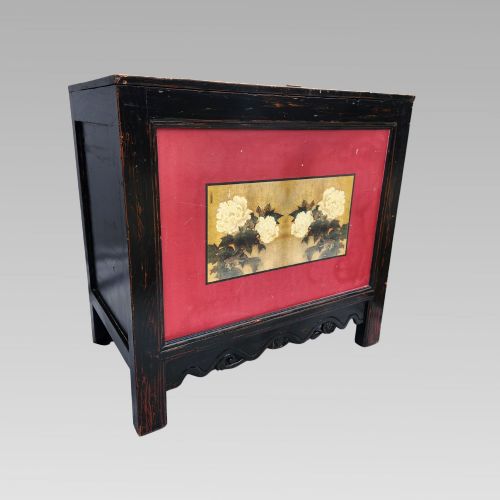
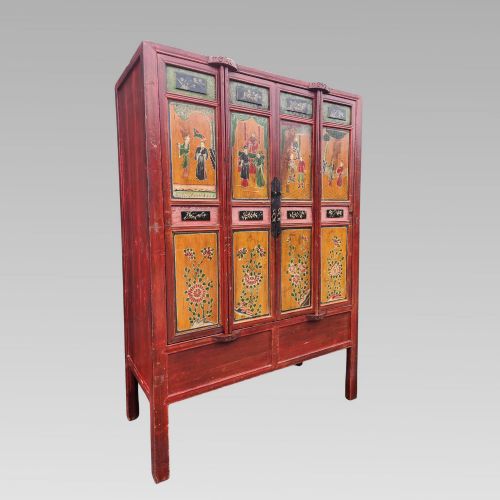
You are most likely to meet pieces finished in red or black lacquer on wood, decorated with birds, flowers and traditional scenes. The selection includes side cabinets, chests of drawers and storage coffers alongside larger standing cupboards.
Originating from Chinese workshops as well as British Victorian and Edwardian makers influenced by Eastern design, these cabinets combine functional storage with decorative surface work. Some examples sit upon carved stands, while others present clean lines intended for prominent placement in reception rooms.
What varies in quality
The sophistication of the hand-painted details separates standard examples from exceptional ones, with finer pieces displaying delicate brushwork in the depiction of birds, foliage and figurative scenes. The depth and smoothness of the lacquer finish also indicate the standard of production, as multiple polished coats require considerable skill to achieve without blemishes.
The quality of the underlying timber framework and joinery dictates the structural integrity of the cabinet over time. Pieces retaining original brass hardware, stable door alignment and untouched decorative surfaces command greater interest from collectors than those with heavy later repainting or mismatched fittings.
One cheerful black cupboard arrives decorated specifically with birds and flowers, proving that nineteenth-century artisans knew the value of a well-placed pigeon.
The Painted Chinese Cabinet Glossary
- Chinoiserie
- European artistic style reflecting Chinese motifs and decorative techniques, popular during the eighteenth and nineteenth centuries. This aesthetic appears on cabinets produced in Britain during the Victorian and Edwardian eras.
- Lacquer
- Protective and decorative coating derived from tree sap or synthetic resins, applied in successive layers to wooden furniture. It forms a hard, smooth surface that takes paint and gold leaf effectively.
- Wedding Cabinet
- Large standing storage piece traditionally given to brides in China as part of dowry furnishings. These items feature two doors opening to reveal internal shelving and compartments.
- Famille Rose
- Palette of opaque enamel colours dominated by pink, introduced to Chinese ceramics and decorative arts during the Qing Dynasty. Plates and vessels decorated in this manner sometimes accompany cabinet collections.
- Qing Dynasty
- The final imperial dynasty of China, lasting from sixteen forty-four to nineteen twelve. Many cabinets and decorative items originate from the later decades of this period.
Painted Chinese Cabinet: Frequently Asked Questions
Where should I place a painted chinese cabinet?
These cabinets work well in living rooms, hallways or dining spaces where their vibrant red or black finishes can serve as a focal point. They offer practical enclosed storage for tableware, linens or media equipment while introducing rich colour to an interior.
Position them away from direct sunlight and strong heat sources to protect the lacquered surfaces and painted details from fading or drying out over time.
How do I care for the lacquer surface?
Dust the cabinet regularly with a soft, dry microfibre cloth to prevent particulate buildup on the delicate painted decoration. Avoid using commercial furniture polishes, abrasive cleaners or damp cloths that might compromise the aged finish.
Maintain a stable room humidity to prevent the underlying wood from expanding or contracting, which can cause cracking in the lacquer layers.
What is the difference between Chinese and Chinoiserie cabinets?
Cabinets made in China during the Qing Dynasty reflect indigenous woodworking traditions, regional motifs from places like Fujian, and local craftsmanship. They served functional domestic roles such as marriage dowry storage.
Chinoiserie cabinets were manufactured in Britain during periods like the Victorian and Edwardian eras by European makers interpreting Asian design conventions through Western furniture forms.
Do these cabinets come apart for transport?
Many traditional marriage and wedding cabinets feature knockdown frame construction held together by wooden tenons and pins without permanent glue. This design allowed furniture to be dismantled easily during historical household moves.
Check the specific construction of each piece before moving, as some side cabinets and desks are built as single solid units.