

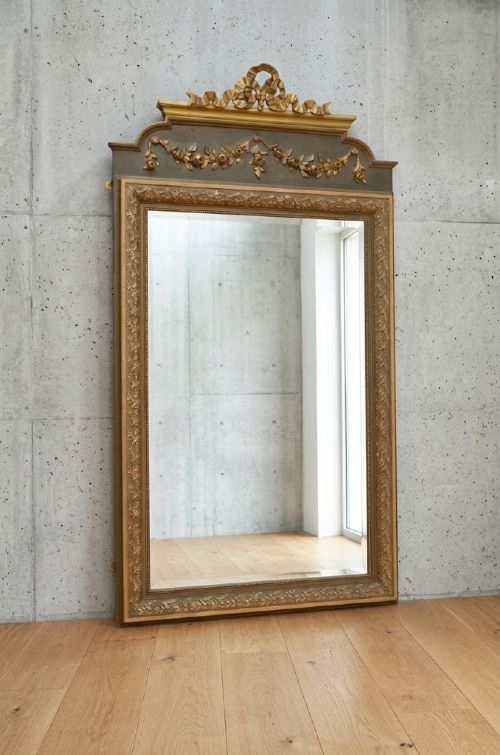
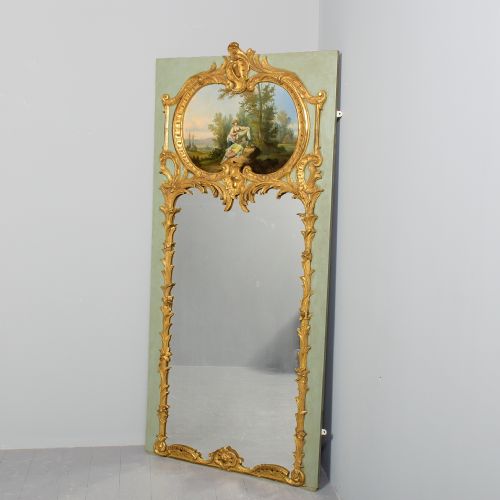
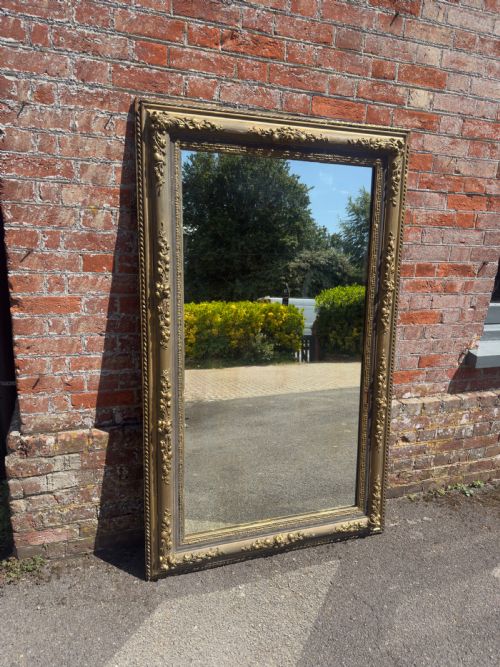
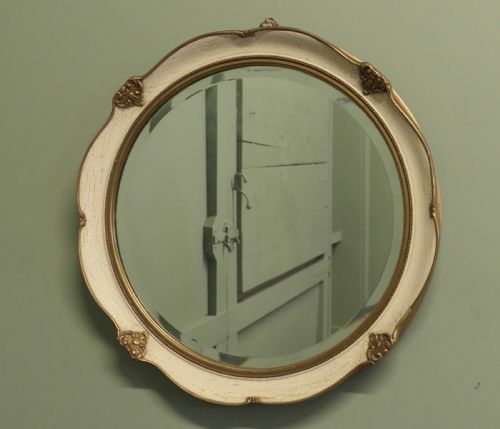
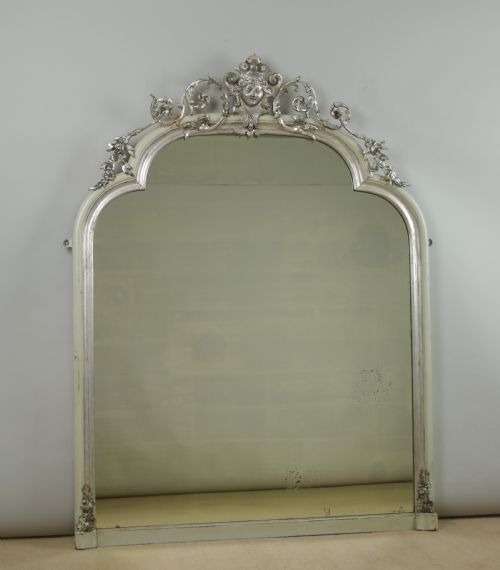

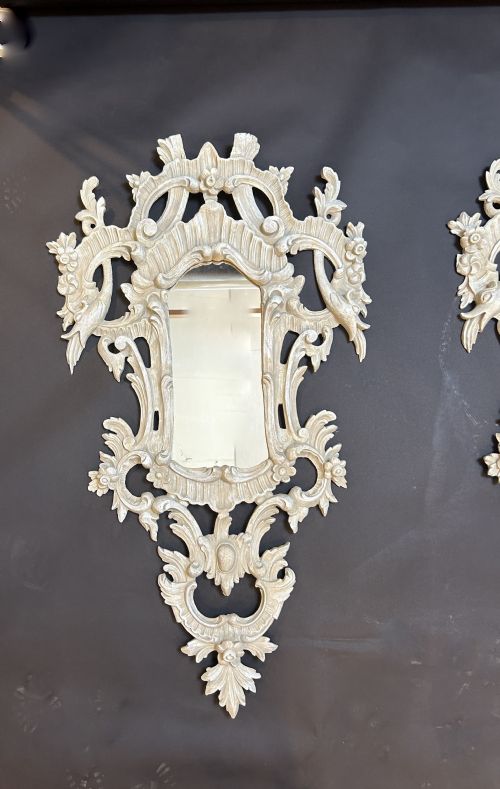
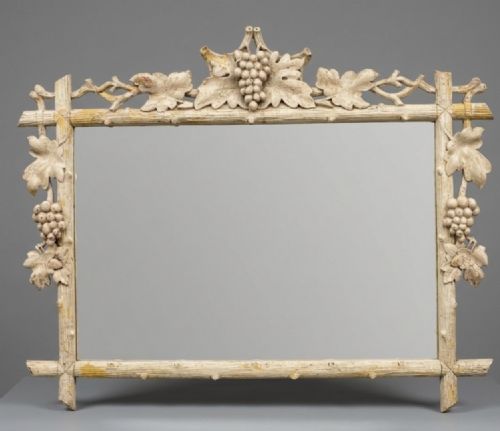
Painted Chateau Wall Mirror
A painted chateau wall mirror brings domestic French elegance into a room through curved wooden frames and soft brushwork.
Painted Chateau Wall Mirror
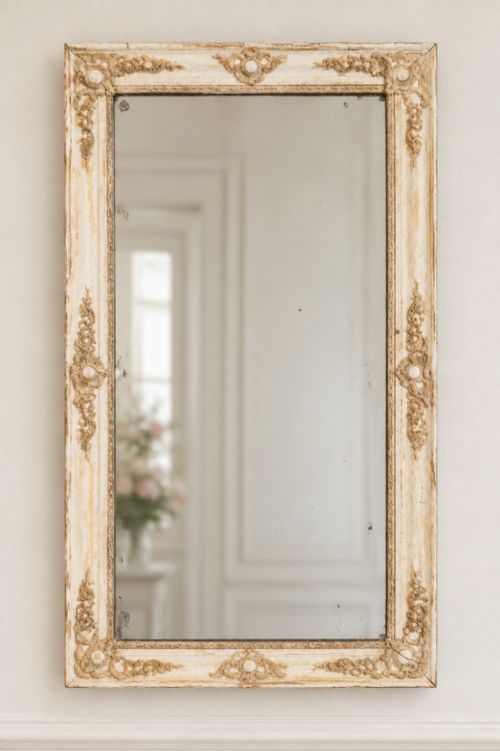
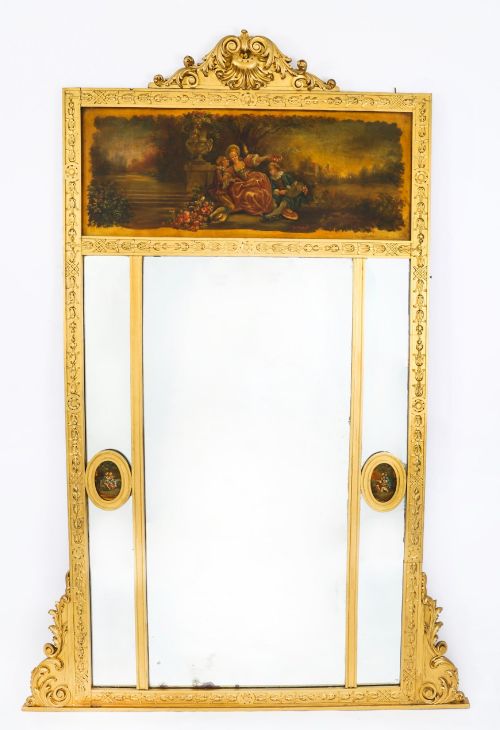
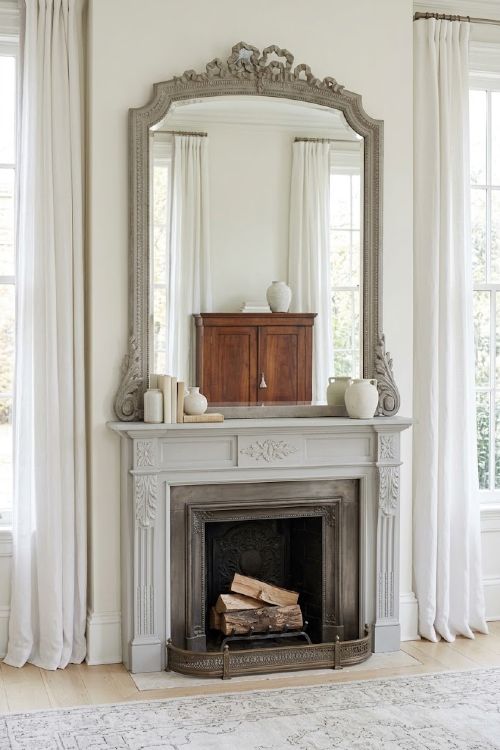
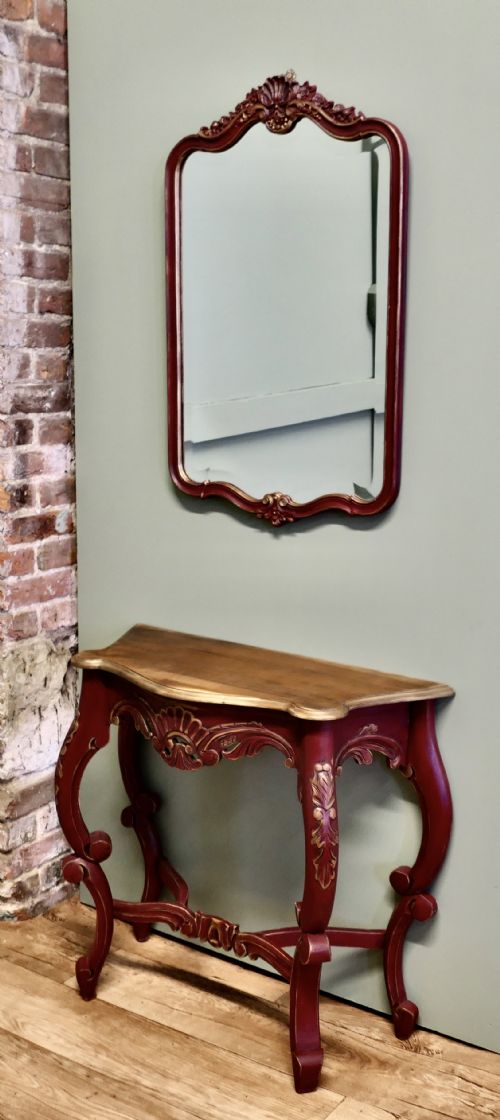
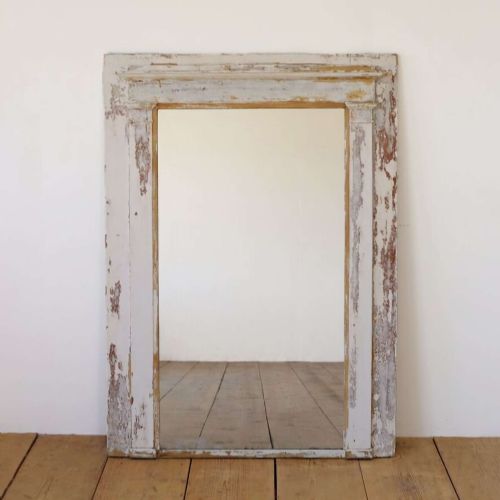
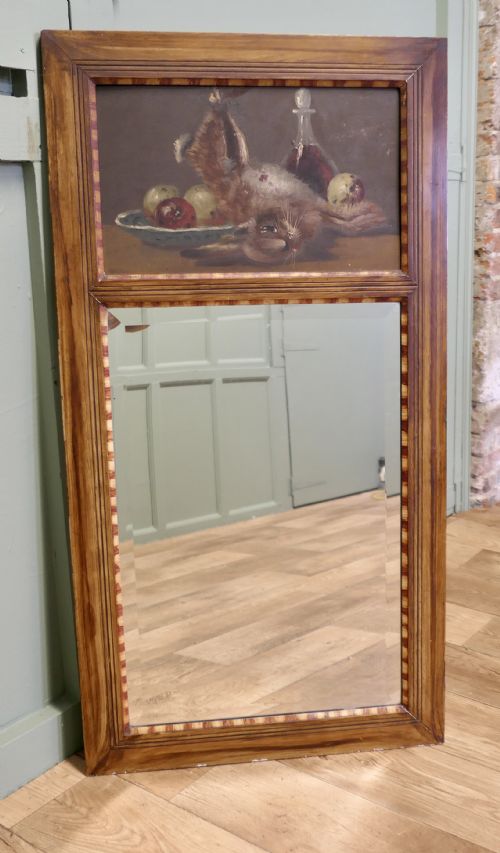
A painted chateau wall mirror typically takes the form of a tall pier glass, an overmantel, or a trumeau designed to sit above a mantelpiece or console table. These items draw on French design traditions, spanning regional country pieces to ornate revival styles.
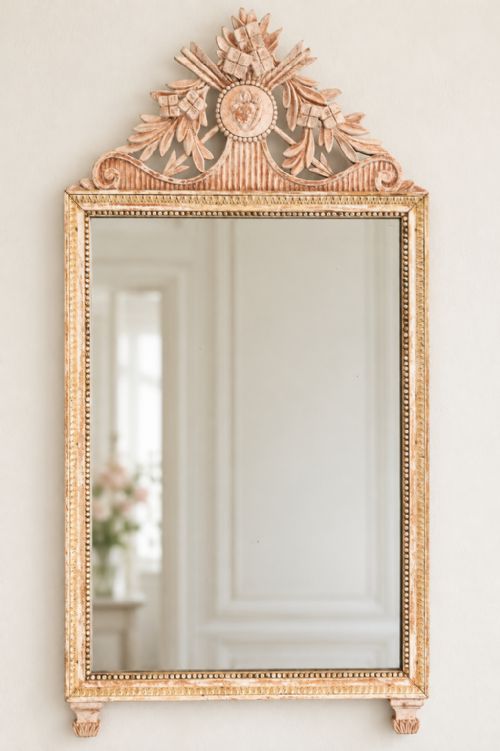
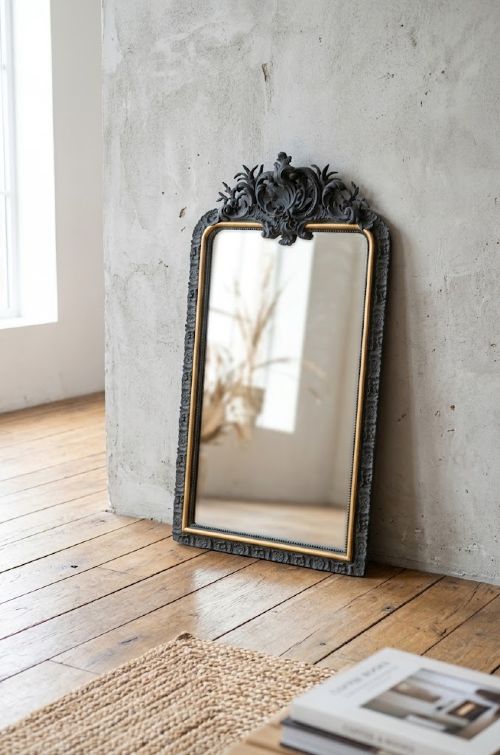
The versions most commonly found here originate in the nineteenth century, often bearing classic Louis or Rococo revival details. Carved wooden frames receive layered paint finishes, sometimes combined with parcel gilt highlights or exposed gesso.
Builders shaped these glasses to serve as focal points in domestic interiors, reflecting light across high-ceilinged rooms. Alongside standalone wall mirrors, buyers encounter matched sets incorporating console tables or architectural panels.
Assessing quality in frames and glass
The depth and precision of the hand-carved woodwork separate finer examples from simpler production. Crisp execution in the gesso moulding indicates skilled workshop output rather than hurried casting.
Originality of the surface finish dictates the character of the piece. Untouched layers of historic paint and authentic silvering on the mirror plate carry more integrity than later overpainting or replaced glass.
Painted Chateau Wall Mirror Retail Price Guide 2026
Typical asking prices for painted chateau wall mirror among the pieces listed under this phrase on Sellingantiques today, from the lower quarter to the upper quarter. They describe what is for sale here now, not the wider market.
Listings feature items framed in wood, gesso, and paint, spanning periods from the eighteenth century through the Edwardian era.
The Painted Chateau Wall Mirror Glossary
- Trumeau
- An architectural mirror panel designed to fit into wall panelling or above a fireplace. These often incorporate painted scenes or decorative carvings above the glass plate.
- Gesso
- A mixture of plaster of Paris and glue used to coat wooden frames before painting or gilding. It provides a smooth base for intricate relief work.
- Overmantel
- A large mirror specifically proportioned to hang on the wall directly above a fireplace mantel. They stretch horizontally or vertically to fill the chimney breast.
- Parcel Gilt
- A decorative treatment where portions of an object are highlighted with gold leaf while the rest remains painted. This technique creates contrast against coloured wooden grounds.
- Pier Mirror
- A tall mirror made to hang on the narrow section of wall between two windows. They often stand above matching console tables.
Painted Chateau Wall Mirror: Frequently Asked Questions
Where should I hang a painted chateau wall mirror?
These pieces suit positions above fireplaces, low sideboards, or console tables where their height can balance room proportions. Placing them opposite windows maximises the reflection of natural light.
Ensure the wall anchors match the weight of the timber and gesso frame, as larger nineteenth-century examples require secure fixings into solid masonry or studs.
How do I care for the painted surface?
Dust the carved frame gently with a soft, dry brush to prevent dirt settling into the crevices of the gesso work. Avoid liquid cleaners and chemical solvents that might lift historic paint layers.
Clean the glass plate using a cloth dampened slightly with water or a mild glass cleaner, taking care not to let moisture seep behind the frame edges.
What styles influence these mirrors?
Design roots trace back to French decorative movements, particularly Louis XV and Louis XVI revivals alongside Rococo and Empire aesthetics. These styles introduce asymmetric scrolls, classical urn motifs, and ribbon crests.
Victorian and Edwardian British makers also adopted these continental forms, producing painted and parcel-gilt versions for domestic homes.
How can I tell if the paint is original?
Examine the surface under natural light to check for microscopic crazing, wear patterns around touch points, and consistent ageing across the gesso underneath. Multiple thin layers of paint accumulating over decades indicate historic finishing.
Flat, uniform modern emulsion or glossy synthetic coatings usually signal later redecoration applied over the original timber.