


Painted Ceramic Water Pitcher
These painted ceramic water pitcher examples unite functional utility with hand-painted artistry, offering a decorative vessel that brings historical charm to any room.
Painted Ceramic Water Pitcher
A painted ceramic water pitcher encompasses a wide variety of household and decorative pouring vessels created across multiple centuries and stylistic traditions. When searching for a painted ceramic water pitcher, buyers encounter forms ranging from robust earthenware storage vessels to delicate porcelain ewers intended for display.
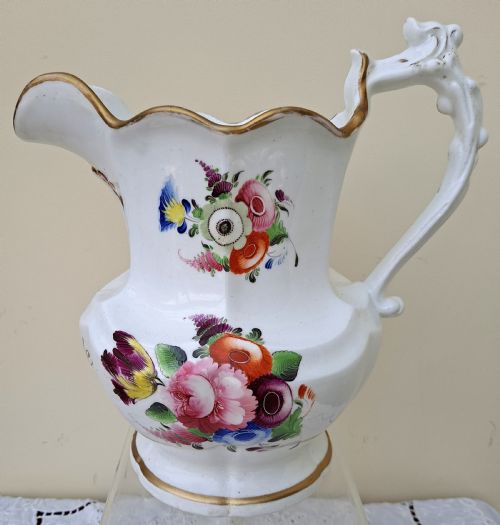
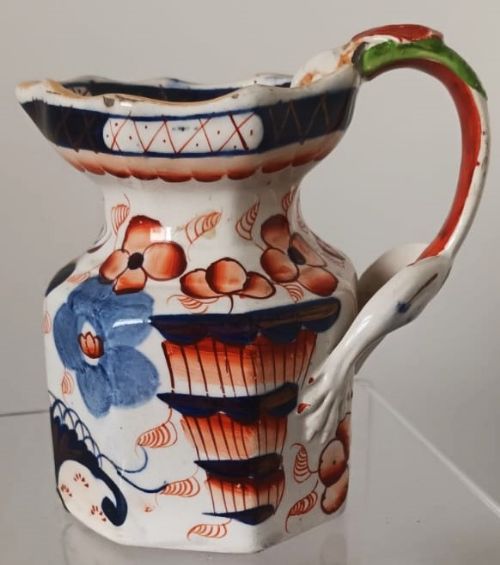
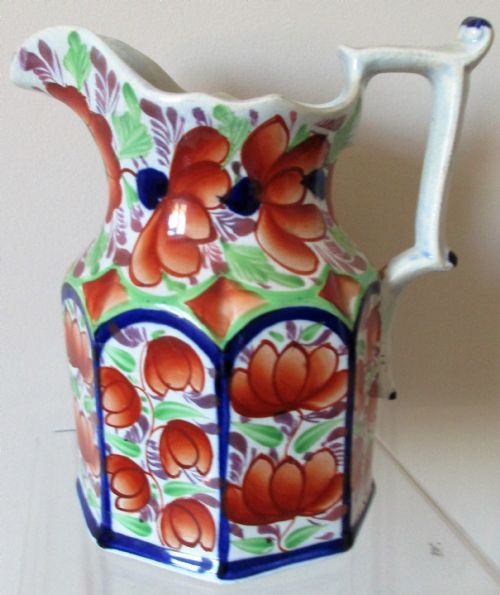
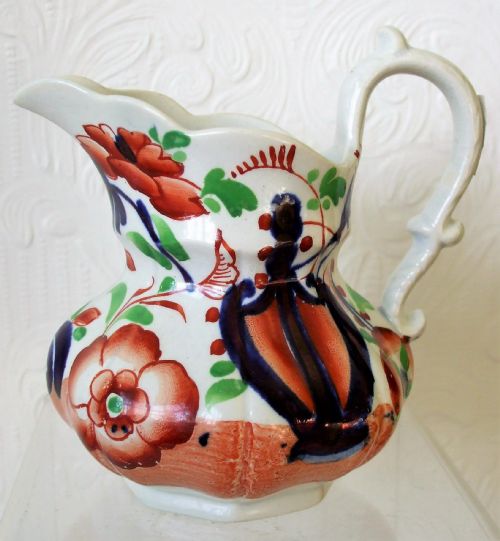
The selections span distinct periods, including Georgian pearlware, Victorian earthenware, and 17th-century Dutch delft. Many examples feature named patterns such as Gaudy Welsh motifs or hand-painted botanical and mythological scenes executed in various European and Asian workshops.
Makers represented include prominent British porcelain factories like Royal Worcester, Derby, and Chamberlain Worcester, alongside French faience makers and Persian potters. These vessels function equally well as traditional jugs, pitchers, and decorative ewers.
Materials and construction methods
Potters constructed these pitchers using earthenware, pearlware, and hard-paste porcelain, shaping the clay through moulding or throwing on a potter's wheel. Cabbage leaf mouldings and ribbed surfaces provide tactile texture beneath the applied glazes.
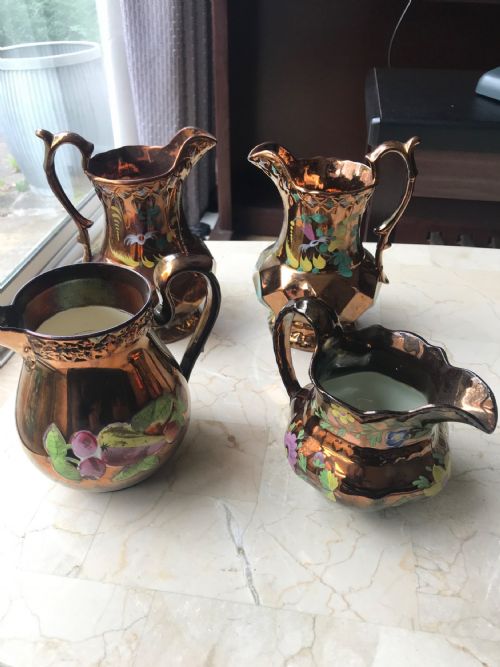
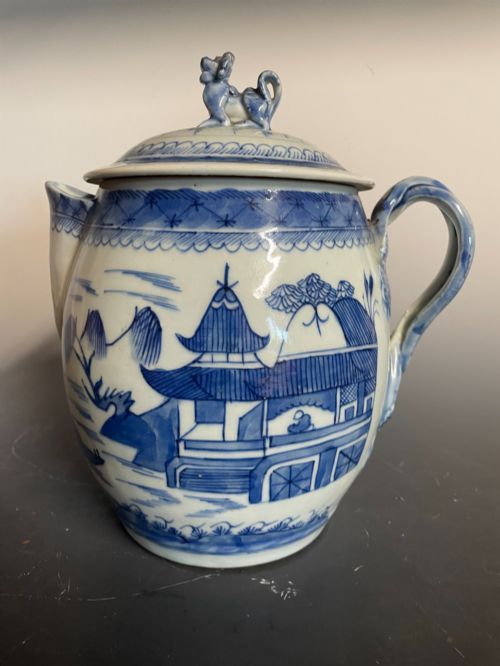
Surface decoration relies on underglaze painting, enamel work, and copper lustre finishes, occasionally accented with gold leaf and intricate gilding. Firing techniques fix the polychrome pigments and blue-and-white designs directly onto the ceramic body.
Early Staffordshire potters occasionally modelled jugs as bustling social scenes, capturing bull-baiting spectacles in durable ceramic relief.
Assessing craftsmanship and finish
Quality rests upon the precision of the hand-painted details, from delicate birds and insects to complex mythological figures and armorial crests. Superior pieces display crisp brushwork and well-defined moulded elements such as cabbage leaf patterns or ribbed body sections.
The sophistication of the glaze and the integration of gilding or enamel determine the visual depth of the vessel. Early porcelain and pearlware bodies show finer potting standards compared to utilitarian earthenwares.
Royal Worcester·Chamberlain Worcester·Mason's·Meissen·Coalport·Derby·Gien Faience·Charlotte Rhead
The Painted Ceramic Water Pitcher Glossary
- Pearlware
- A refined type of earthenware developed in the late 18th century by Josiah Wedgwood, featuring a bluish glaze that pooled in recesses to mimic Chinese porcelain.
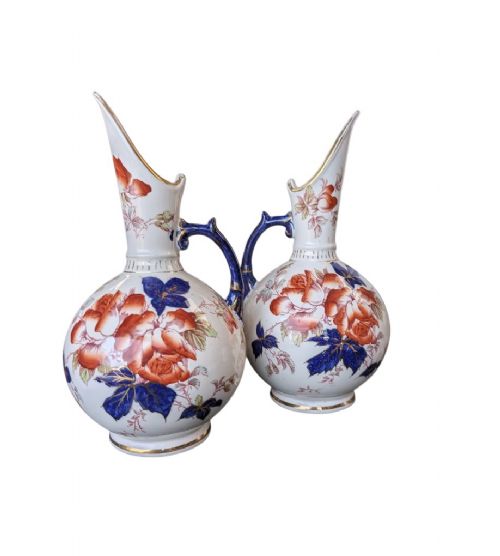
- Ewer
- A large ornate jug with a slender neck and flared spout, traditionally used for pouring water.
- Gaudy Welsh
- A style of brightly coloured pottery decorated with cobalt blue, iron red, copper lustre, and green, popular in the 19th century.
- Faience
- Tin-glazed earthenware produced in France, Italy, and other parts of Europe, known for its opaque white surface and painted decoration.
- Armorial
- Bearing a coat of arms or family crest, usually hand-painted onto bespoke ceramic services.
- Copper lustre
- A metallic glaze technique producing a coppery, reflective sheen over an earthenware or porcelain body.
Painted Ceramic Water Pitcher: Frequently Asked Questions
What is a painted ceramic water pitcher?
A painted ceramic water pitcher is a glazed vessel of earthenware, stoneware, or porcelain featuring hand-painted or transferred decorative motifs. These pieces function as pouring jugs or decorative ewers across various historical periods.
Craftsmen produced them in diverse forms, ranging from utilitarian kitchenware to fine porcelain display items adorned with floral scenes, landscapes, or armorial crests.
How do I date an antique pitcher?
Dating relies on identifying the ceramic body type, such as pearlware versus hard-paste porcelain, alongside stylistic clues like Victorian revival motifs or Georgian shapes. Maker's marks and factory culls provide further chronological indicators.
Examining the glaze composition, colour palette, and moulding techniques helps narrow the window of manufacture to specific decades or reigns.
Were these pitchers used for water?
Many pitchers served practical daily functions as water jugs, washbasin pitchers, or milk containers on dining and dressing tables. Larger ewers often paired with washbasins for personal hygiene before indoor plumbing.
Others served strictly decorative purposes or commemorated specific events, featuring armorial crests or historical inscriptions rather than enduring heavy daily wear.
How should I display my pitcher?
Display pitchers on sturdy shelves, mantels, or within glass cabinets where their painted surfaces catch adequate light. Ensure they rest away from heavy foot traffic to prevent accidental tipping.
Pairing pieces of similar periods, such as grouping 19th-century Gaudy Welsh patterns together, creates a cohesive visual collection.