


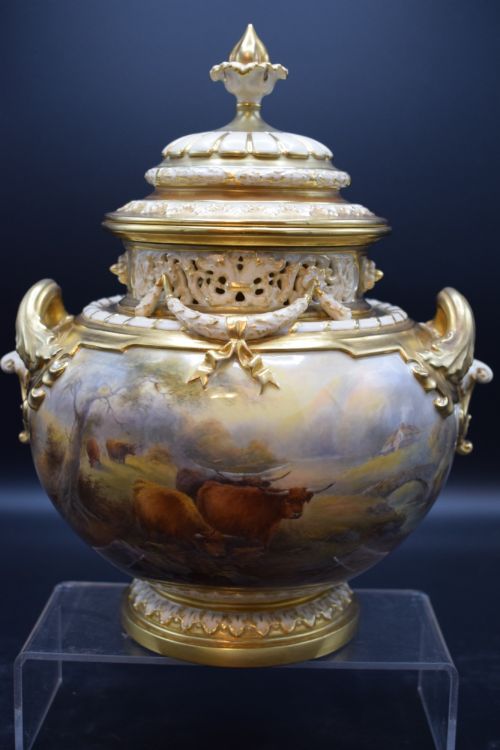
Painted Cattle Urn
A painted cattle urn brings the misty majesty of the Scottish Highlands directly into a room.
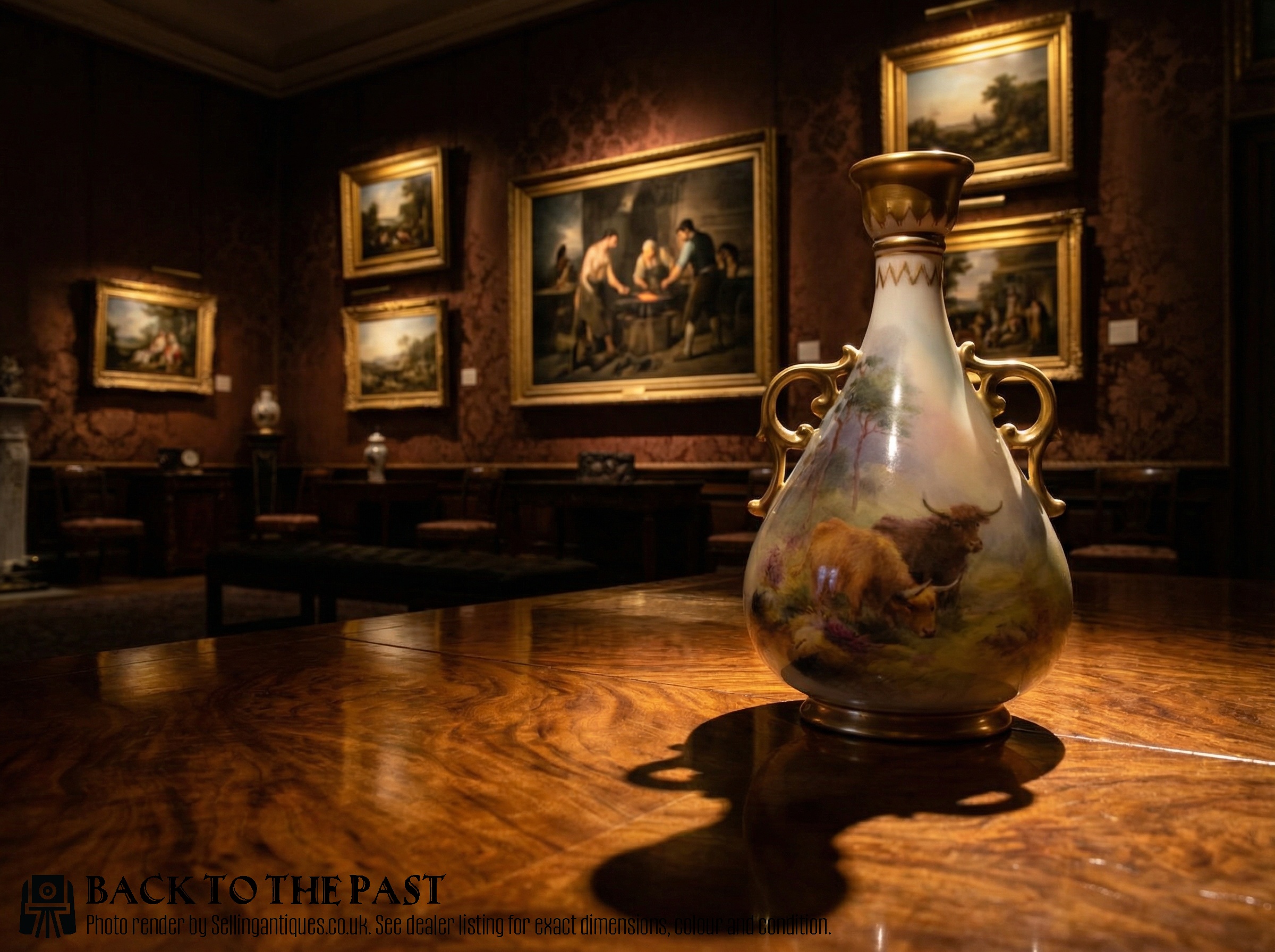
Painted Cattle Urn
A painted cattle urn is a porcelain vessel decorated with pastoral scenes of highland cattle, most often rendered in Edwardian and early twentieth-century workshops. These pieces take the form of lidded urns, bow vases, and decorative vases that showcase detailed animal painting. When you browse this selection, you encounter fine porcelain bodies adorned with hand-painted artistry.
The pieces available here span from the turn of the twentieth century through the 1930s, capturing a specific era of decorative ceramic production. Vases and urns from this timeframe rely on the prestige of established makers to set their form and character. Most examples feature named artists whose brushwork defines the pastoral scenes across the ceramic surface.
How they were made
Makers shaped these pieces from fine porcelain, firing the ceramic body to create a smooth canvas for subsequent decoration. Artists applied delicate enamel paints by hand to capture the texture of the cattle and the atmospheric background of the Scottish hills. This meticulous painting process required careful control during multiple kiln firings to fix the pigments onto the glaze.
Gilt accents, gilding, and gold leaf were applied to the handles, rims, and bases of the vessels to frame the central pastoral painting. These precious metal applications added a layer of formal elegance that elevated the functional shape of the vase or urn. The combination of painted enamel scenery and gold leaf finish typifies the craftsmanship of the period.
Painted Cattle Urn Retail Price Guide 2026
Typical asking prices for painted cattle urn among the pieces listed under this phrase on Sellingantiques today, from the lower quarter to the upper quarter. They describe what is for sale here now, not the wider market.
Listings show porcelain vessels from the Edwardian period through the 1930s, featuring enamel painting, gilding, and gold leaf.
What varies in quality
The skill of the hand-painted scene dictates the distinction between standard production and exceptional work. Vessels featuring detailed rendering by recognised artists command greater attention due to the expressive depth of the cattle and landscape. The subtlety of the enamel blending and the precision of the brushwork separate finer specimens from simpler ornamentation.
The application of gold leaf and the intricacy of the porcelain form also influence the character of each piece. Heavier gilding and more complex vessel shapes, such as large urns with covers, represent a higher tier of manufacture. The overall harmony between the porcelain moulding and the painted vignette determines the visual impact of the work.
Harry Stinton·John Stinton·Royal Worcester
The Painted Cattle Urn Glossary
- Urn
- A decorative vase typically featuring a footed base, a rounded body, and sometimes handles or a cover. These vessels served primarily as ornamental display pieces in Edwardian interiors.
- Porcelain
- A hard, white ceramic material made from clay minerals such as kaolin, fired at high temperatures. It provides a smooth, non-porous surface ideal for fine enamel painting.
- Enamel
- A decorative glass-like substance fused to the surface of porcelain through firing. Artists use enamel paints to achieve rich, lasting colour in figurative scenes.
- Gilding
- The application of gold leaf or gold powder to the surface of a ceramic object. This technique highlights rims, handles, and borders to create a luxurious contrast.
Painted Cattle Urn: Frequently Asked Questions
Who painted these cattle scenes?
Many of these pieces were decorated by specialist ceramic artists working for established factories during the early twentieth century. Signatures or inscriptions on the body often identify the specific hand responsible for the artwork.
Artists such as members of the Stinton family became particularly well-known for their highland cattle scenes on porcelain.
How should I display an urn?
These decorative vessels suit placement on sturdy mantelpieces, cabinets, or side tables where the painted scene receives adequate light. Their detailed enamel work and gold leaf accents benefit from clear sightlines and secure positioning.
Keeping them away from direct sunlight helps preserve the vibrancy of the enamel colours over time.
How do I date these pieces?
Dating relies on factory marks stamped or painted on the underside of the porcelain base, which changed systematically across decades. Stylistic clues, such as the palette and the complexity of the gilding, also point to periods like the Edwardian era or the 1920s and 1930s.
Comparing the signature style of the artist helps narrow down the timeframe of production.