


Harry Stinton Worcester
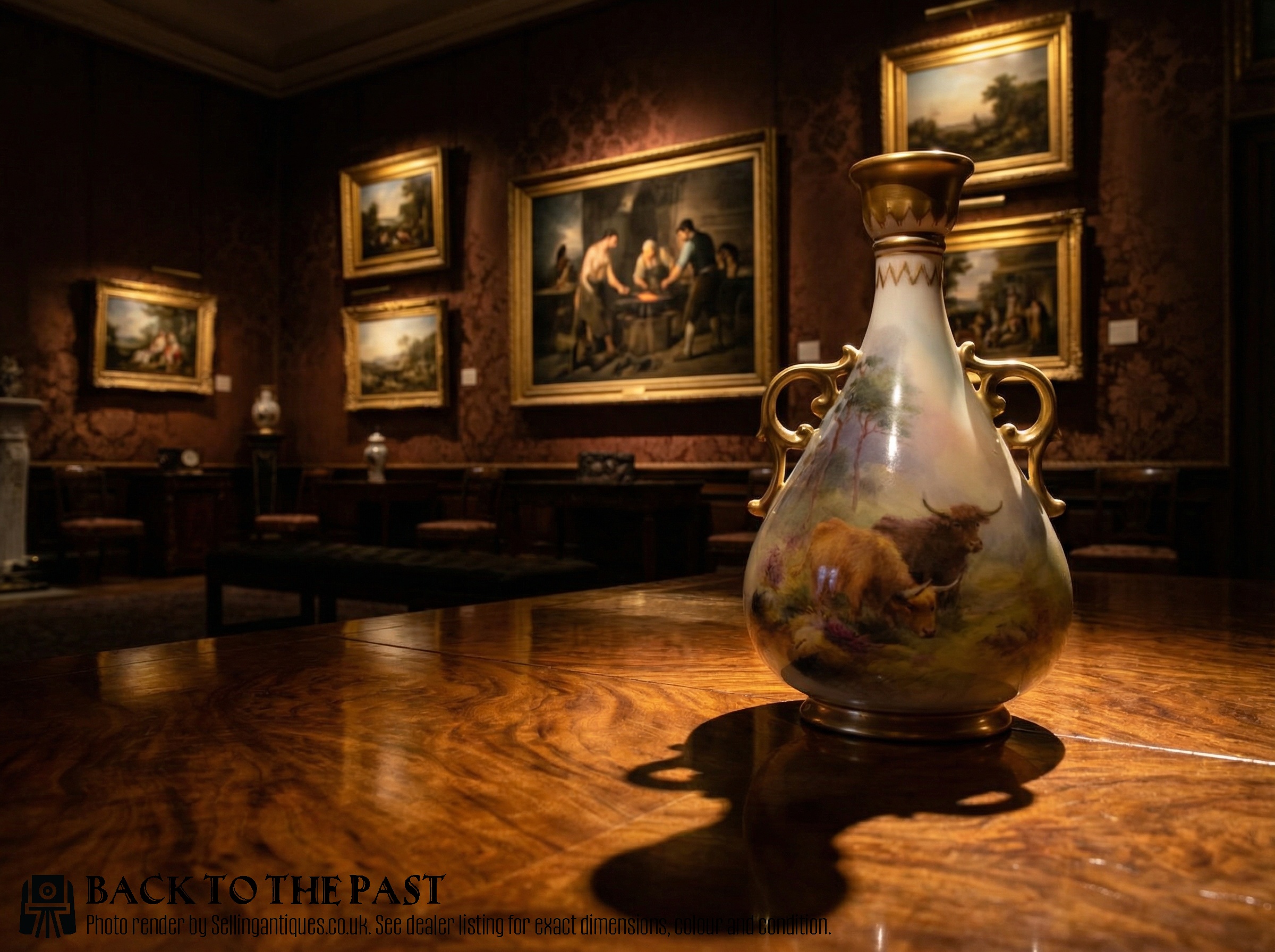
Harry Stinton Worcester works are hand-painted porcelain pieces depicting Highland cattle, stags, and sheep that collectors prize for their detailed artistry.
Harry Stinton Worcester
When you search for harry stinton worcester, you encounter hand-painted porcelain objects created by this specific Royal Worcester artist. The selection spans vases, cabinet plates, plaques, ewers, and smaller vessels like cream jugs and demi-tasse cups.
The most common pieces on this page are vases and pairs of vases decorated with Highland cattle. These items date primarily from the early twentieth century, specifically spanning the nineteen-hundreds through the nineteen-thirties.
Edwardian aesthetic influences appear alongside porcelain forms finished with enamel and gilding. The focus remains squarely on the painted animal subjects set against misty Scottish landscapes.
How they were made
Makers utilised fine porcelain and bone china as the primary base materials for these painted vessels. Artists then applied enamel colours by hand to capture the rich tones of the landscape and animals.
Gilding, gold leaf, and gilt details often frame the painted central scenes, adding a metallic contrast to the ceramic surface. Pot pourri jars, ewers, and vases were shaped before undergoing careful firing and hand-decoration.
Harry Stinton Worcester Retail Price Guide 2026
Typical asking prices for harry stinton worcester among the pieces listed under this phrase on Sellingantiques today, from the lower quarter to the upper quarter. They describe what is for sale here now, not the wider market.
Listings feature porcelain and bone china enhanced with enamel, gold leaf, and gilding across Edwardian forms.
What varies in quality
The finesse and detail of the hand-painted animal subjects dictate the standing of each piece. Finer examples display intricate brushwork in the rendering of cattle hair, horns, and atmospheric background hills.
Scale and form also influence desirability, moving from standard cabinet plates up to large twin-handled lidded vases and three-piece pot pourri sets. The presence of a clear signature by Harry Stinton anchors the attribution.
Royal Worcester
The Harry Stinton Worcester Glossary
- Porcelain
- A ceramic material made by heating materials, generally including kaolin, in a kiln. It provides a smooth, white surface ideal for detailed miniature painting.
- Gilding
- The application of gold leaf or powder to ceramic surfaces. This technique highlights handles, rims, and borders on plates and vases.
- Enamel
- A decorative glassy substance fused to the surface of porcelain through firing. It supplies the permanent coloured pigments used for landscape and animal scenes.
- Ewer
- A large jug with a wide spout and handle, shaped similarly to a pitcher. Several examples serve as canvases for pastoral animal paintings.
- Pot pourri
- A vase or jar with a pierced lid designed to hold dried plant materials for scenting rooms. These often form multi-piece garniture sets.
Harry Stinton Worcester: Frequently Asked Questions
What subjects did Harry Stinton paint?
Harry Stinton specialised primarily in depictions of Highland cattle roaming in misty, mountainous landscapes. His portfolio also included scenes featuring stags and sheep.
These subjects were painted onto various ceramic bodies including vases, plaques, and tea wares, creating a consistent pastoral theme across different object types.
Were these pieces used or displayed?
Most decorative items such as vases, plaques, and cabinet plates were intended for display in Edwardian drawing rooms and cabinets. Functional items like cream jugs and demi-tasse cups saw actual domestic use.
Due to the delicate nature of the hand-painted enamel and gilt decoration, display quickly became the primary purpose for surviving examples.
How should I care for painted porcelain?
Keep porcelain pieces away from direct sunlight to prevent any fading of the delicate enamel colours. Dust gently with a soft, dry cloth rather than using liquid cleaners that might harm the gilt edges.
Avoid displaying these fragile ceramic items near heat sources or in areas subject to temperature fluctuations.