

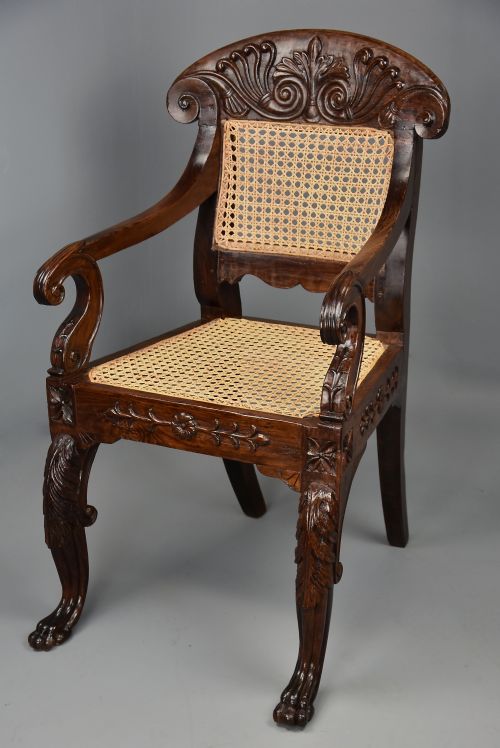


Padouk Wood Furniture
Padouk wood furniture brings dense red timber and intricate carving into the home through colonial and Chinese export forms.
Padouk Wood Furniture
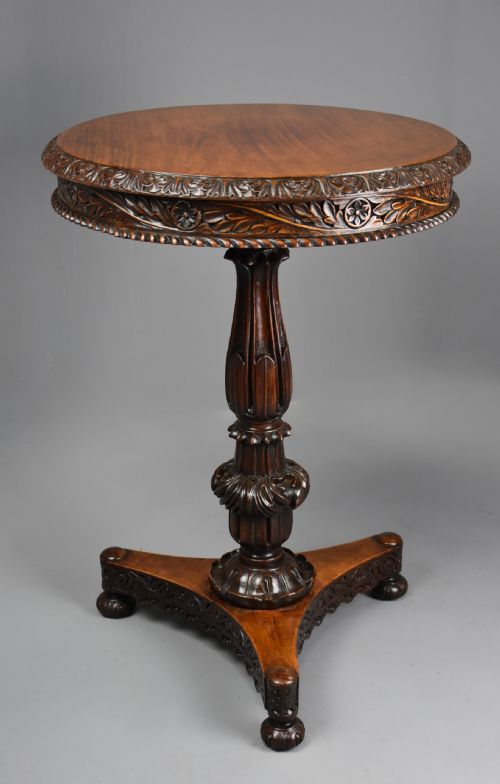
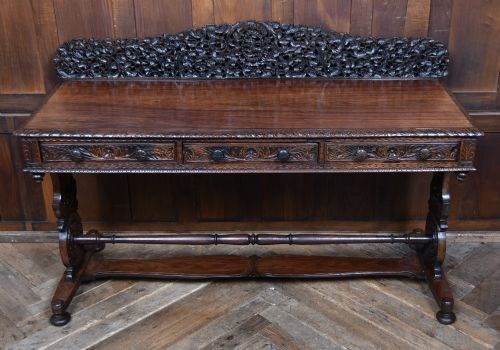
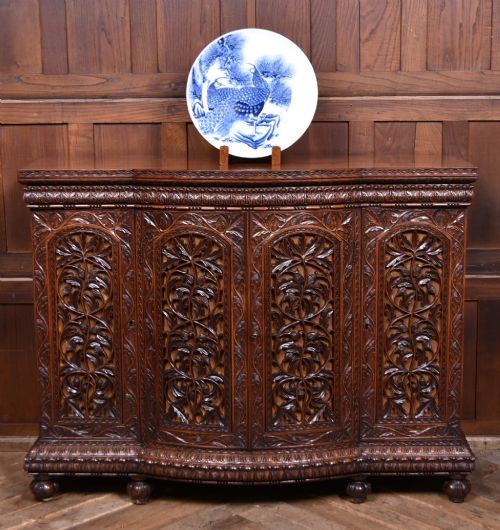
Padouk wood furniture encompasses seating, storage and display pieces shaped from dense tropical hardwood during the nineteenth century. Buyers encounter sideboards, side tables, campaign chests and armchairs originating from Anglo-Indian, Burmese and Chinese workshops. These items combine British domestic forms with regional carving traditions.
The nineteenth-century examples on this page span the Regency, Victorian and later periods. Anglo-Indian sideboards and tables dominate the selection alongside Chinese plant stands and military campaign bureaus. Each object demonstrates the global trade in timber and design during the colonial era.
Materials and construction
Craftsmen utilised heavy padouk wood for its natural stability and deep reddish hue. This timber accommodates deep relief carving without splitting, which accounts for the ornate foliage and figures seen on nineteenth-century tables and chairs. Secondary materials such as brass fittings appear on campaign furniture and campaign chests.
Joinery methods reflect both British carcass construction and local cabinet-making techniques. Hardwood stands and low tables rely on traditional mortise and tenon joints, while campaign pieces incorporate flush brass handles and dismantling sections for transport.
Padouk Wood Furniture Retail Price Guide 2026
Typical asking prices for padouk wood furniture among the pieces listed under this phrase on Sellingantiques today, from the lower quarter to the upper quarter. They describe what is for sale here now, not the wider market.
Listings feature nineteenth-century padouk pieces incorporating brass, marble, glass, cane and needlepoint upholstery.
Qualities that distinguish the pieces
Quality rests primarily on the crispness of the carved detail and the depth of the timber's natural patina. Superior examples display sharp undercutting in floral motifs and smooth, polished surfaces that highlight the grain. Lesser pieces show softer carving and duller finishes.
Proportion and structural integrity further divide the range. Items retaining original brass hardware, cane seats or marble inserts command attention through their completeness. Altered dimensions or replacement elements diminish the integrity of the piece.
The Padouk Wood Furniture Glossary
- Padouk
- A dense tropical hardwood known for its reddish-brown colour and durability. It darkens to a rich dark brown with exposure to light.
- Campaign chest
- A modular set of drawers designed to split into sections for military transport. These pieces typically feature brass corners and recessed handles.
- Anglo-Indian
- A descriptive term for furniture made in India for British residents or export. It merges British forms with Indian carving styles.
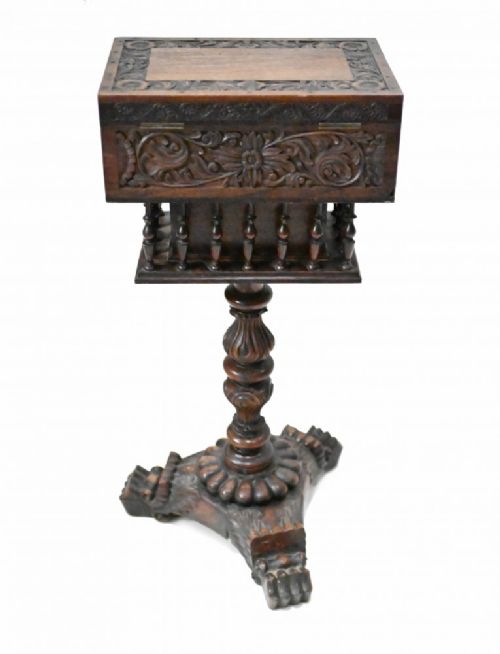
- Teapoy
- A small occasional table designed to hold tea canisters and equipment. Nineteenth-century examples often incorporate hinged tops and fitted interiors.
- Patina
- The glossy sheen developed on wood surfaces through age, handling and polishing. Good patina indicates minimal over-restoration.
Padouk Wood Furniture: Frequently Asked Questions
What is padouk wood?
Padouk is a heavy, durable tropical hardwood prized for its reddish colour and resistance to decay. Cabinet makers utilised it extensively in the nineteenth century for export furniture destined for British homes.
Over time, exposure to light deepens the timber from a bright red to a rich, dark brown. Its density allows for exceptionally sharp, deep carving.
How do I care for padouk furniture?
Maintain padouk wood furniture by dusting regularly with a soft cloth and avoiding direct sunlight. Excessive heat and dry air can cause splitting in dense tropical hardwoods.
Apply a traditional beeswax polish sparingly to preserve the surface sheen. Avoid silicone-based sprays which can damage the historic finish.
Where was Anglo-Indian furniture made?
Anglo-Indian furniture was manufactured in various workshops across the Indian subcontinent during the British colonial period. Major centres included Bombay, Madras and Vizagapatam.
Local artisans adapted standard British furniture forms, incorporating intricate regional carving traditions and native hardwoods.
What is a campaign chest?
A campaign chest is a portable set of drawers built in two or more stacking sections for military officers on the move. Makers fitted these chests with recessed brass handles and corner brackets to prevent damage during transit.
They offer practical storage while retaining the rich grain and colour of padouk wood.