
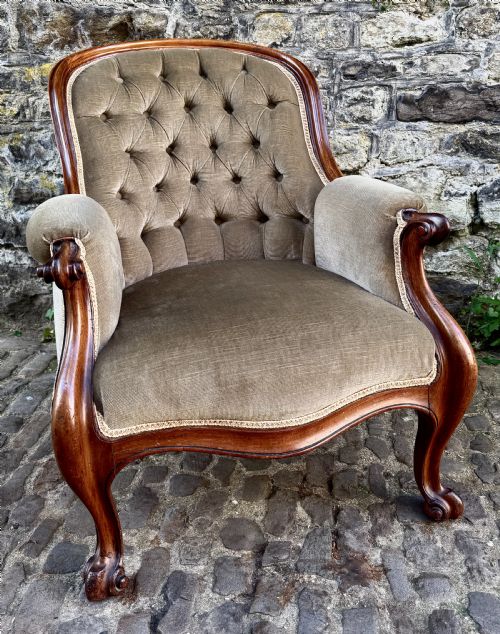


Padded Velvet Armchair
A padded velvet armchair offers deep comfort paired with period presence, spanning centuries of craft from Georgian wing chairs to Edwardian boudoir seats.
Padded Velvet Armchair
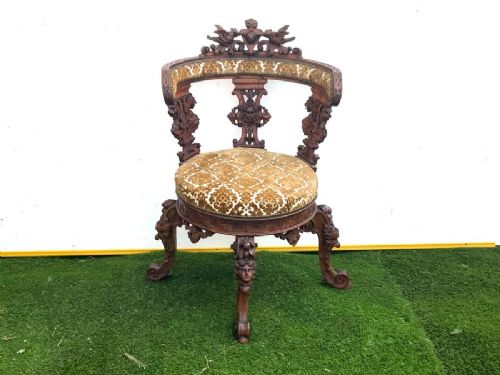
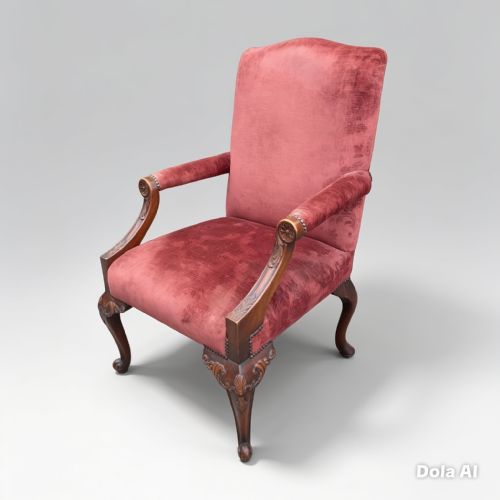
A padded velvet armchair encompasses an array of historical forms, from grand library chairs and sturdy study seats to low salon and boudoir chairs. Buyers searching for a padded velvet armchair will find examples originating across the nineteenth and twentieth centuries, alongside earlier seventeeth and eighteenth century pieces.
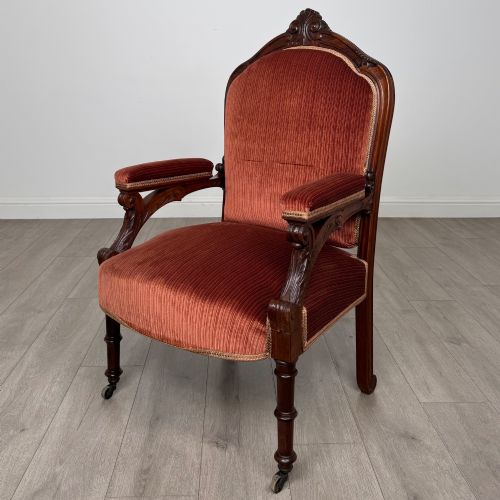
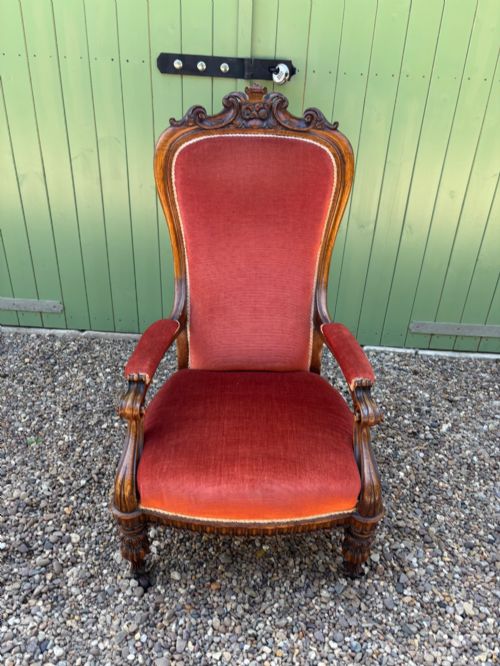
The Victorian era dominates the selection, bringing forth walnut and rosewood open armchairs, balloon back pairs, and tub chairs. Alongside these British pieces sit continental revivals, including Louis XV and Louis Quinze style chairs, as well as traditional American rocking chairs.
Form follows function across the inventory, ranging from generous high-backed wing chairs designed to keep away draughts to low accent and desk chairs built for specific domestic rooms. Each piece balances substantial timber framing with plush upholstery.
How they were made
Carpenters and cabinet makers constructed the structural frames of these seats using dense hardwoods such as walnut, mahogany, oak, rosewood, and general wood. Skilled hands carved details into the timber exposed on the arms, legs, and crest rails.
Upholsterers then padded the seats and backs before applying plush velvet fabrics, occasionally securing elements with brass tacks or finishing touches. Bentwood techniques also appear among the lighter salon and armchair designs.
Listings feature woods spanning walnut, mahogany, rosewood, oak, and bentwood, paired with velvet and fabric upholstery across multiple centuries.
What varies in quality
The calibre of timber and the depth of carving separate standard production from superior examples created by notable workshops. Solid walnut and rosewood frames exhibit sharper detailing and greater structural integrity than simpler utility woods.
Proportion and scale dictate the visual success of a chair, with generous library wing chairs requiring balanced framing to support heavy padding. The quality of the original joinery determines how securely the frame holds its rigidity over centuries of daily use.
Howard & Sons·Hindley & Sons
The Padded Velvet Armchair Glossary
- Fauteuil
- An open-framed armchair with upholstered back and armrests, originating in France. These wooden frames often feature carved decoration around the rails.
- Wing back
- An armchair with side panels or wings attached to the back, designed to shield the sitter from draughts. Georgian iterations remain particularly sought after.
- Tub chair
- A curved armchair where the back and arms form a single continuous rounded shell. They offer a compact footprint while maintaining deep padding.
- Balloon back
- A chair back shaped like a rounded oval resembling an inflated balloon. This silhouette is frequently encountered on Victorian walnut parlor seating.
- Elbow chair
- A traditional term for an armchair with low wooden or upholstered armrests. These pieces served as desk, study, or dining chairs.
Padded Velvet Armchair: Frequently Asked Questions
What defines a Victorian armchair?
Victorian armchairs are typically constructed from dense hardwoods like walnut or mahogany, featuring button-tufted or padded velvet upholstery.
They often incorporate stylistic revivals, ranging from heavy carved open arms to delicate balloon backs and curved tub shapes.
How do I identify a Georgian wing chair?
Georgian wing chairs display high backs with integrated side wings designed to retain heat and block draughts from open fireplaces.
Their proportions tend to be generous, supported by sturdy mahogany or walnut frames built during the eighteenth century.
Where were boudoir chairs used?
Boudoir chairs were compact, decorative seats placed inside private dressing rooms or bedrooms during the Edwardian period.
Their smaller scale made them ideal for personal spaces where comfort and upholstery took precedence over heavy timber frames.
Are rocking chairs period pieces?
Rocking chairs span various periods, including traditional American examples produced in the early twentieth century.
They combine standard upholstered armchair padding with curved wooden rockers fitted beneath the legs for movement.