


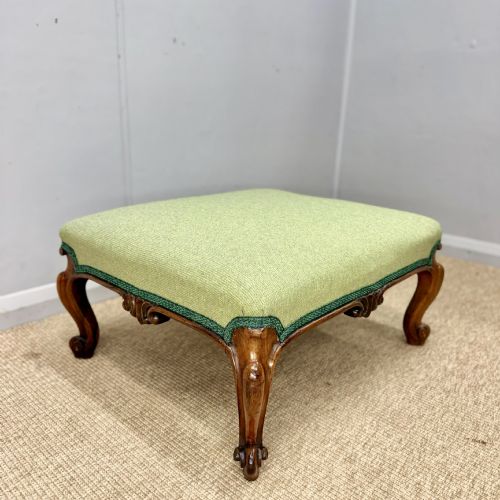


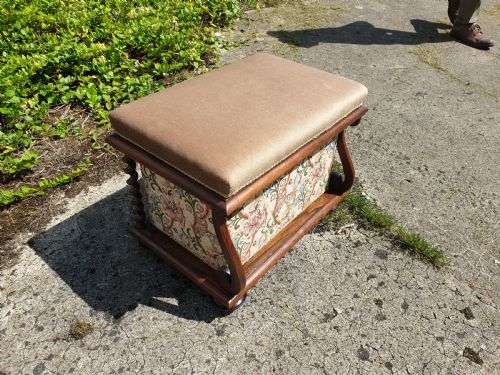


Padded Rosewood Stool
A padded rosewood stool brings rich timber grain and soft upholstery together, offering a traditional seat that suits both period and modern drawing rooms.
Padded Rosewood Stool
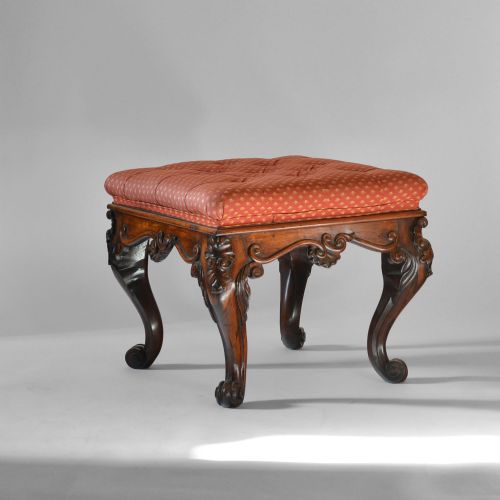
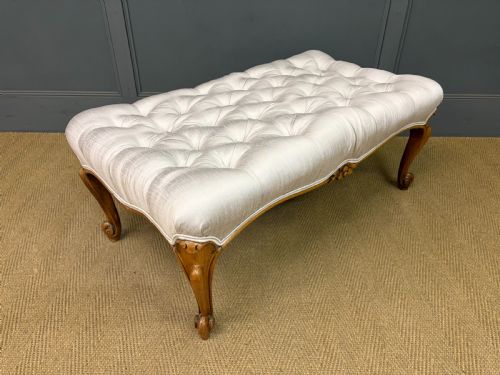
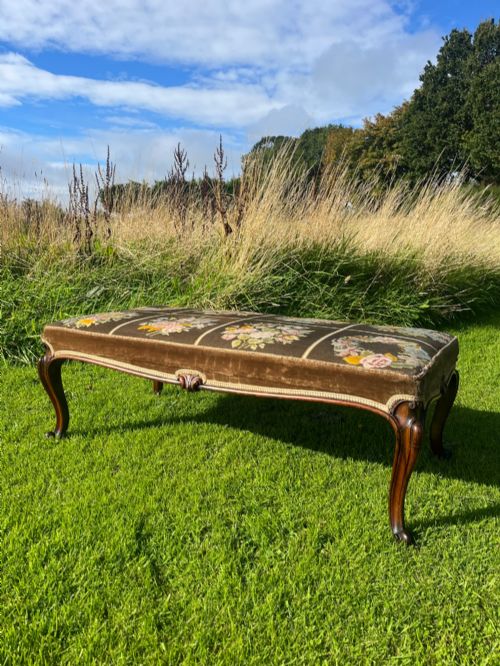
A padded rosewood stool combines a dense timber frame with textile, velvet, or tapestry seating, serving as a footstool, ottoman, or piano seat. Buyers seek these forms for their robust construction and decorative presence in reception rooms.
The selections span the nineteenth century, taking shapes from Regency lines to Victorian rococo revival and Anglo-Indian carving. Most examples encountered here date from the Victorian era, alongside earlier Regency and George IV forms.
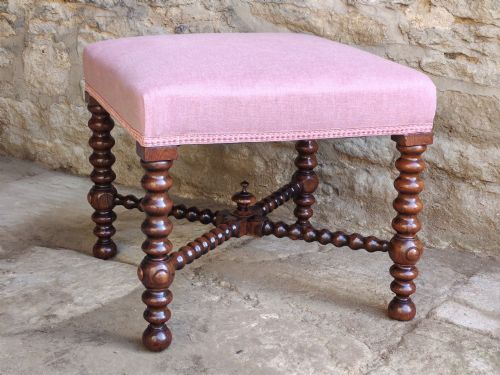
Makers produced everything from simple bobbin leg stools to large centre stools and box seats with rising mechanisms. Each variant offers a specific height and surface area suited to resting feet or seating guests.
Materials and construction methods
Workshops relied upon solid rosewood for the structural frames, often shaping the timber into cabriole legs, X-frames, or turned bobbin supports. Carpenters joined these elements with traditional joinery before applying polished finishes to highlight the dark, figured grain.
Upholstery techniques involved padding the upper deck with textile, leather, or floral trellis tapestry, sometimes secured over box compartments or rising seat mechanisms. Brass fittings and carved wooden details frequently completed the decorative scheme.
Padded Rosewood Stool Retail Price Guide 2026
Typical asking prices for padded rosewood stool among the pieces listed under this phrase on Sellingantiques today, from the lower quarter to the upper quarter. They describe what is for sale here now, not the wider market.
Some nineteenth-century makers concealed lifting mechanisms inside box seats, letting a polite footstool double as a secret cache for sheet music.
Judging the standard of workmanship
Quality rests in the crispness of the timber carving and the integrity of the rosewood frame, where finer examples display substantial proportions and balanced cabriole or X-frame geometry. Lesser pieces might show simpler turned legs without decorative enrichment.
The sophistication of the seating mechanism and the choice of covering fabric also set pieces apart. Box seats with functional rising mechanisms or upholstery featuring detailed tapestry work distinguish higher grade items from standard footstools.
The Padded Rosewood Stool Glossary
- Rosewood
- A dense, dark timber prized for its prominent grain patterns and durability in nineteenth-century furniture. It takes a high polish and forms the primary structure of these seats.
- Cabriole leg
- A furniture leg that curves out and then in, resembling an animal's leg. This design appears frequently on Victorian examples.
- X-framed
- A structural base formed by two intersecting diagonal members shaped like the letter X. This configuration provides sturdy support for larger stools.
- Box ottoman
- A seated furniture piece featuring a hinged lid that opens to reveal storage space inside. These often double as footstools.
- Bobbin leg
- A turned wooden support shaped to resemble a string of rounded bobbins or spools. This decorative turning is typical of mid-nineteenth-century pieces.
Padded Rosewood Stool: Frequently Asked Questions
How do I date a padded rosewood stool?
Dating relies on stylistic clues such as the presence of Regency restraint, early Victorian proportions, or later Victorian rococo revival carving.
Inspect the turning methods on the legs and the construction of any internal storage compartments for period manufacturing traits.
Can I use an ottoman daily?
These nineteenth-century pieces were built to withstand regular use in domestic settings, utilising sturdy timber frames.
Ensure the internal joints remain solid and the upholstery fabric is maintained to support ongoing seating or footrest duties.
What is an Anglo-Indian stool?
Anglo-Indian pieces reflect British furniture forms constructed in India using local rosewood and intricate carved ornamentation.
They bring distinct decorative motifs and deep timber colouration that set them apart from standard domestic British production.
How should I clean the wood?
Maintain the polished rosewood surface by dusting gently with a dry, soft cloth to prevent the accumulation of grit.
Avoid harsh chemical cleaners that can damage the traditional polish and strip the natural lustre from the grain.