
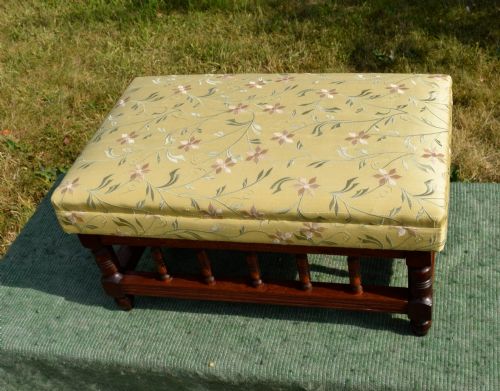
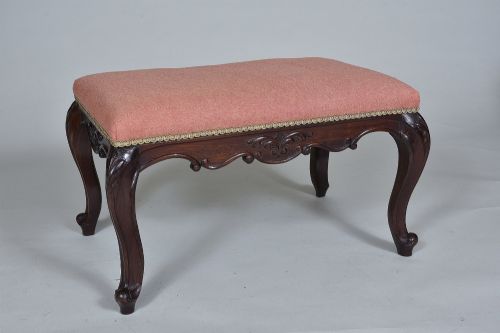
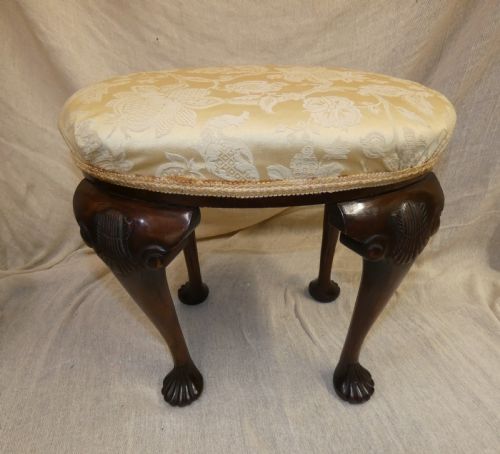
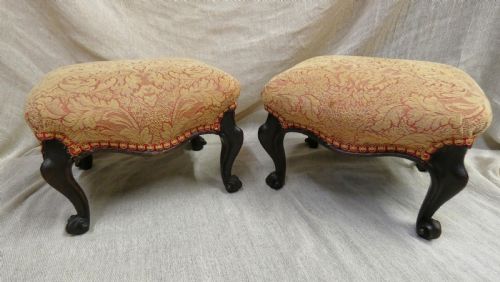




Padded Mahogany Footrest
A padded mahogany footrest brings solid timber framing and traditional upholstery together to support tired feet at the end of a long day.
Padded Mahogany Footrest
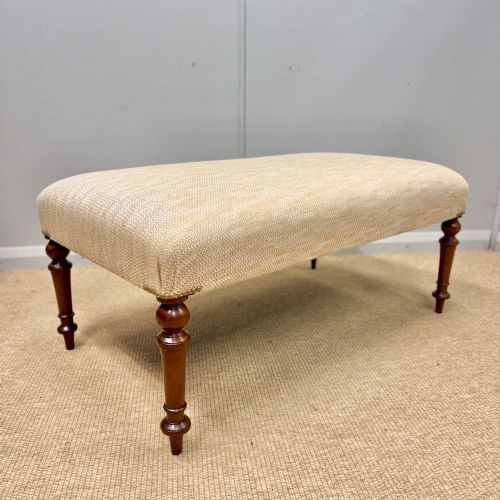
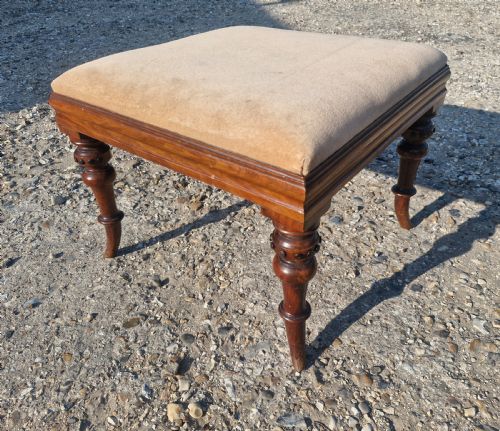
A padded mahogany footrest encompasses various forms of small stools, long ottomans, and dressing seats designed for relaxation. When searching for a padded mahogany footrest, buyers encounter pieces spanning the 18th century through the Edwardian period, with Victorian examples appearing most frequently.
These items range from compact square footstools on brass castors to very long ottomans with storage compartments or deep buttoned cushions. Surviving pieces frequently display Revival styles including Chippendale and Queen Anne alongside plain Regency and Georgian forms.
Materials and construction methods
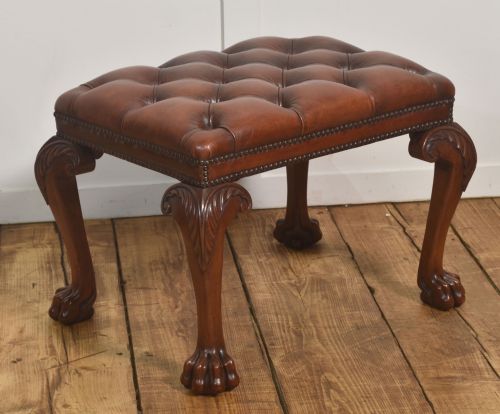
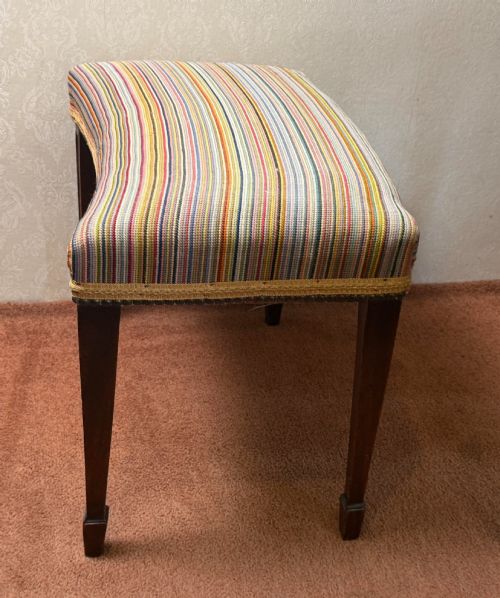
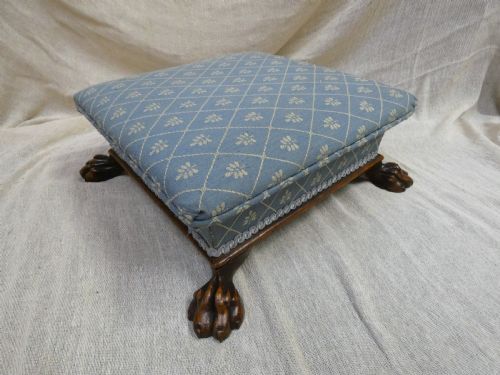
Cabinetmakers built the foundational frames of these pieces using solid mahogany, often shaping the timber into cabriole legs, square tapering legs, or scroll tops. Decorative elements such as carved frames, lions paw feet, and brass castors finish the woodwork.
Makers applied traditional upholstery techniques over the wooden frames, utilising materials like wool, leather, damask fabric, tapestry, and Liberty fabric. Many pieces feature needlepoint or gros-point needlework tops secured with padding.
Upholstery materials recorded on these frames include leather, wool, damask, tapestry, and gros-point needlework.
Distinctions in construction and finish
The degree of hand-carving on the mahogany frame separates standard production from finer examples, particularly in pieces following George II or Chippendale styles. Crisp execution of cabriole legs or detailed scroll work indicates superior craftsmanship.
The integrity of the timber and the quality of the textile covering dictate the overall standard of the piece. Original needlework tops or well-preserved leather upholstery carry greater distinction than later replacements.
Howard and Sons·Mathew Gregson·Liberty
The Padded Mahogany Footrest Glossary
- Cabriole leg
- A furniture leg that curves outward at the knee and tapers inward toward the ankle, resembling an animal limb. This form appears frequently on 18th-century and Victorian stools.
- Ottoman
- A low upholstered seat or footstool often featuring internal storage space. These pieces can be long or square and frequently rest on brass castors.
- Needlepoint
- A type of counted thread embroidery stitched onto canvas to create durable decorative covers for stools. Pieces featuring gros-point utilise a coarser stitch for textured patterns.
- Castor
- A small wheel mounted in a swivel frame attached to the legs of furniture. These allowed heavy mahogany footstools to move easily across carpets.
Padded Mahogany Footrest: Frequently Asked Questions
How do I date a mahogany footstool?
Dating relies upon observing the style of the mahogany frame, leg shape, and construction methods. Georgian and 18th-century pieces typically display simpler lines or carved details like square tapering legs, whilst Victorian examples often feature deep buttoning or castors.
Upholstery fabrics and textile types also offer clues, though many pieces have received new covers over time. Examining the underlying timber framing helps confirm the authentic period of manufacture.
What is the difference between a footstool and an ottoman?
A standard footstool is designed solely to support the feet while sitting in a chair or sofa. They remain compact in size and feature open wooden frames with padded tops.
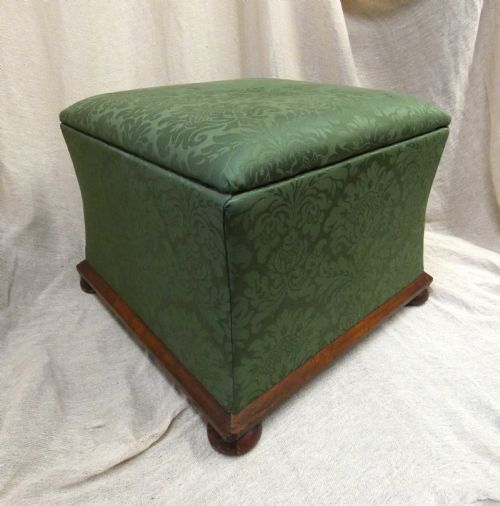
An ottoman typically provides a larger surface area and frequently includes an internal storage compartment beneath a hinged or lift-off upholstered lid. These larger pieces often function as seats as well as footrests.
Are these footrests suitable for daily use?
Solid mahogany frames offer robust structural stability that easily withstands everyday placement in living rooms and dressing areas. Their traditional construction ensures longevity under normal household conditions.
Buyers should consider the condition of the fabric top when planning heavy use, as delicate antique textiles or vintage needlepoint may require protective care or eventual reupholstery.
What styles of mahogany footrests are available?
The available styles range from plain 19th-century utility forms to elaborate Revival pieces inspired by earlier cabinetmakers. Common decorative approaches include George II and Chippendale styles featuring carved mahogany frames.
Other variations include Regency scroll top designs and Edwardian long forms upholstered in damask, leather, or printed textile fabrics.