

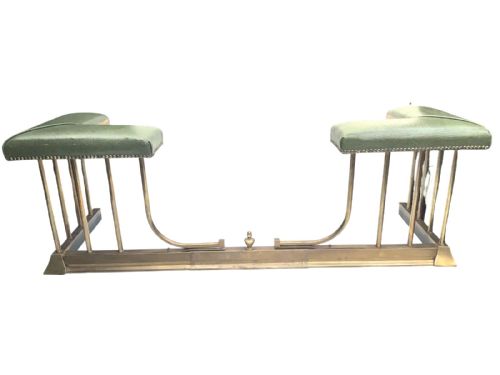
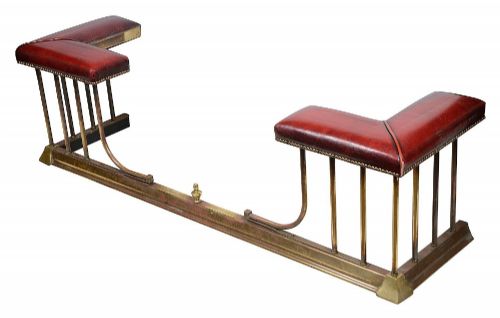


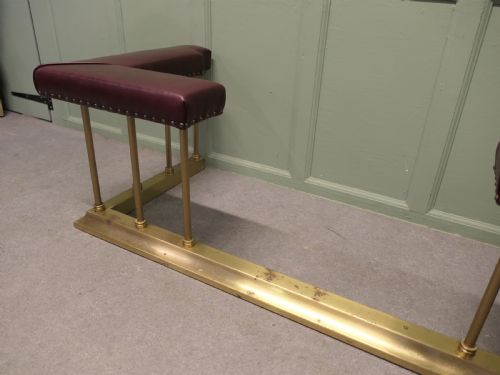


Padded Hearth Seat
A padded hearth seat gives the fireside a practical, low-slung perch, bringing sturdy metal frames and comfortable leather tops together by the grate.
Padded Hearth Seat
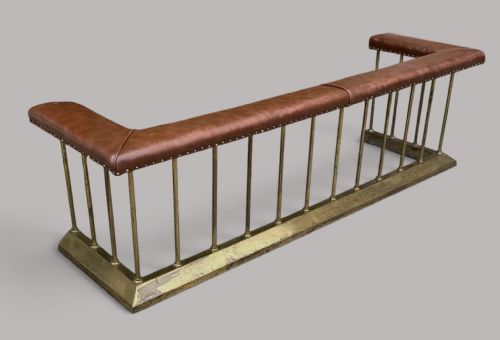
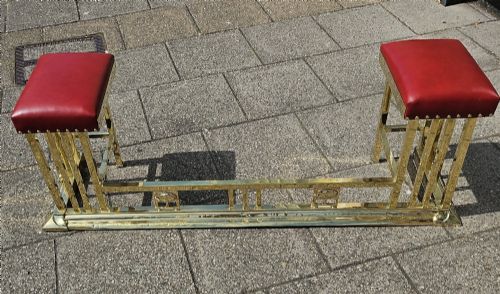
A padded hearth seat most commonly appears here as a club fender, combining a low metal frame with cushioned top rails designed for sitting directly around the fireplace. These pieces span the Victorian and Edwardian eras into the early decades of the twentieth century, bringing substantial iron, steel, and brass structures into domestic spaces.
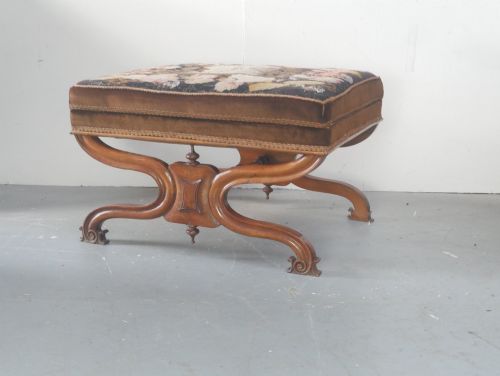
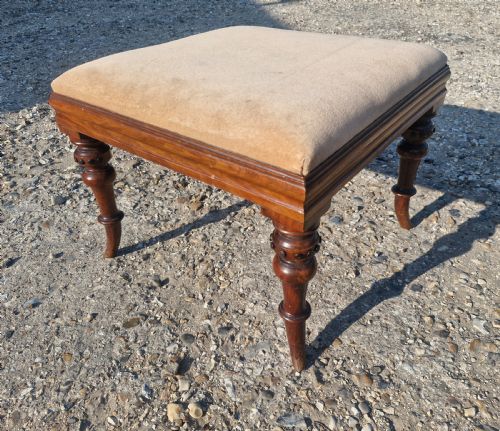
Alongside club fenders, the selection includes low stools and fireside benches featuring upholstered tops in leather, velvet, or tapestry. These shorter forms offer compact seating options that fit snugly against hearths or within period rooms without blocking the warmth of the fire.
Origins stretch from English country houses and Scottish baronial settings to urban clubs, reflecting diverse aesthetic demands from Gothic Revival through to Art Deco. Buyers encounter forms ranging from heavy cast steel and wrought iron to polished brass frameworks.
Materials and construction
Metalwork forms the backbone of these pieces, utilising robust brass, cast steel, wrought iron, and occasional copper or silvered finishes to build weight-bearing frames. These metals are shaped into sturdy tubular or bar constructions designed to withstand decades of heavy fireside use.
Upholstery completes the top surfaces, employing mature tan leather, dark velvet, tapestry, and fabric padding secured over solid wood or metal bases. Nailhead trim and deep buttoning frequently secure the leather coverings to the cushions, adding structural durability to the seat.
Listings feature brass, steel, and iron frameworks paired with leather, velvet, and tapestry upholstery across Victorian, Edwardian, and Art Deco periods.
Markers of quality
The distinction between standard examples and finer pieces lies in the substance of the metal frame and the integrity of the joinery. Heavier gauges of brass, cast steel, and substantial wrought iron provide an inherent stability that lighter tubular constructions lack.
Upholstery finish also dictates quality, where thick, mature leather with traditional hand-stitching or buttoning outlasts modern fabric replacements. The proportion between the metal support and the padded rail determines whether the seat sits with genuine architectural authority by the grate.
The Padded Hearth Seat Glossary
- Club fender
- A low, padded metal frame built to surround a fireplace hearth, providing integrated seating close to the fire. These originated in gentleman's clubs and country houses during the Victorian period.
- Gothic Revival
- An architectural and decorative style drawing inspiration from medieval design, visible here in sturdy ironwork and pointed structural motifs. It dominated nineteenth-century interior furnishings.
- Scottish Baronial
- A heavy, robust architectural style reflecting historic Scottish castles, often seen in substantial wooden or metal seating forms. Pieces carrying this descriptor display pronounced solidity.
- Art Deco
- A twentieth-century design movement favouring sleek lines, geometric forms, and modern industrial materials. In hearth seating, this style appears in streamlined iron and brass frames from the 1920s and 1930s.
Padded Hearth Seat: Frequently Asked Questions
What is a club fender?
A club fender is a specialised low seat built around three or four sides of a fireplace hearth. The metal frame supports upholstered top rails where people sat to warm themselves close to the fire.
These pieces combine functional fireside accessories with comfortable seating, keeping family and guests near the grate without obstructing the heat.
How do I measure for a hearth seat?
Measure the width, depth, and height of your fireplace surround to ensure the frame clears the hearth stone and fire opening safely. Take account of the projecting corners so the seat fits comfortably within the room's proportions.
Leave adequate clearance between the fender and the active fire source to protect both the metal frame and the leather or fabric upholstery from excessive heat.
How do I care for leather upholstery?
Keep leather seat tops clean by dusting them regularly with a soft, dry cloth and applying appropriate leather balms periodically to prevent drying. Avoid placing these seats in direct sunlight or too close to active flames to preserve the hide.
Treat the surface gently and avoid harsh chemical cleaners that strip the natural oils from mature or antique leather coverings.
Are these seats comfortable to use?
These seats are designed for low-slung, upright sitting by the fire rather than deep lounging. The padded rails provide firm support while keeping users at a warm, convenient height near the hearth.
Many period examples feature dense stuffing or buttoned leather that offers a supportive perch during winter evenings.