



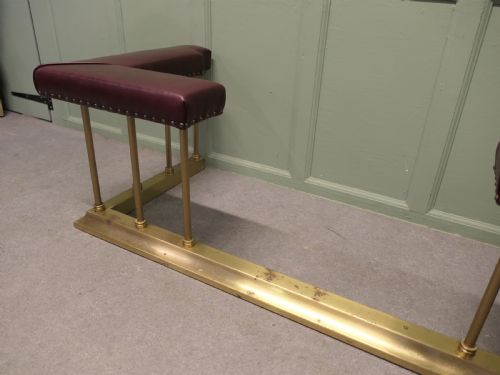


Padded Club Fender
These padded club fender designs combine low fireside seating with robust metal frames, offering a practical seat around the hearth.
Padded Club Fender
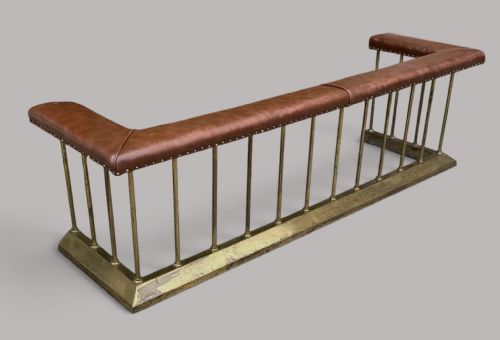
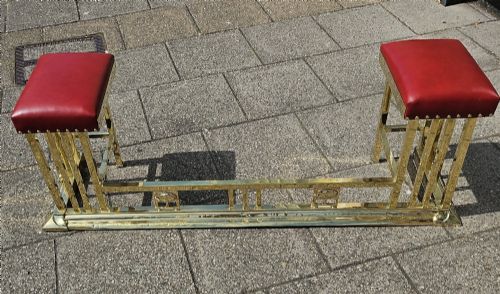
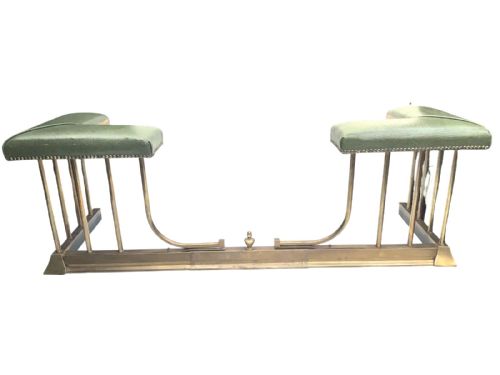
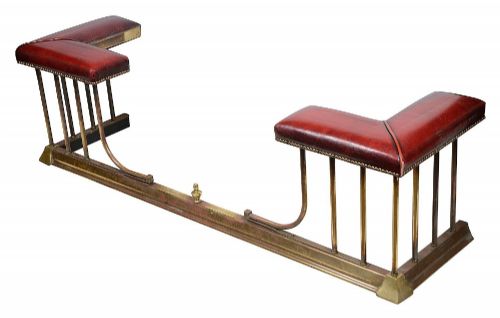
A padded club fender forms a low, upholstered bench around the hearth, giving a comfortable seat close to the fire. When exploring a padded club fender selection, buyers frequently encounter Victorian and Edwardian examples alongside pieces from the 1920s and 1930s.
The form typically comprises metal supports framing low cushions, often finished in tan leather or alternative upholstery. These fixtures serve as functional fireplace accessories that bridge the gap between seating and hearth protection.
Assessing quality in construction
Substantial weight and gauge of the metal framework separate standard examples from heavier, more robust pieces. Solid brass or cast steel construction indicates higher build quality than lighter substitutes.
The quality of the upholstery work and the depth of the leather padding influence the overall finish. Fine stitching and well-preserved hides indicate superior original craftsmanship.
Listings feature periods spanning the nineteenth century through the 1930s, incorporating brass, steel, wrought iron, and leather.
The Padded Club Fender Glossary
- Club Fender
- A low fireside seat built around a fireplace opening, featuring padded tops for seating. These fixtures became popular in gentlemen's clubs and country houses during the nineteenth century.
- Upholstery
- The padded and covered components of the seat. Leather and velvet are traditional choices for hearthside furniture.
- Wrought Iron
- Iron beaten into shape by hand, known for its fibrous texture and durability. It provides a sturdy alternative to brass in fireplace furnishings.
- Extender
- A section designed to adjust the width of the frame. This allows the structure to fit various hearth dimensions.
Padded Club Fender: Frequently Asked Questions
What is a padded club fender?
A padded club fender is a low fireside seating structure that surrounds the hearth. It combines a metal frame with cushioned seats.
These pieces protect the room from stray embers while offering a convenient place to sit close to the fire.
How do I style a club fender?
Place the fender directly around the fireplace opening to anchor the hearth area. It works well in traditional reception rooms and studies.
Pair the metal finish with matching fireside accessories like companion sets or coal buckets for a cohesive look.
How do I date a club fender?
Examine the metal type, fasteners, and upholstery style to determine the period. Victorian and Edwardian pieces often feature heavy brass frameworks.
Later examples from the 1920s and 1930s introduce Art Deco influences and heavier iron structures.
Are these fenders adjustable?
Some examples incorporate extender mechanisms to alter the width of the base. This allowed owners to adapt the structure to different fireplace openings.
Fixed-size frames remain common among nineteenth-century and early twentieth-century designs.