
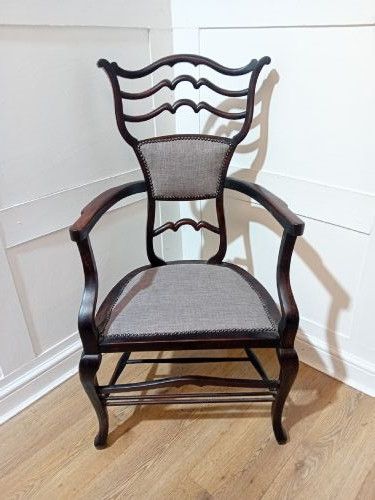


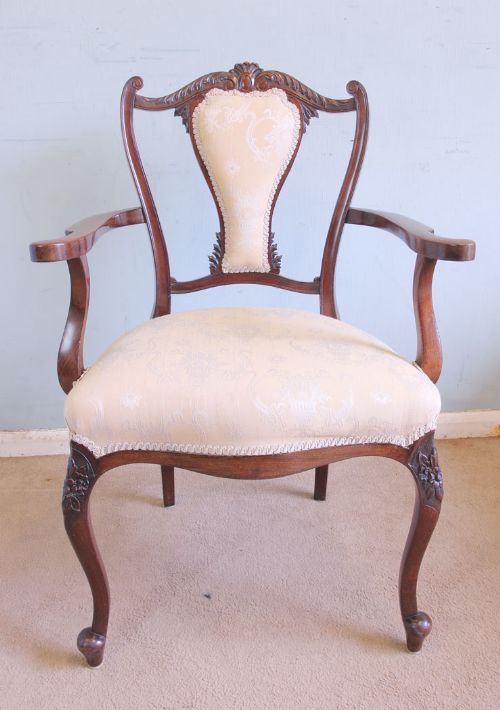


Padded Back Carver Chair
A padded back carver chair offers sturdy arm support and upholstered comfort, making it a versatile seating choice for both study and dining rooms.
Padded Back Carver Chair
A padded back carver chair combines traditional armchair framing with upholstered support, appearing across various historical periods including the eighteenth century and the Victorian era. You encounter forms ranging from formal dining carvers to study armchairs and Windsor chairs, reflecting diverse domestic uses.
The selection includes pieces influenced by Queen Anne and Chippendale revivals, alongside Edwardian empire designs and English country furniture. Walnut, mahogany, oak, yew, and elm provide the structural timber for these frames.
Makers utilised fabric, velvet, and leather alongside upholstery studs to finish the padded sections of the seats and backs. These armchairs function effectively at a desk, around a dining table, or as standalone seating.
Materials and construction
Craftsmen shaped dense hardwoods such as mahogany, walnut, oak, yew, and elm to build the rigid frames of these armchairs. Turned tapering feet, box stretchers, and carved splats provide both structural integrity and decorative detail.
Upholstery techniques involved applying fabric, velvet, or leather over padding, frequently secured with metal upholstery studs along the edges. Carved arms and shaped forelegs completed the construction of formal and country variants alike.
Materials recorded across the inventory include mahogany, walnut, oak, yew, elm, velvet, leather, and upholstery studs.
Assessing quality in construction
Quality reveals itself in the crispness of carved wooden details, such as vase splats or balloon backs, and the selection of fine cabinet timbers like figured walnut and mahogany. Solid joinery in the arms, legs, and stretchers ensures long-term stability.
The standard of upholstery work, from the choice of textile like velvet or leather to the neat alignment of studs, distinguishes standard utility seating from finer examples.
The Padded Back Carver Chair Glossary
- Balloon back
- A rounded, oval-shaped chair back popular during the Victorian period. It curves outward to resemble the shape of a balloon.
- Vase splat
- A vertical wooden strip in the centre of a chair back shaped like a classical vase. This form is common in eighteenth-century and revival dining chairs.
- Windsor chair
- A wooden chair constructed with a solid elm or yew seat into which the legs and back spindles are directly inserted. High back variants often include pad arms.
Padded Back Carver Chair: Frequently Asked Questions
Where should I place a carver chair?
These armchairs suit placement at either end of a dining table, providing a natural pairing with side chairs. They also function well as standalone seating in a hallway or as a desk chair in a study.
Their supportive armrests and upholstered backs make them practical for extended seating periods in living spaces or home offices.
How do I identify a Victorian carver chair?
Victorian examples frequently feature characteristic shapes such as balloon backs or high pad arms in timbers like mahogany, oak, and walnut. Many incorporate turned components or carved decorative details typical of nineteenth-century production.
Examining the construction methods and timber ageing helps distinguish Victorian pieces from earlier eighteenth-century originals or later twentieth-century revivals.
What is a Queen Anne style chair?
Queen Anne style chairs are distinguished by their graceful curves, often featuring vase splats and polished walnut or mahogany frames. Revival pieces from the early twentieth century successfully replicated these earlier eighteenth-century aesthetic traits.
These chairs bring a formal yet refined silhouette to dining rooms and studies through their balanced proportions.
Are these chairs suitable for daily use?
Solid hardwood frames built from mahogany, walnut, oak, yew, or elm provide the structural durability needed for everyday seating. Proper maintenance of the wooden frame ensures these chairs withstand regular domestic use.
Upholstery elements like fabric, velvet, or leather can be maintained or renewed over time to preserve both comfort and appearance.