

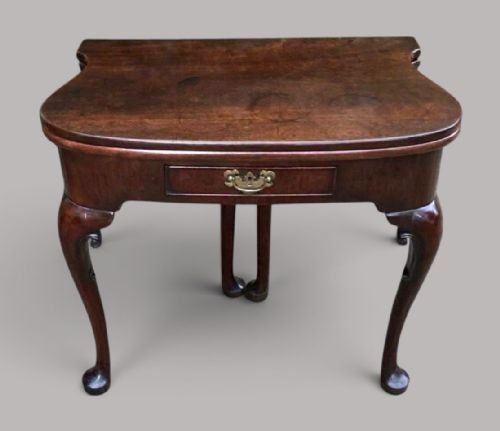
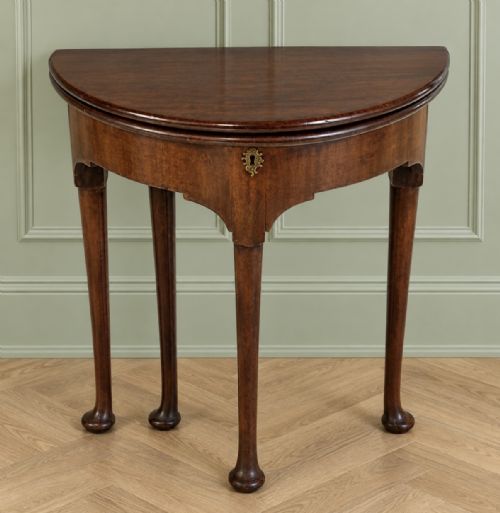
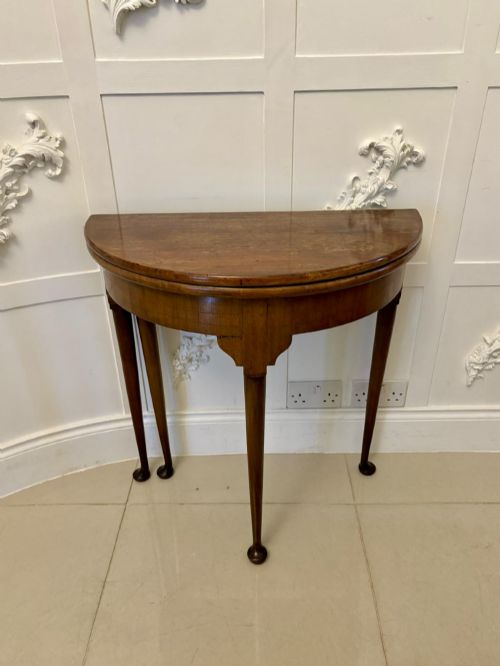
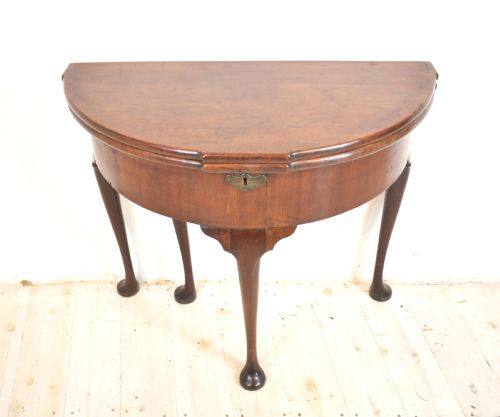



Pad Foot Games Table
A pad foot games table is a folding timber piece designed for evening entertainment, offering period proportion and concealed surfaces that appeal to traditional interiors.
Pad Foot Games Table
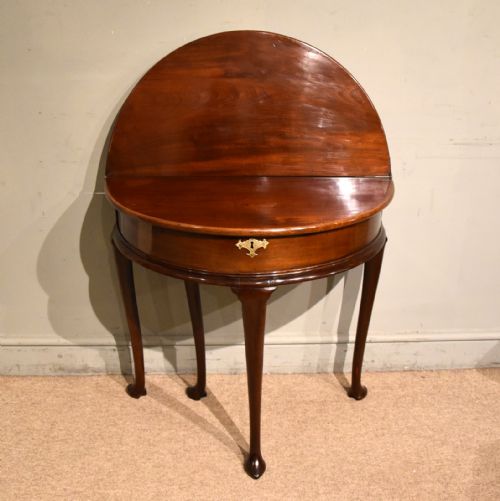
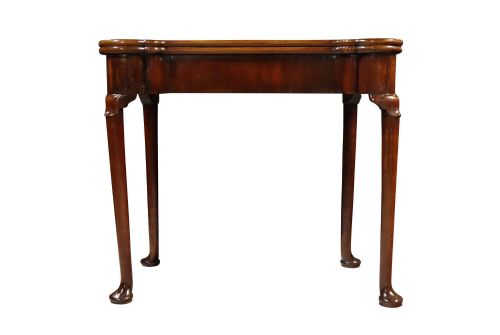
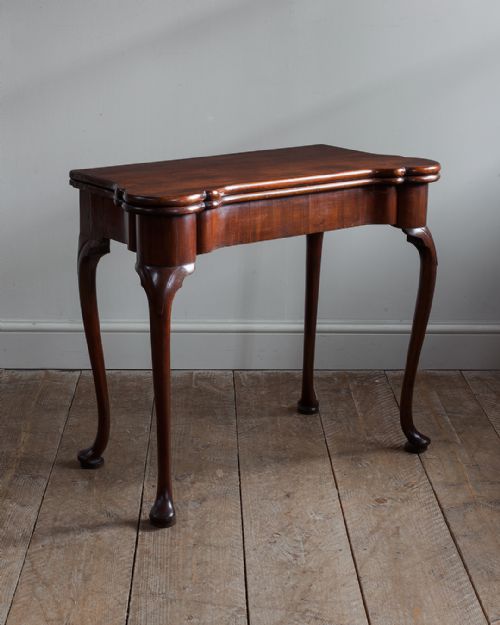
A pad foot games table is primarily a mahogany or walnut piece designed with a folding top to serve card playing and tea drinking in eighteenth-century rooms. You meet these most often in George II and Georgian forms, where timber tops open on concertina actions or simple hinges to reveal baize surfaces and coin wells.
The evidence shows these tables span the seventeenth, eighteenth, and nineteenth centuries, including Edwardian reproductions built in earlier styles. Card tables, tea tables, and occasional tables dominate the selection, frequently featuring demi-lune shapes or rectangular folding tops supported by cabriole legs.
What varies in quality
The distinction between ordinary and superior pieces rests on timber selection and the precision of the folding mechanism. Tables built from figured Cuban mahogany or rich red walnut with crisp carving at the knees command attention.
Internal engineering marks the better examples, particularly concertina actions that extend the rear frame evenly alongside the top rather than relying on simple swing legs. The integrity of the timber hinges and the depth of dished wells for counters separate standard workshop output from exceptional cabinet work.
Pad Foot Games Table Retail Price Guide 2026
Typical asking prices for pad foot games table among the pieces listed under this phrase on Sellingantiques today, from the lower quarter to the upper quarter. They describe what is for sale here now, not the wider market.
Listings feature mahogany, red walnut, and Cuban mahogany across eighteenth-century forms.
The Pad Foot Games Table Glossary
- Pad foot
- A simple, rounded foot profile resting flat on the floor at the base of a cabriole leg. This form appears frequently on Georgian walnut and mahogany tables.
- Concertina action
- An expanding frame mechanism that pulls outward with the folding top to support the opened leaf evenly. It allows all four legs to remain positioned at the corners when the table is open.
- Guinea well
- A small circular depression carved into the interior surface of a card table. These held gold coins used during gaming.
- Demi-lune
- A half-moon shape characteristic of side and tea tables designed to sit flat against a wall when closed. They open into full circles or ovals when unfolded.
Pad Foot Games Table: Frequently Asked Questions
How do I use a pad foot games table today?
These tables function well as console or side tables against a hallway or living room wall when folded shut. Opening the top reveals a generous surface suited for display or occasional card evenings.
Position the piece away from direct heat sources to protect the historic timber and polish. The folding leaf requires gentle handling when opening the concertina or swing-leg supports.
How do I date a George II games table?
Dating relies on stylistic markers such as the contour of the cabriole leg, the presence of pad feet, and the construction of the frieze drawer. Mid-eighteenth-century pieces often utilise dense Cuban mahogany and incorporate specific hardware types.
Comparing the joinery beneath the folding leaf to documented examples from the seventeen-fifties provides further chronological context.
Are these tables sturdy enough for daily use?
Eighteenth-century framing is robust, but the folding mechanism requires care during operation. The structural stability depends on the timber hinges and the alignment of the rear support leg.
Treat the opened leaf with consideration, avoiding heavy downward pressure on unsupported corners to preserve the antique joints.