

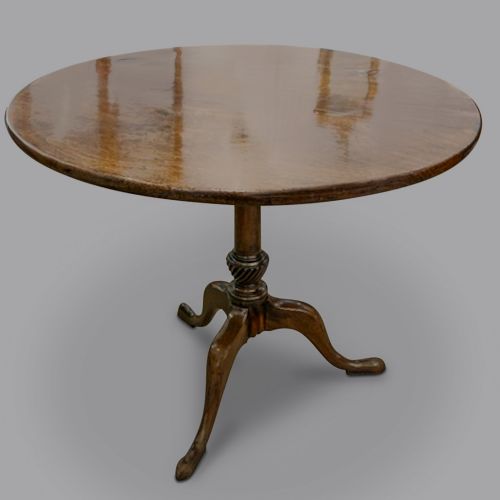
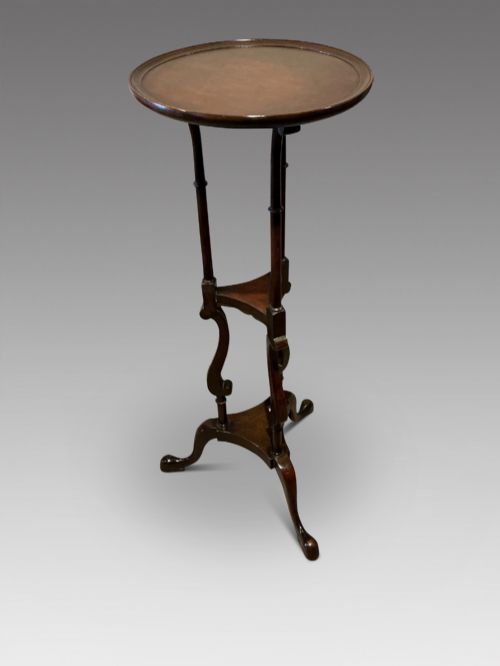
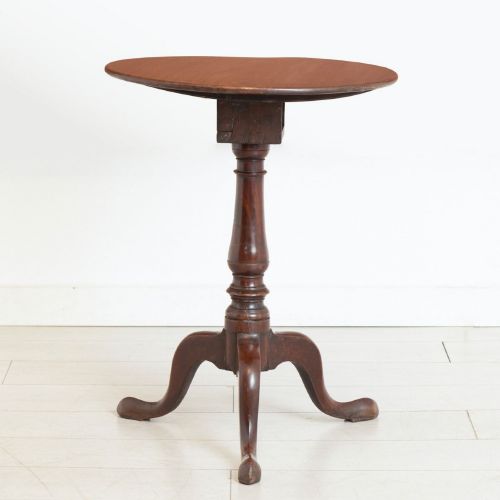

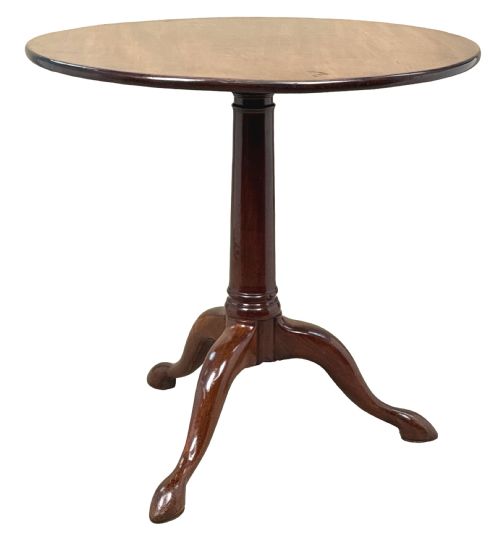



Pad Foot Candle Stand
A pad foot candle stand is a sturdy small table raised on three legs, prized for holding a light or small vessel beside a chair.
Pad Foot Candle Stand
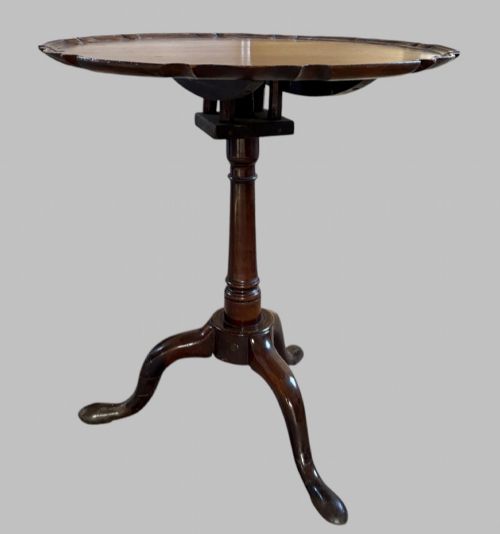
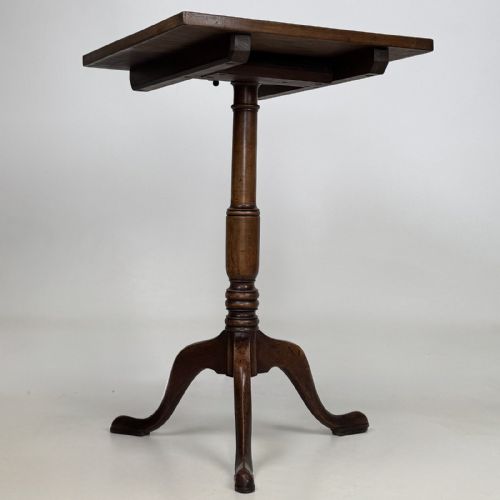
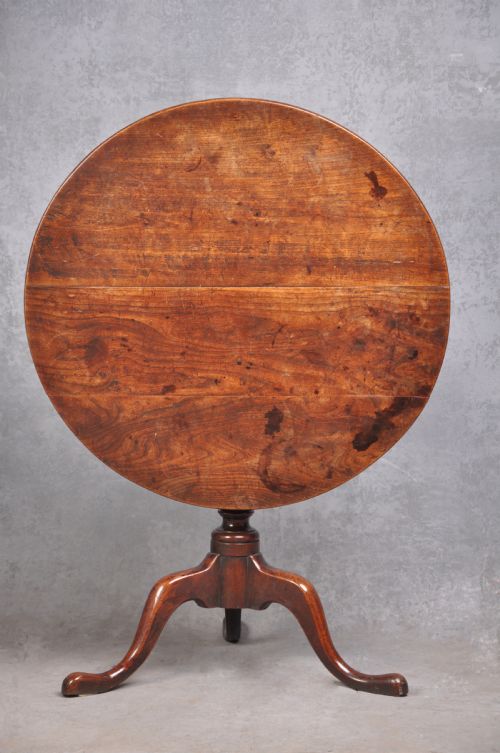
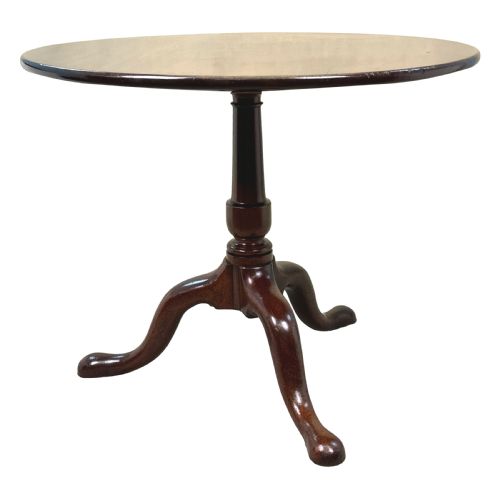
When you search for a pad foot candle stand, you encounter compact tripod tables designed to support illumination or small items in period interiors. The majority of pieces here date from the Georgian era and the eighteenth century, constructed with a central pillar and three splayed legs.
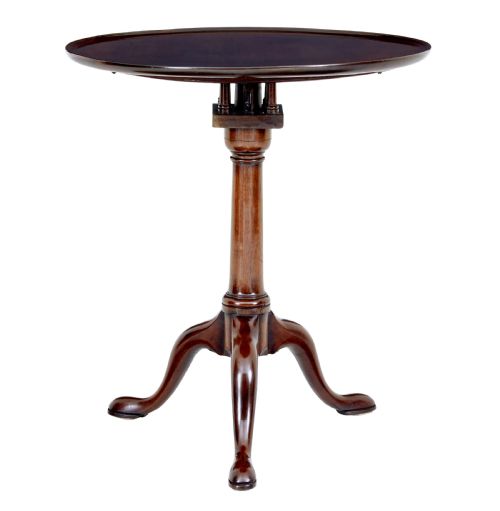
Forms range from simple circular tops on plain shafts to tilting mechanisms with birdcage mechanisms that allow the surface to pivot. Oak, fruitwood, and cherrywood appear alongside mahogany and walnut, representing both country vernacular workshops and urban cabinet makers.
How they were made
Cabinet makers utilised dense hardwoods such as mahogany, walnut, and oak, turning the central pillars on lathes while shaping the legs by hand. Joinery relied on sturdy tenon and dovetail construction to ensure the slender tripod base remained stable.
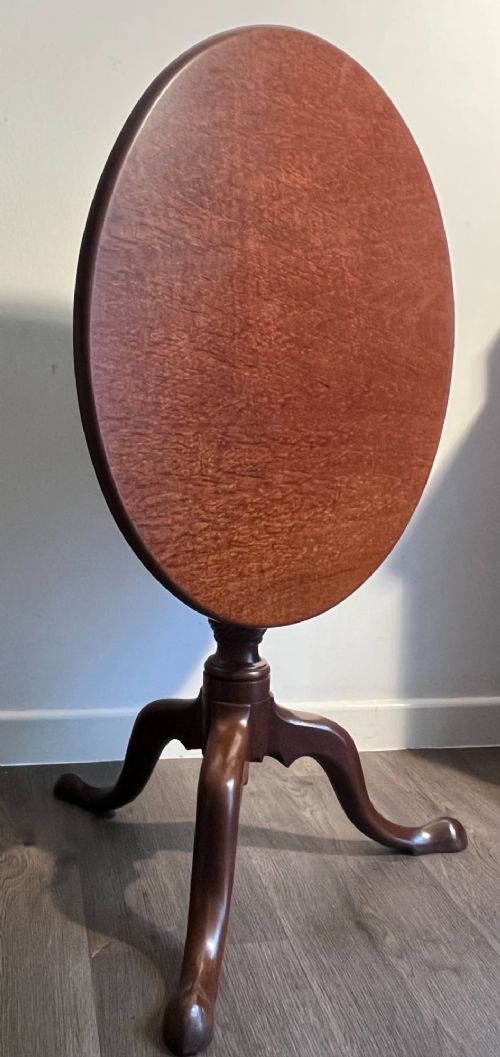
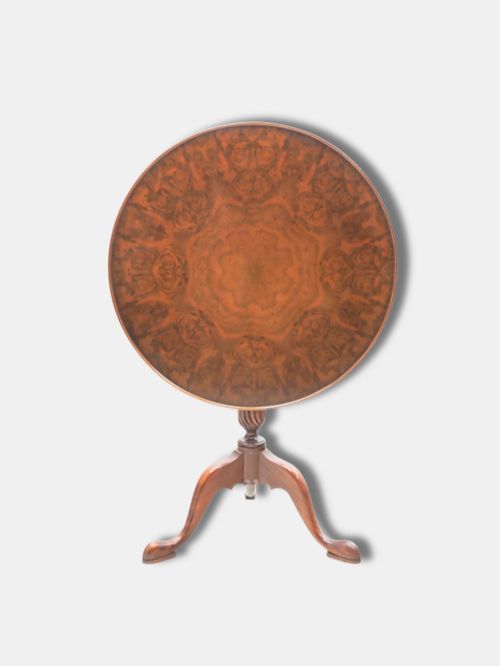
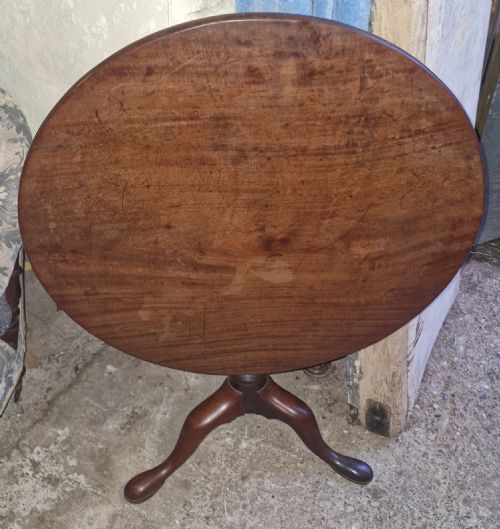
Surfaces often feature tilt-top mechanisms, enabling the table to stand flat against a wall when not in use. Selected examples employ burr walnut veneer over solid carcases, demonstrating refined surface preparation.
Pad Foot Candle Stand Retail Price Guide 2026
Typical asking prices for pad foot candle stand among the pieces listed under this phrase on Sellingantiques today, from the lower quarter to the upper quarter. They describe what is for sale here now, not the wider market.
The listings on this page span the Georgian era, the nineteenth century, and early twentieth-century revival pieces, constructed in mahogany, walnut, oak, and fruitwood.
What varies in quality
The distinction between ordinary and superior examples lies in the proportion of the turning and the crispness of the timber grain. Finer tables exhibit balanced pillar profiles and elegantly curved legs that terminate cleanly.
Timber selection dictates the character of the piece, with richly figured mahogany or well-matched fruitwood elevating the object. Original tilt mechanisms and untouched surface patination command greater appreciation among collectors.
The Pad Foot Candle Stand Glossary
- Tripod table
- A small freestanding table supported by three legs radiating from a central pillar. This configuration provides stability on uneven floors.
- Tilt top
- A tabletop mounted on a catch mechanism that allows the surface to pivot vertically. It enables compact storage against room boundaries.
- Birdcage
- A wooden revolving frame beneath the tabletop that permits the surface to both rotate and tilt. This assembly is characteristic of finer eighteenth-century examples.
- Pad foot
- A simple rounded foot shape at the base of a cabriole or straight leg. It rests flat on the floor without additional casters.
Pad Foot Candle Stand: Frequently Asked Questions
What is a pad foot candle stand?
A pad foot candle stand is a compact three-legged table historically used to hold a candle or small lamp. These tables combine portability with a stable base designed for domestic spaces.
The listings show examples spanning the eighteenth and nineteenth centuries, utilising timbers such as mahogany, oak, and fruitwood. Their modest proportions make them versatile for placement beside seating.
How do I date a tripod table?
Dating relies on observing timber choices, construction methods, and stylistic cues from the Georgian period. Earlier pieces often display vernacular timbers like fruitwood or oak, while later ones favour mahogany.
Hardware details, such as the presence of a birdcage mechanism or hand-turned pillars, further help place the object within the eighteenth or early nineteenth century.
How were tilt top tables used?
Tilt top tables served flexible roles in historic rooms, acting as occasional surfaces for tea, reading, or illumination. The pivoting mechanism allowed them to be stored flat against a wall to save floor space.
This practical function made them common additions to parlours and sitting rooms throughout the Georgian era.
Where should I place one at home?
These compact tables fit well beside armchairs or in corners where a small surface is required for a lamp or book. Their narrow footprint allows them to integrate easily into both historic and modern interiors.
Keeping them away from direct heat sources helps preserve the polished hardwood surfaces and traditional timber joinery.