



Oversized Persians Wool Rug
These oversized persians wool rug pieces are substantial room-scale floor coverings woven in traditional Persian centres that anchor a grand interior with deep heritage.
Oversized Persians Wool Rug
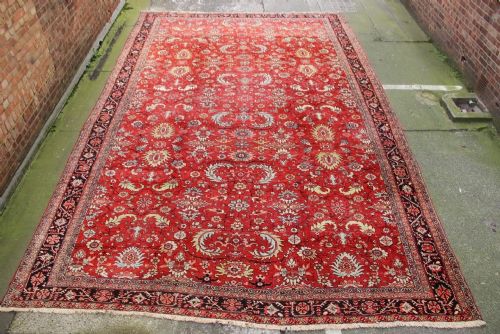
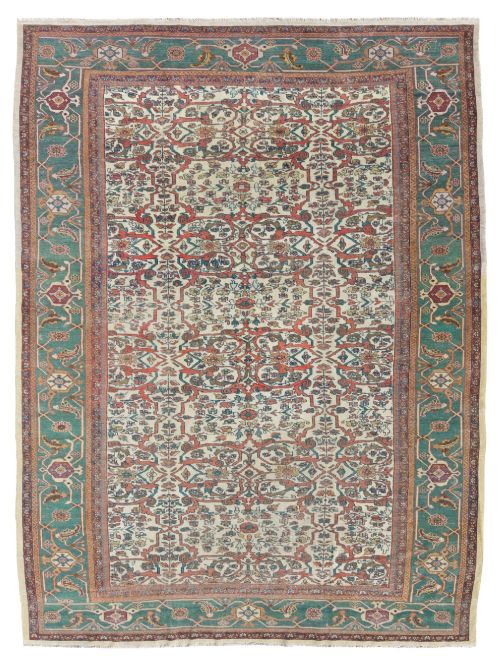
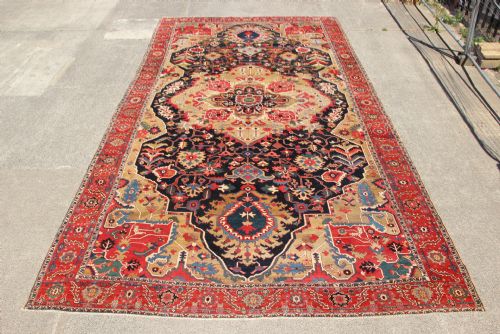
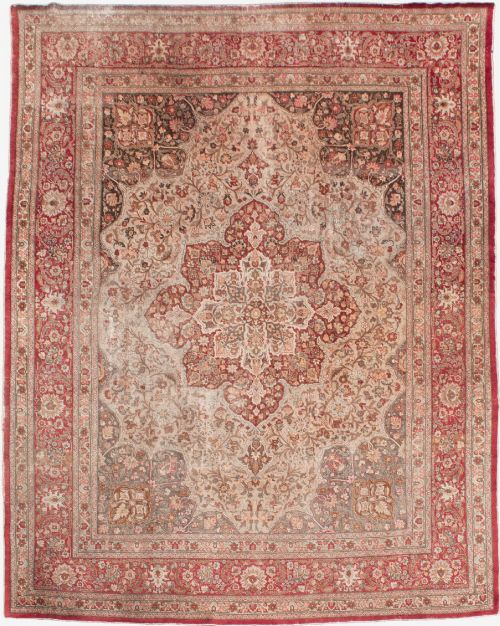
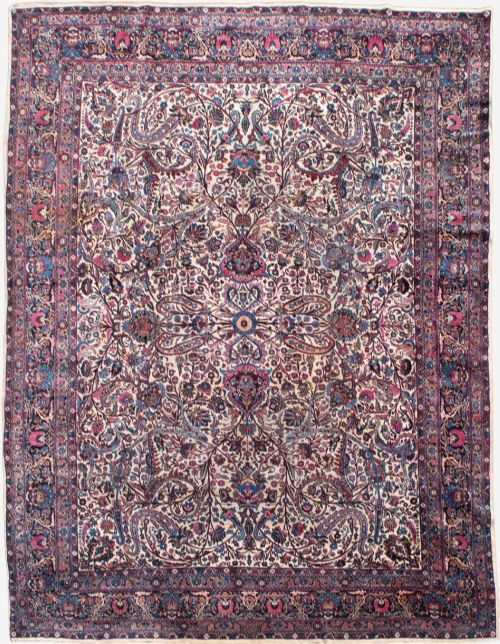
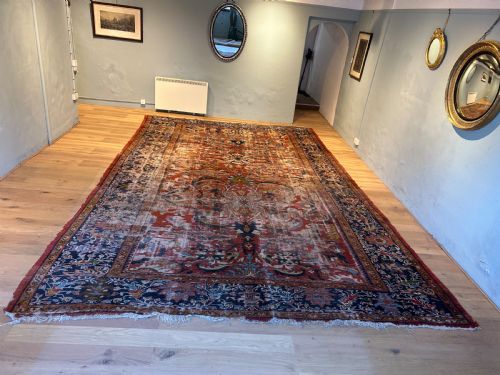
When you search for an oversized persians wool rug, you encounter grand room-size and palace-scale carpets originating from notable weaving traditions such as Heriz, Sultanabad, Kirman, and Tabriz. These pieces date principally from the late nineteenth century through to the early twentieth century, reflecting a period of ambitious scale and confident design. The selection on this page consists entirely of substantial carpets designed to anchor large spaces with considerable architectural presence.
The regional types vary visibly in character, from the geometric medallions of Heriz and Serapi weaves to the sweeping floral arrangements found in Sultanabad and Kirman productions. Many examples demonstrate the robust qualities required for country house drawing rooms and reception halls, utilising generous dimensions that frequently exceed four or five metres in length. Buyers looking at these listings will find floor coverings defined by traditional Persian compositions executed on a grand canvas.
Materials and construction
These carpets are constructed predominantly from wool pile foundation structures tied onto cotton warps and wefts, providing the dense yet flexible body necessary for floor use. The wool employed is frequently thick and resilient, sourced locally to withstand decades of foot traffic while retaining rich dyed coloration.
Weavers utilised hand-knotting techniques specific to their regional workshops, combining organic and mineral dyes to achieve the varied palettes seen across the nineteenth and early twentieth centuries. The integration of cotton for the structural grid ensures dimensional stability across vast surface areas like those measured in palace-size formats.
The listings on this page span several decades, featuring pieces dated from the 1870s through to the 1920s in wool and cotton.
Distinctions in standard
Quality in these large carpets rests upon the precision of the knotting and the complexity of the design rendering, where finer weaves allow for sharper delineation of intricate floral and geometric motifs. The handling of the wool pile also dictates the tactile character, with certain workshop productions offering a denser, more responsive touch underfoot.
The integrity of the structural foundation and the preservation of original borders significantly influence the standing of an individual carpet. Examples displaying harmonious dye saturation and balanced secondary shades represent the upper tier of nineteenth-century output.
Ziegler and Co·Haji Jalili
The Oversized Persians Wool Rug Glossary
- Heriz
- A region in north-west Persia known for producing robust geometric carpets with prominent central medallions. These pieces typically incorporate durable wool well suited to heavy use.
- Sultanabad
- A nineteenth-century commercial weaving style characterised by large-scale, open floral patterns. They were frequently produced for Western markets to fit expansive drawing rooms.
- Kirman
- A city in southern Persia renowned for finely knotted carpets featuring intricate floral sprays and vase designs. Kirman Lavar is a specific sub-variety noted for particularly delicate execution.
- Warp
- The vertical threads stretched tightly on the loom that form the skeleton of the carpet. Cotton is the standard material for these structural elements.
- Medallion
- A large central ornament set into the field of a carpet, acting as the primary focal point of the composition. They appear frequently in Heriz and Tabriz designs.
Oversized Persians Wool Rug: Frequently Asked Questions
How do I choose the right size?
Measure your room carefully to ensure the carpet leaves an even border of exposed flooring around the edges of the space. Consider the placement of heavy furniture so that seating groups sit comfortably on the field.
Oversized carpets require adequate clearance from doorways and built-in fixtures. A well-proportioned layout allows the central design to remain visible rather than disappearing entirely beneath tables and sofas.
Where were these carpets used historically?
These large-scale pieces were traditionally commissioned for country houses, urban mansions, and formal reception rooms where grand proportions demanded an imposing floor covering. They served both as functional insulation and as visual statements of status.
Many Sultanabad and Ziegler carpets were specifically exported to European and American households during the nineteenth century. Their scale reflected the architectural preferences of period drawing rooms.
How do I identify a Heriz from a Sultanabad?
Heriz carpets rely on strong geometric medallions and angular corner spandrels woven with sturdy wool. The overall impression is architectural and bold.
Sultanabad carpets utilise sweeping, curvilinear floral patterns with a more open arrangement of motifs. The colour palette often leans towards softer terracotta and muted tones.
How should I care for a wool carpet?
Vacuum the surface regularly using a suction-only attachment to avoid damaging the vintage pile or fringe. Keep the carpet out of harsh, direct sunlight to preserve the natural dyed coloration.
Rotate the piece periodically to ensure even wear across high-traffic areas. Professional cleaning should be undertaken sparingly by specialists familiar with antique Persian textiles.